
Florida Hotel Assault Claims: Why Footage and Prior Crimes Matter
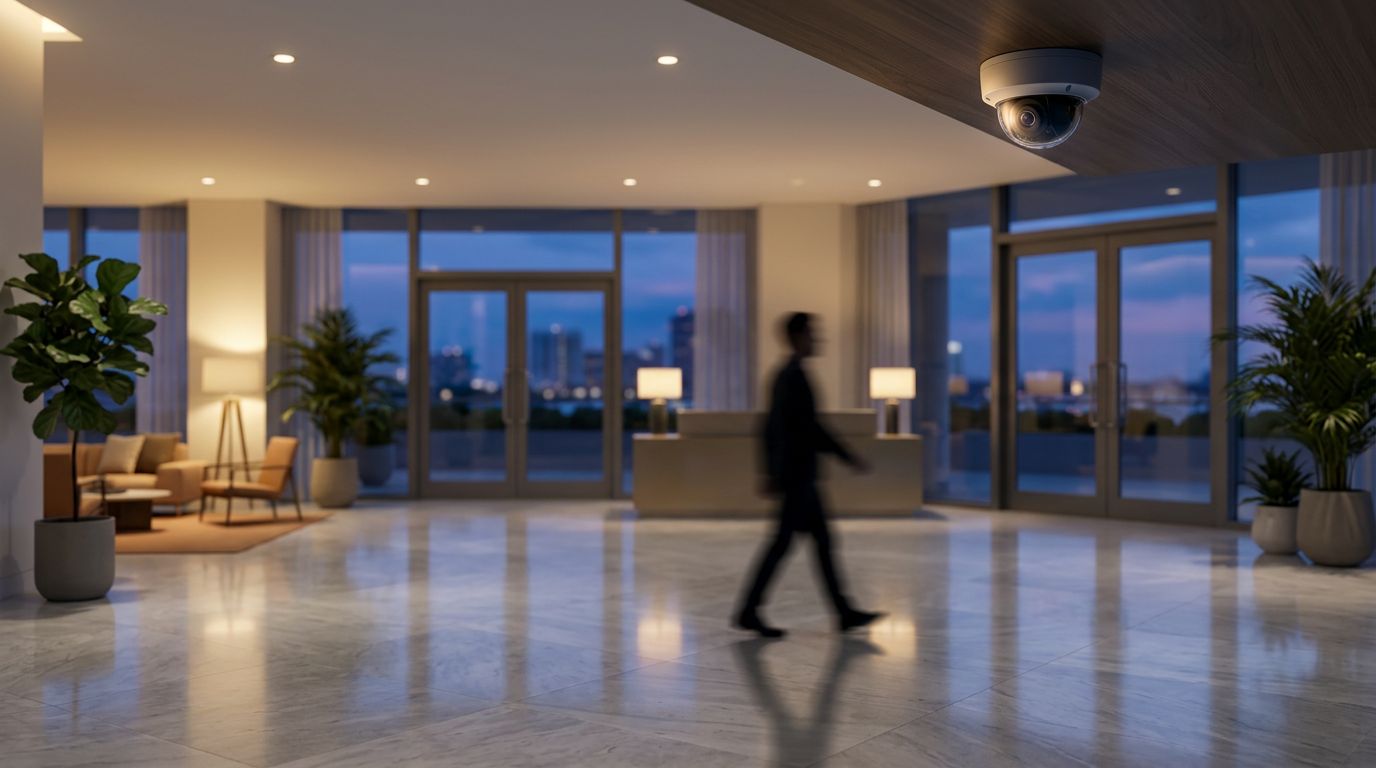
An assault at a hotel can become a proof fight within hours. In florida hotel assault claims, the case often turns less on what happened to you and more on what the hotel knew before it happened.
Two kinds of evidence usually carry the most weight: security footage and proof of earlier crime. When both line up, a negligence claim gets much harder for the hotel to dismiss. When both disappear, the hotel gets a head start on the story.
What a Florida hotel assault claim must prove
A hotel assault case is usually not a claim against the attacker alone. It is often a civil claim against the hotel for negligent security. That means you must show the hotel failed to use reasonable care to protect guests from a foreseeable crime.
Hotels do not guarantee perfect safety. Still, they do owe guests a duty to take reasonable steps for known risks. The broader rule is part of Florida premises law, and this guide to Florida premises liability duty of care explains the basic framework.
In plain terms, most claims rise or fall on four issues. Was the risk foreseeable? Did the hotel fail to act reasonably? Did that failure help allow the assault? Did you suffer real harm?
Foreseeability is usually the hardest part. A dark stairwell, a broken gate, no working hallway camera, poor key-card control, or no security presence can matter. So can a record of fights, robberies, break-ins, or guest complaints in the same area.
Florida’s negligence rules are tougher than they used to be. Many cases now face a shorter filing deadline, and fault can be split among everyone involved, including the attacker. Hotels use those rules to argue, “The criminal caused this, not us.” That defense often gets weaker when the property ignored clear warning signs.
Florida has also created special protections in some property-security cases. For example, section 768.0706 deals with certain multifamily housing claims, not hotel claims. Still, it shows how closely Florida now looks at specific security measures and prior crime history.
Security footage is often the cleanest witness
A camera can’t feel fear, forget details, or change its story. That’s why security footage often becomes the strongest evidence in hotel assault cases.
Good footage can show more than the attack itself. It may reveal how the assailant entered, whether a side door stayed unlocked, how long staff took to respond, or whether a guard was missing from a known trouble spot. It can also show what happened in the minutes before the assault, and that often matters most.
This is the kind of proof footage can provide:
| Evidence from video | What it may show | Why it matters |
|---|---|---|
| Lobby or hallway footage | The attacker’s path and timing | Helps prove access failures |
| Parking lot video | Poor lighting or no patrols | Supports negligent security claims |
| Entry-door footage | Broken or ignored key-card rules | Shows weak access control |
| Staff response video | Delayed or confused reaction | Helps show poor procedures |
| Missing footage | Cameras failed or were not preserved | Can raise serious questions |
Video is powerful, but it is not magic. A single clip may miss blind spots. Some systems record over themselves in days. Others keep only short segments unless someone asks that the footage be saved.
If the hotel had notice of the assault and still failed to preserve footage, that can become a major issue in the claim.
That is why speed matters. Ask for an incident report, note the time and location, and move quickly to preserve recordings. This guide on preserving security footage after premises injury is aimed at premises cases generally, but the same urgency applies after a hotel assault.
Prior crime proof can turn suspicion into foreseeability
Prior crimes are often the bridge between “This was terrible” and “The hotel should’ve seen this coming.” Without that bridge, many cases stall.
The earlier events do not need to match like carbon copies. A prior armed robbery is not the only kind of warning that counts. Fights near the bar, batteries in the parking lot, unauthorized people entering guest floors, stalking complaints, or repeated calls for service can all matter if they point to the same security gap.
What matters is similarity, location, and timing. A purse theft two years earlier in a different building may carry little weight. Repeated violent incidents near the same elevator bank or side entrance carry much more. Hotel records, police reports, 911 call logs, employee emails, and guest complaints can all help build that picture.
The same “notice” idea comes up in other hotel negligence disputes too. If you want a plain-English look at how hotels get linked to known hazards, this explanation of evidence for Florida hotel negligence claims helps show how notice is often proved.
After an assault, protect the facts before they fade:
- Get medical care right away, even if adrenaline masks pain.
- Report the assault to hotel management and law enforcement.
- Keep your room key, receipts, texts, and screenshots.
- Write down witness names, staff names, and exact locations.
Those simple steps can matter as much as any legal argument. A negligent security case is a lot like a chain. If one key link goes missing, the defense will pull on that gap.
Strong florida hotel assault claims usually combine both forms of proof. The camera shows what happened. Prior crime evidence shows why the hotel should have acted before it happened.
The bottom line is simple. In these cases, foreseeability is rarely proved by one dramatic fact alone. It is built from video, records, prior incidents, and quick action after the assault.
If you believe a hotel ignored warning signs before you were attacked, get the case reviewed fast. Evidence disappears quickly, and once it’s gone, it rarely comes back.