
Florida Informed Consent Claims: What Patients Must Prove
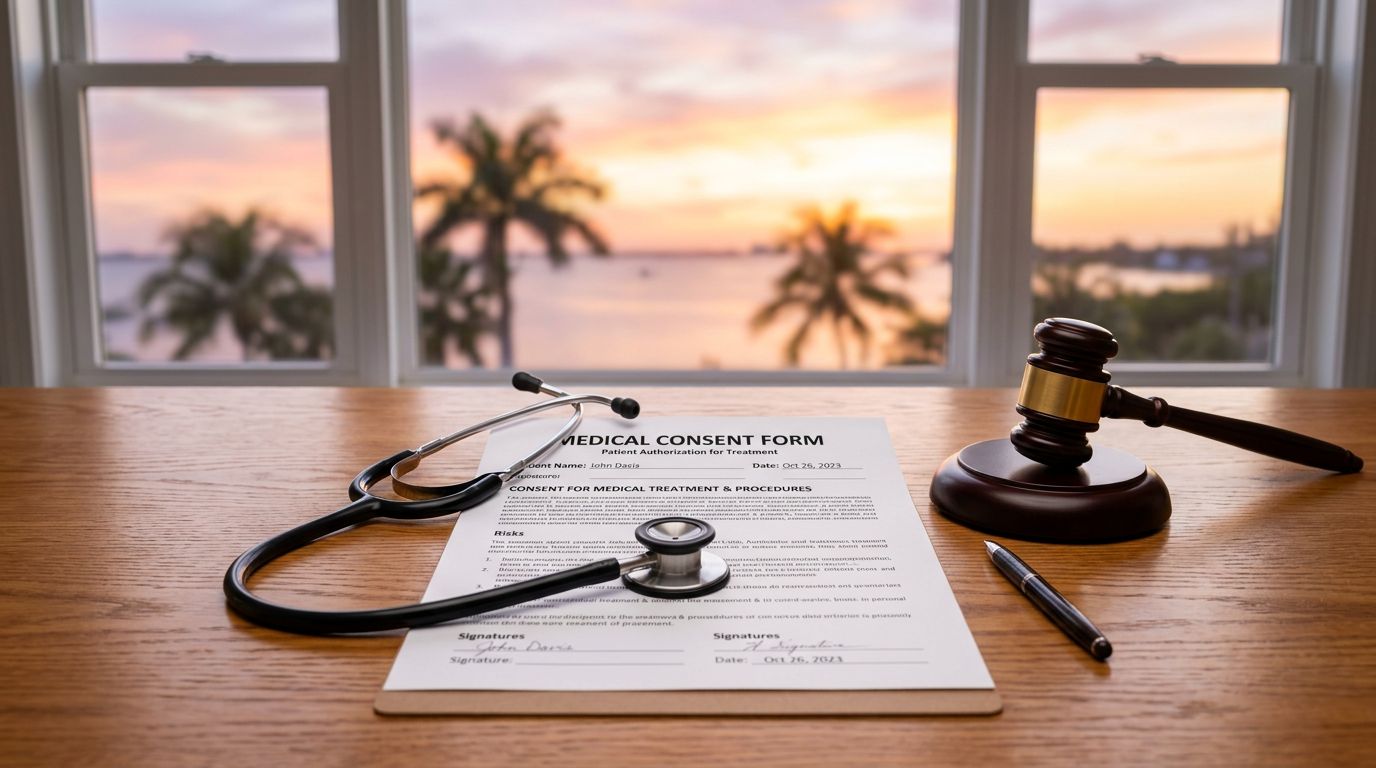
You signed the consent form, but did you actually consent? In many Florida medical malpractice cases, the dispute isn’t about whether a patient agreed to treatment. It’s about whether the patient got enough information to make a real choice.
Florida informed consent claims focus on what the provider explained (or didn’t explain) before a procedure. If a serious risk shows up afterward, the legal question often becomes simple: should you have been warned, and would that warning have changed your decision?
Below is what patients generally must prove, what evidence matters most, and what deadlines can end a case before it starts.
What Florida law expects before you agree to treatment
Informed consent is about choice. Think of it like agreeing to buy a used car. If the seller hides that the brakes sometimes fail, your “agreement” doesn’t mean much. Health care is higher stakes, so the duty to disclose is taken seriously.
Florida rules generally require providers to give patients enough information to make an informed decision. While the exact duty can depend on the procedure and setting, the discussion commonly includes:
- The nature of the procedure (what’s going to happen)
- Substantial risks and hazards that a reasonable patient would want to know
- Reasonable alternatives, which can include doing nothing
- Likely outcomes of refusing treatment, when that matters to the choice
The heart of these cases is the idea of a material risk. A material risk is a risk important enough that a reasonable person might weigh it when deciding.
A signature is evidence of consent, but the real issue is whether the patient understood the choice they were making.
Florida also recognizes practical exceptions. In a true emergency, doctors may treat to prevent death or serious harm when the patient can’t consent. Consent issues can also look different when a patient lacks capacity, or when a legal guardian must decide.
For a plain-language overview of how informed consent is analyzed in Florida, see Florida informed consent law elements and exceptions.
The core elements patients must prove in a Florida informed consent claim
An informed consent case isn’t just, “I wasn’t told everything.” Patients usually need to connect the missing warning to a real injury. Although facts vary, most claims center on four points.
1) The provider had a duty to disclose the information
First, you must show the provider should have discussed the risk, alternative, or key detail. This often turns on medical standards for the type of procedure and what providers customarily explain.
2) The provider failed to disclose a material risk or reasonable alternative
Next, you must prove the disclosure didn’t happen, or it happened in a way that wasn’t meaningful. For example, a provider might mention a risk in passing without explaining its seriousness, or skip alternatives that would matter to many patients.
3) You would have chosen differently if properly informed
This is the decision link. In many cases, the defense argues you would have proceeded anyway. As a result, the evidence often focuses on your values, your concerns, and the options you had.
Helpful proof can include your testimony, a spouse’s or family member’s testimony, and chart notes that show you asked questions or raised concerns. Timing matters too. A “consent talk” five minutes before surgery, after sedatives, can raise issues.
4) The undisclosed risk happened and caused harm
Florida informed consent claims usually require more than a technical violation. The complication tied to the missing warning must actually occur, and it must cause damages.
If the undisclosed risk never happens, the lack of warning often won’t support a damages claim by itself.
This also helps explain a common confusion: informed consent is different from negligent treatment. A surgery can be performed perfectly, yet still lead to an informed consent claim if a major risk wasn’t disclosed. On the other hand, if the provider made an avoidable mistake during the procedure, that is often framed as negligence, even if you signed a consent form.
How consent forms, chart notes, and experts shape the evidence
Most patients remember the form. Insurers focus on it too. In Florida, a signed consent form can help a provider argue the patient agreed after being informed. Still, a form is not always the end of the story.
A strong case often shows a gap between paperwork and reality, such as a form that is too vague, a discussion that didn’t match the procedure, or a patient who couldn’t understand the explanation due to language or medical condition.
Here’s a quick way to see how evidence tends to land in real cases:
| Evidence issue | Often helps the patient when | Often helps the provider when |
|---|---|---|
| Consent form language | It’s generic, missing key risks, or doesn’t match the procedure | It lists major risks and alternatives in clear terms |
| Timing of consent | Consent was obtained under pressure, or right before sedation | Consent discussion happened in advance, with time for questions |
| Documentation | Records are thin, or notes conflict with what was said | Chart notes reflect a real back-and-forth conversation |
| Patient understanding | Language barriers, confusion, or cognitive limits weren’t addressed | Interpreter used, questions documented, teach-back noted |
In addition, expert review is usually central. Experts may be needed to explain what risks are substantial for that procedure, and what a reasonably careful provider should disclose.
If you want a broader look at what kinds of proof come up in malpractice cases, including records and expert opinions, see evidence needed for Florida medical malpractice claims.
Deadlines and pre-suit rules that can make or break the case
Even a strong informed consent claim can fail if it’s filed late or the pre-suit steps aren’t followed.
Florida medical malpractice cases generally have a two-year deadline that often runs from when the injury was discovered (or should have been discovered). In addition, a statute of repose can set an outer limit (often four years), with limited exceptions that may extend the time in cases involving fraud or concealment (sometimes discussed as allowing up to seven years in narrow situations).
Because these dates are technical, it’s smart to confirm them early. For more on timing, review the Florida medical malpractice statute of limitations.
Florida also uses pre-suit requirements in med mal cases. That process often involves an investigation, expert support, and a formal notice step before filing in court. Missing a requirement can stall a case or lead to dismissal.
If you suspect something went wrong and you need to protect records and timelines, this steps post medical malpractice suspicion Florida guide can help you act quickly without guessing.
Conclusion
Florida informed consent claims come down to proof: what should have been disclosed, what wasn’t disclosed, and whether that missing information changed your decision and led to harm. The details live in records, timelines, and expert review, not just a signed form. If you’re considering a claim, act fast because deadlines and pre-suit rules can close the door even when the facts feel clear.