
Florida Landlord Dog Liability After a Tenant Attack
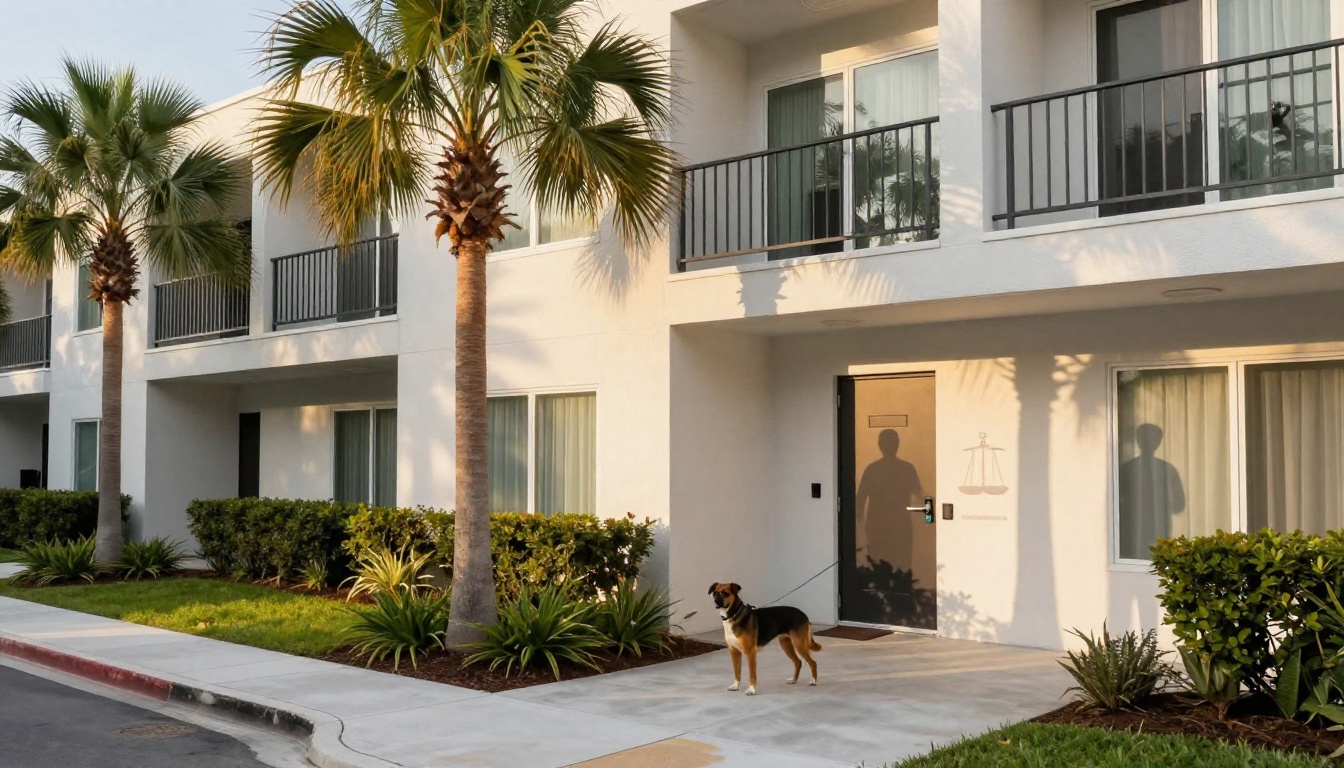
A tenant’s dog can change someone’s life in seconds. What looks like a routine walk through an apartment complex can end with stitches, infection, scars, and a long fight over who should pay.
In Florida, the dog’s owner is usually the first person on the hook. Still, Florida landlord dog liability can come into play when a landlord knew the risk and failed to act. That line matters if you were attacked at a rental home, condo, or apartment property.
The owner’s strict liability doesn’t automatically make the landlord liable
Florida gives dog bite victims a strong starting point against the owner. Under Florida Statute 767.04, owners are often strictly liable when a dog bites someone in a public place or while the person is lawfully on private property. In plain terms, the owner usually can’t escape liability by saying, “the dog never bit before.”
If you want a simple breakdown of that rule, Avard’s guide on strict liability for first-time dog bites in Florida explains why the old “one-bite” idea usually doesn’t control here.
Landlords are different. They are not automatically liable every time a tenant’s dog attacks someone. A landlord case usually depends on negligence, not strict liability. That means the focus shifts to notice, control, and whether the attack happened on property the landlord controlled.
As of March 2026, Florida has not made a major statutory change that rewrites this landlord rule. The core framework still comes from older Florida cases and general negligence law. Fault can also matter. Under Florida’s comparative fault statute, your recovery may shrink if the defense proves you share blame, and it may be barred if you were more than 50 percent at fault.
Bottom line: the dog owner may face strict liability, but landlord liability usually depends on what the landlord knew and what the landlord had the power to do.
That difference is why these claims often feel less like a simple dog bite case and more like a premises liability dispute.
The two issues that usually decide Florida landlord dog liability
Most landlord cases rise or fall on two points, knowledge and control.
First, did the landlord know the dog was dangerous? Prior bites, lunging, growling, written complaints, animal control reports, and lease violations can all matter. A vague claim that the dog “seemed mean” usually isn’t enough on its own. Stronger cases have a paper trail.
Second, did the landlord have the power to reduce the danger? That may mean enforcing pet rules, requiring removal of the dog, repairing broken gates, or even starting eviction steps. If the landlord had no real control, liability gets much harder to prove.
Florida courts have drawn this line for years. In White v. Whitworth, the court recognized that a landlord who knows about a dangerous dog on the premises may have a duty to take reasonable precautions. In Ramirez v. M.L. Management, landlord exposure turned on notice and a failure to act. On the other hand, Tran v. Bancroft reflects the usual rule that a landlord is generally not liable for an attack that happens off the landlord’s property.
This quick comparison shows where claims often stand:
| Factor | Why it matters | Example |
|---|---|---|
| Prior notice | Shows the landlord knew the dog posed a risk | Earlier complaints about lunging or threats |
| Power to act | Proves the landlord could reduce the danger | Lease allowed pet removal or eviction |
| Attack location | On-property attacks are much stronger | Hallway, stairwell, parking lot, shared yard |
| Rule violations | Supports negligence if ignored | Breed ban or pet limit was never enforced |
| Common-area control | Links the case to property duties | Unrestrained dog in a shared walkway |
The attack site often becomes the hinge of the case. If the bite happened in a common area, the same basic Florida premises liability duty of care principles may support the claim. If the dog attacked someone blocks away, the landlord usually has a much stronger defense.
Put simply, the landlord doesn’t become the dog’s backup owner. Liability usually appears only when the landlord had warning, had control, and let the risk keep growing.
Proof can make or break a tenant dog attack claim
These cases are won with records, not outrage. Memories fade fast, and property managers often move quickly after an attack.
Start with the scene. Photos of the location, blood, torn clothing, broken leash, open gate, or missing warning signs can help show how the attack happened. If the dog was loose in a common area, that detail matters. So does the exact address and unit number.
Next, lock down notice. Emails to management, text messages, prior tenant complaints, lease rules, incident reports, and animal control records can show the landlord knew the dog was a problem before the attack. One written complaint can change the feel of a case. Three complaints can change the whole case.
Medical proof matters too. A dog bite claim is only as strong as the treatment record behind it. Avard’s Florida dog bite medical records checklist is a useful guide for gathering ER records, follow-up care, infection treatment, scar care, and other key documents.
If management knew the dog had threatened people before, every written report matters more than any later excuse.
Don’t wait too long to act. Florida injury claims are subject to filing deadlines under Florida Statute 95.11. Delay can also cost you surveillance video, witness names, and leasing records that may disappear once everyone senses a claim coming.
One more point is easy to miss. Not every dog attack is a “bite” case under the statute. If the dog knocked you down or caused another injury without biting, the claim may lean harder on negligence and premises liability. That makes landlord notice and control even more important.
A landlord isn’t the automatic payer after every tenant dog attack. Still, Florida law can hold a landlord responsible when the danger was known, the property was under the landlord’s control, and no reasonable step was taken.
If you were hurt at an apartment complex or rental property, gather the paper trail fast. Then speak with Florida dog bite attorneys who can sort out owner liability, landlord fault, and where the strongest claim really sits.
Accountability often turns on what was known before the attack, not what gets said after it.