
Florida Lane-Change Sideswipe Crashes: How To Prove Blind-Spot Fault
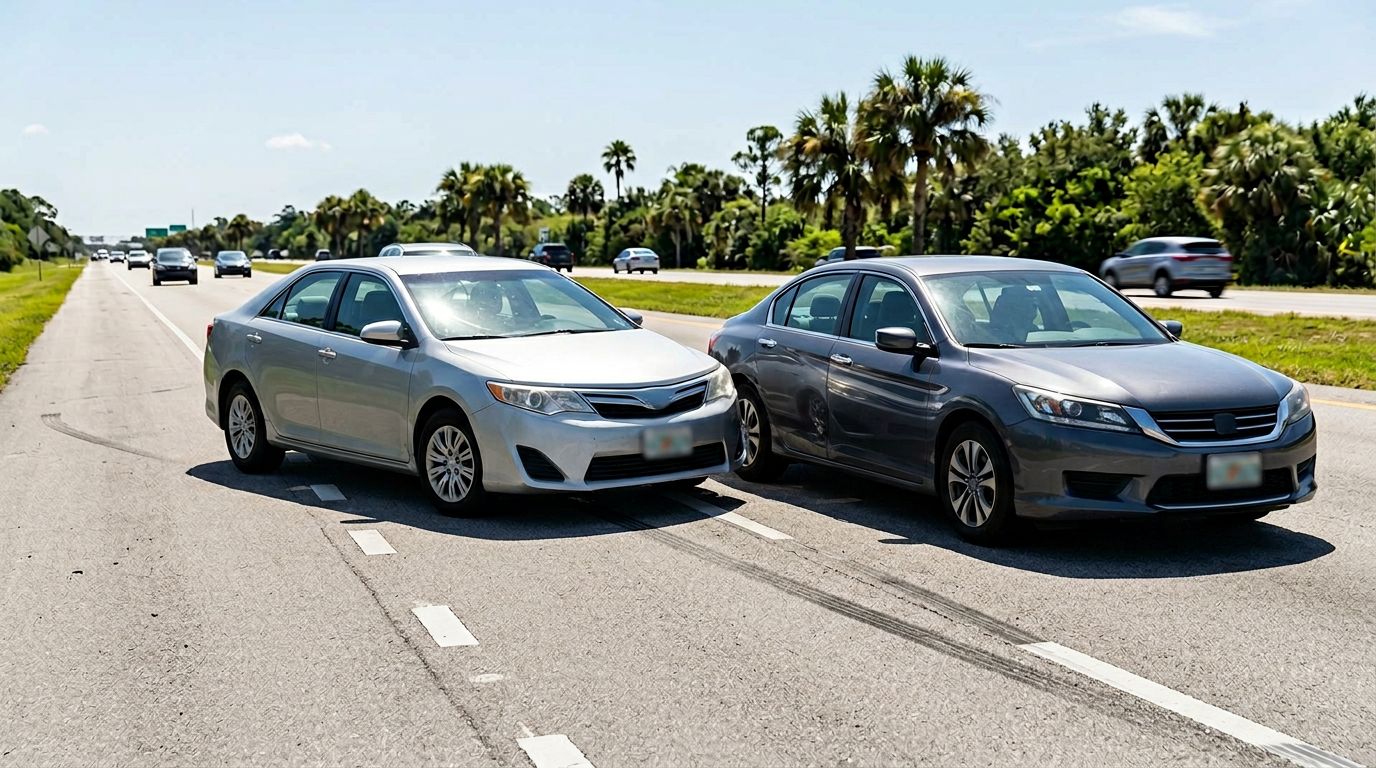
A sideswipe can feel minor at first, like two cars just “rubbed paint.” Then you see the crushed door, the neck pain, and the insurance finger-pointing. In a Florida lane change accident, fault often turns on one question: who moved into whose space?
Blind-spot crashes are tricky because they happen fast and leave few obvious clues. Still, they’re very possible to prove with the right evidence and the right timeline. Below is how these cases are usually won or lost in Florida, and what to do if the other driver claims, “I never saw you.”
Why lane-change sideswipes turn into fault fights
Most drivers picture a lane-change crash as simple: one car drifts over, the other gets hit. Real cases are messier because both cars often keep moving, both drivers may end up in the same lane, and each person swears they were “already there.”
Insurance companies also like sideswipes because they can argue shared blame. They’ll suggest you sped up, hovered in the other driver’s blind spot, or failed to avoid the impact. That matters because Florida uses a no-fault system for many injury claims at first, but fault becomes central once injuries are serious, damages exceed PIP, or you pursue compensation beyond basic coverage. If you need a refresher on how PIP works and when fault starts to matter, see Florida’s no-fault insurance after a car accident.
Blind spots add another layer. A blind spot isn’t an excuse, it’s a known danger. Think of it like the dark corner of a room. You don’t walk into it without checking, especially if you might collide with someone.
The legal focus usually comes down to ordinary care: a driver changing lanes must make sure the move is safe, signal when required, and yield to vehicles already occupying the lane. When they fail, a sideswipe often follows.
If the physical evidence shows your car was established in the lane, the lane-changer usually carries the blame, even if they say they “didn’t see you.”
What you must prove to show blind-spot fault
To hold the lane-changing driver responsible, you want proof that connects four ideas: duty, breach, causation, and damages. In plain terms: they had to change lanes safely, they didn’t, that failure caused the hit, and you were harmed.
The cleanest blind-spot fault cases tend to share a few proof points:
- Lane position: You were already traveling in your lane, not drifting or straddling lines.
- Timing: The other car initiated the lateral move, then contact happened quickly.
- Impact pattern: Damage starts near your front corner or door area, consistent with a merge into you.
- No safe gap: Traffic spacing shows there wasn’t room to move over.
- No signal or late signal: Video, witness statements, or admissions show they failed to signal (or signaled while already moving).
Small details matter. For example, if their front quarter panel hit your rear door, insurers may argue you “came into them.” On the other hand, if their rear quarter panel scrapes along your front fender and door, it often fits a story where they moved over into an occupied lane.
Also, don’t ignore what’s said at the scene. Drivers often blurt out the truth before they think about blame. “I didn’t see you” is basically a blind-spot admission. So is “I thought the lane was clear.” Those statements can support your claim when paired with objective evidence.
For a broader look at how Florida cases establish liability, including the role of reports, witnesses, and video, read how to establish fault after a Cape Coral car accident.
Evidence that helps prove a lane-change sideswipe (and how to lock it down)
The best proof often disappears within days. Skid marks fade. Vehicles get repaired. Camera footage gets overwritten. So the first goal is preservation.
One sentence before the table: this is the kind of evidence that typically decides a Florida lane change accident claim.
| Evidence source | What it can show | How to get it quickly |
|---|---|---|
| Dashcam video | Turn signal use, lane position, point of impact | Save the file immediately, back it up |
| Traffic or business cameras | The lane change and vehicle spacing | Request footage fast, many systems overwrite in days |
| Photos of both cars | Scrape direction, impact height, damage alignment | Take wide shots plus close-ups from multiple angles |
| Witness statements | Independent confirmation of who moved lanes | Get names and numbers at the scene |
| Police crash report | Diagrams, citations, recorded statements | Request as soon as it’s available |
| Vehicle data (if available) | Speed, braking, steering inputs | Preserve the vehicle, ask about downloads before repairs |
Photos deserve extra attention in sideswipes. Take shots that show where each car ended up, not just the dents. Include lane markings, shoulder distance, and any nearby signage. If you can safely do it, capture a short video walking around both vehicles while narrating the location and direction of travel.
Medical records matter, too. Even a “low-speed” sideswipe can cause shoulder, neck, and back injuries, especially with a door-area impact. Timely treatment helps your health and ties the injury to the crash.
If you suspect a nearby camera (gas station, condo gate, intersection), act quickly. A polite request sometimes works, but formal preservation letters can matter when footage is at risk.
For step-by-step guidance on what to do after a crash while evidence is fresh, including documentation and deadlines, review this guide to filing a Cape Coral car accident claim.
You can also learn how insurers define an improper lane change, which often lines up with the fact pattern in sideswipe claims, in what counts as an improper lane change.
How insurers try to shift blame in blind-spot crashes
Expect the adjuster to test a few common angles. First, they’ll say you lingered in the blind spot. Next, they’ll argue you accelerated to “block” the lane change. Finally, they might claim you could’ve avoided contact by braking or moving away.
Here’s the key: Florida fault isn’t just about what was possible in hindsight. It’s about whether each driver acted reasonably in the moment. A driver doesn’t get a free pass to merge into an occupied lane because you didn’t swerve onto the shoulder.
Fault percentage still matters a lot, though. Florida’s comparative fault rules can reduce what you recover, and in some cases can block recovery if the other side pins most of the blame on you. For a clear explanation of how percentages affect money in real claims, see Florida’s 51% fault rule.
Insurers also may attack your injuries, especially if you have prior neck, back, or shoulder issues. That doesn’t end your case, but it changes how you prove damages. Strong baseline records and careful wording can stop the “it was old” argument from taking over the claim. This resource on overcoming prior injury defenses in Florida crashes lays out what usually works.
For drivers who want to read statute language in one place, this page includes the text and analysis for Florida Statute 316.089. (Lane-change cases more often focus on signaling and safe movement, but insurers frequently mix in spacing and “safe driving” themes.)
Conclusion
A blind-spot sideswipe isn’t “just one of those things.” In many cases, it’s a preventable lane change made without a safe gap. The fastest path to proving fault is simple: preserve video, photograph both cars and lane lines, get witness contacts, and get medical care right away. If the other driver tries to rewrite the story later, objective evidence usually beats opinions. If you’re dealing with a disputed Florida lane change accident, getting help early can protect the proof that makes the difference.