
Florida Motorcycle Left-Turn Crash Claims: Proof Injured Riders Need
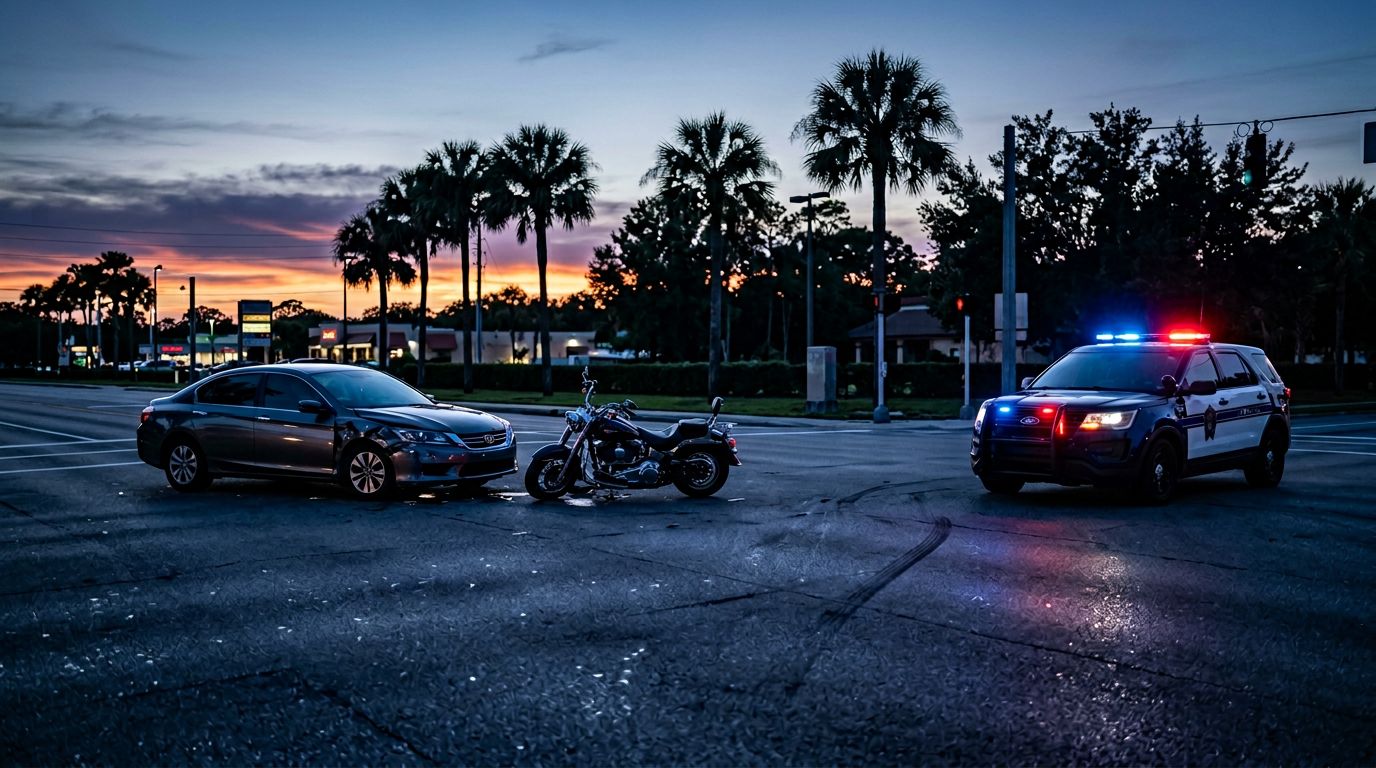
A driver says, “I didn’t see the motorcycle.” That line comes up again and again after left-turn wrecks in Florida.
When a car cuts across your lane, the crash happens in seconds. Then the blame fight starts. In a Florida motorcycle accident claim, strong proof often matters more than the driver’s excuse. That’s where your case either gains force or starts to slip.
Why left-turn motorcycle crashes are so hard fought
Left-turn crashes often happen at intersections, where details vanish fast. A skid mark fades. A witness leaves. Store video gets erased. Because of that, the first proof collected after the crash can shape the whole claim.
Florida’s latest full-year data available in early 2026 shows 8,696 motorcycle crashes and 549 deaths in 2025. Left-turn wrecks remain one of the most dangerous patterns because the rider has little space to react. The driver often claims the bike was speeding or “came out of nowhere.”
That defense matters because Florida uses modified comparative fault. If the insurer can push your share of fault above 50 percent, you may recover nothing. If they assign you less fault, your compensation drops by that percentage. So the real fight is not only over injury value. It’s also over who had the right of way.
In many left-turn cases, the rider must prove three points. First, the motorcycle was traveling lawfully in its lane. Next, the turning driver failed to yield. Finally, that failure caused the rider’s injuries and losses.
Because motorcycles usually fall outside Florida’s no-fault system, fault proof matters from day one. If you’re sorting out treatment costs, this guide on Florida motorcycle crash medical bills without PIP helps explain why riders often face pressure sooner than car occupants do.
In a left-turn case, the claim often turns on one issue: who had the right of way, and what proof locks that down.
The proof that gives a left-turn claim real weight
A strong claim reads like a clean timeline. It shows what happened before impact, at impact, and after impact.
This quick chart shows the evidence that usually carries the most weight:
| Evidence | Why it matters |
|---|---|
| Police report and scene photos | They pin down lane position, signals, damage, and witness names |
| Video and witness statements | They often show the turn, speed, and right-of-way better than memory alone |
| Medical records and bills | They connect the crash to your injuries and your financial loss |
Start with the crash scene. Photos of the intersection, turn lane, traffic lights, debris, gouge marks, and final vehicle positions can tell a clear story. Damage patterns matter too. A front-end hit to the bike and side damage to the turning car often support a failure-to-yield claim.
Next comes the police report. It may not decide fault by itself, but it often names witnesses, notes statements, and records whether the driver admitted turning left. If the officer diagram shows your lane and the vehicle’s turn path, that can become a key piece of leverage.
Video can be even better. Helmet cam footage, dashcam video, doorbell clips, and nearby business surveillance can cut through the usual blame shifting. In a busy Florida intersection, camera footage may exist even when no one mentions it at the scene. That’s one reason riders often move fast to preserve it.
Then there are witnesses. Independent witnesses help because they don’t have money on the line. Their value rises when they can describe the traffic light, the vehicle’s turn, and the motorcycle’s path before the crash.
Medical proof comes next, and it must stay consistent. ER records, imaging, follow-up visits, and physical therapy notes should line up with the mechanics of the wreck. If you struck the hood, windshield, or pavement, your records should reflect those forces. Gaps in care make insurers argue that something else caused your pain.
Lost wages, repair estimates, and out-of-pocket costs matter too. They show how the crash changed your daily life, not only your body.
If a passenger was also hurt, that person may have a separate claim. This page on injured motorcycle passenger claims in Florida explains how those rights can differ from the rider’s claim.
What insurers use against riders, and how to answer it
Insurance companies rarely admit a left-turn case is simple. Instead, they look for a way to move part of the blame onto the rider.
Speed is the first target. The insurer may argue the motorcycle closed the gap too fast for the driver to judge. They may also claim the rider changed lanes, lacked a working headlight, or entered on a stale yellow light. That’s why scene evidence matters so much. It gives those claims less room to grow.
Social media can hurt a case too. A photo of you standing at a barbecue may get used to downplay a broken wrist or back injury. Meanwhile, a quick recorded statement taken while you’re medicated can turn into a contradiction months later.
Another common mistake is fixing or selling the bike too soon. The damage can show angle of impact, point of contact, and force. Once that bike is gone, one of the best pieces of physical proof may be gone too.
Deadlines matter as well. Florida injury claims now face shorter filing windows than many riders expect, so waiting can cost more than evidence.
When the facts are contested, early legal help can make a real difference. A team that handles Florida motorcycle accident attorneys cases can send preservation letters, secure footage, inspect the bike, and frame the right-of-way issue before the insurer controls the story.
The bottom line for injured Florida riders
A left-turn crash can wreck your body, your bike, and your income in one moment. Still, the claim rises or falls on proof, not outrage.
Build the case early. Save the bike. Get the report. Lock in witnesses. Keep your medical care consistent.
If a driver turned left in front of you, don’t let “I didn’t see the motorcycle” become the final word.