
Florida Mall Slip and Fall Claims: What Really Proves Notice
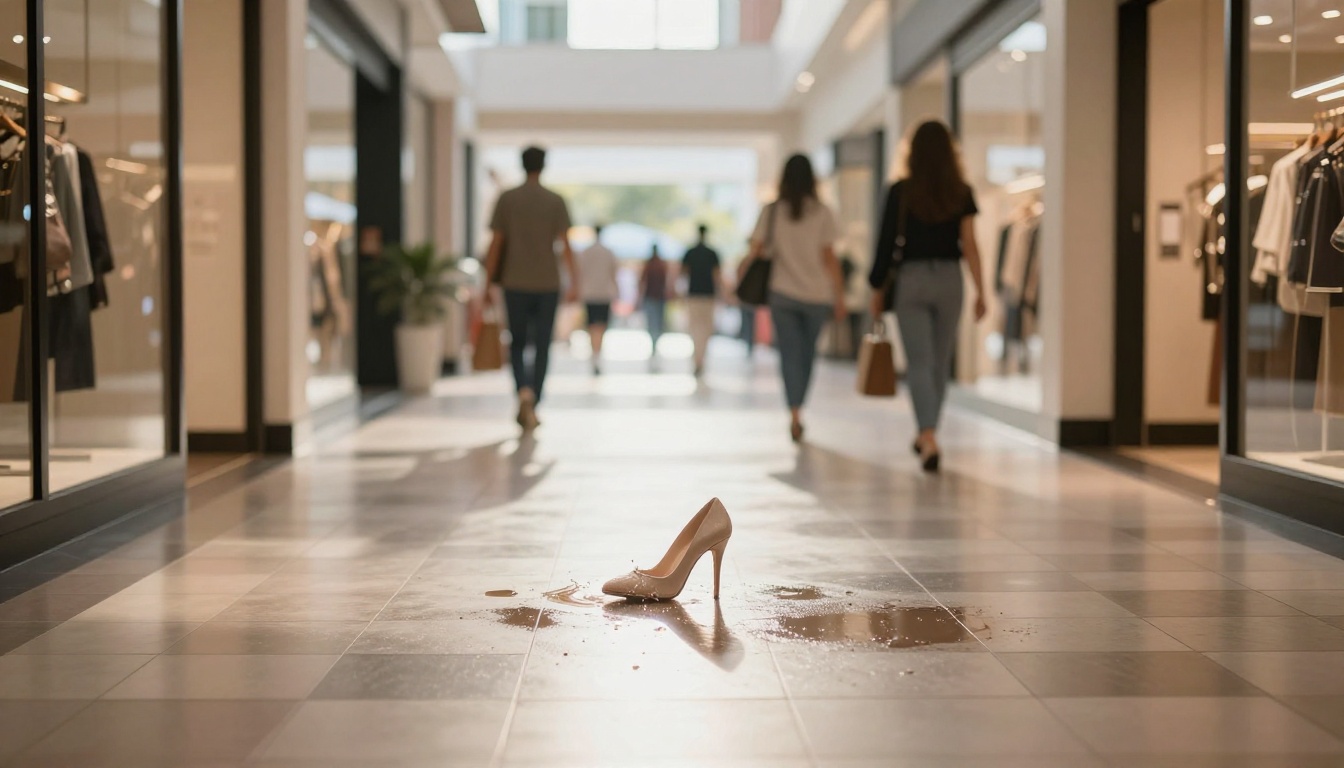
A hard fall at a Florida mall can leave you with pain, bills, and a simple question: who should pay? In most florida slip and fall claims, the answer turns on notice. In plain terms, did the mall know about the danger, or should it have known?
That point matters because a fall, by itself, does not prove negligence. A mall is expected to use reasonable care for shoppers, but it is not an automatic insurer of every accident. As of March 2026, that rule has not changed. For spills and other temporary hazards, Florida law still focuses on actual or constructive knowledge under Florida Statute 768.0755.
Why notice controls mall slip and fall claims
In a mall case, notice is the hinge on the door. If it swings your way, the claim may move forward. If it does not, the case can stall fast.
Most mall falls involve a “transitory foreign substance.” That usually means something temporary, like rainwater, a dropped drink, food court grease, or a slick restroom floor. Florida law requires the injured person to prove the business had actual or constructive knowledge of that hazard and failed to act.
Actual notice is the cleaner path. Maybe a janitor saw the spill. Maybe a store employee got a complaint. Maybe security footage shows staff walking past the puddle twice. If the mall knew and did nothing, that can support liability.
Constructive notice is more common. It means the evidence shows the mall should have known. A spill with dirt, cart tracks, or footprints may suggest it sat there long enough to be found. A leak near the same skylight every rainy day may show a recurring condition.
In mall cases, the fight is rarely over whether you fell. The fight is over what the property knew, and when it knew it.
This fits the broader rules of Florida premises liability duty of care. Because shoppers are invitees, malls must inspect, fix hazards, or warn people in time. Still, they often argue the danger appeared seconds before the fall, or that it was open and obvious.
That is why timing matters so much. A puddle can disappear with one mop pass. The proof has to outlast the cleanup.
What evidence can prove actual or constructive notice
Good mall claims are built like brick walls, one solid fact at a time. Photos, video, logs, and witness statements often matter more than angry opinions.
This quick table shows the proof that usually carries the most weight:
| Evidence | What it may prove | Mall example |
|---|---|---|
| Surveillance video | Staff saw the hazard, or the condition sat too long | Security footage shows a spill near the food court for 20 minutes |
| Witness statements | Earlier complaints or prior near-falls | Another shopper says she warned guest services before your fall |
| Condition of the substance | The hazard was old enough to be discovered | Dirty water with footprints near a main entrance |
| Inspection or cleaning logs | Missed checks or weak inspection practices | No hallway inspection recorded during a busy lunch hour |
| Prior complaints or work orders | The condition happened often | Repeated reports of a leaking drink machine or slippery tile |
| Photos of the scene | Lack of warning signs, lighting, and layout | No cones, no mats, poor lighting, slick tile |
The takeaway is simple: the best proof shows how long the danger existed, or how often it happened.
Start with the floor itself. A clear, fresh splash looks different from a puddle that has turned gray and tracked across the tile. The older the condition looks, the stronger the constructive notice argument may become.
Next, think about patterns. Malls are full of repeat trouble spots. Rain gets blown into entryways. Food courts drop drinks. Restroom sinks overflow. Loose mats bunch near polished floors. When the same danger keeps showing up in the same place, the mall cannot act surprised every time.
Inspection records also matter. If a mall says, “We check every 15 minutes,” the logs should match that story. Gaps, missing entries, or back-filled records can hurt the defense. So can witness testimony from kiosk workers, cleaners, or nearby shoppers.
Not every mall fall involves a spill. Some cases involve uneven flooring, broken pavement, loose thresholds, or hidden height changes in parking areas. Recent Florida results still show that code-related defects can support constructive notice when the condition was visible and had existed long enough to be fixed.
Because evidence fades quickly, the first day often matters most. A practical Florida slip and fall evidence checklist can help you protect photos, shoes, clothing, receipts, and witness names before the scene changes. Also, many surveillance systems overwrite footage in as little as 7 to 30 days, so delay can cost you the strongest proof.
What hurts a claim, and what to do right after the fall
Even strong florida slip and fall claims can weaken if the early steps go wrong.
First, report the fall right away. Ask for a manager. Get the location, time, and hazard documented. If possible, request that the mall preserve all video from the area. This is often easier if you understand how to secure a Florida slip and fall incident report while the facts are fresh.
Second, do not guess. If you do not know how long the spill was there, say that. If you are not sure whether the puddle came from rain or a drink, do not fill in the blanks. Guessing gives the defense room to attack your credibility later.
Third, get medical care quickly. Pain can show up hours later, but late treatment creates doubt. A clean medical timeline helps tie the injuries to the fall.
Mall owners also raise common defenses. They may argue the hazard was open and obvious. They may say you were looking at your phone. They may blame your shoes. Florida’s modified comparative fault rule matters here. If you are found more than 50 percent at fault, recovery can be barred. If your share is lower, compensation may be reduced.
Time matters, too. For many negligence cases, Florida’s filing deadline is now two years. That may sound like plenty of time, but it is not. Video disappears first. Witness memory fades next. Paperwork goes missing after that. A claim can weaken long before the legal deadline arrives.
Conclusion
In mall cases, notice is the make-or-break issue. To recover, you usually need proof that the mall knew about the hazard or should have found it before you fell. The strongest claims move fast, preserve video, lock in witness details, and create a clear paper trail from the scene to the medical records. When the floor gets cleaned, the evidence should still speak for you.