
Misdiagnosis Vs Delayed Diagnosis In Florida Malpractice Claims
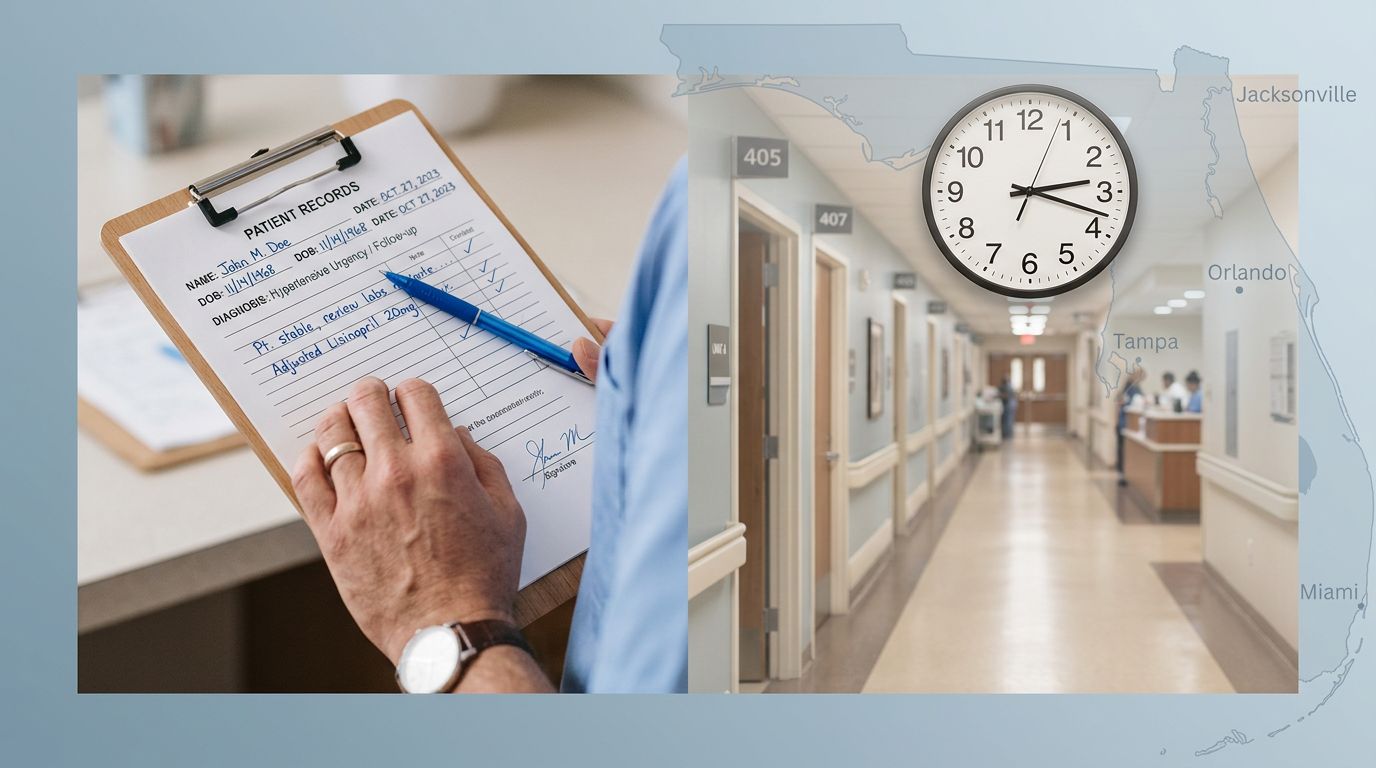
A diagnosis is supposed to be the map that points treatment in the right direction. When that map is wrong or arrives too late, patients can lose time they can’t get back.
In Florida misdiagnosis malpractice cases, the hardest part often isn’t naming the mistake. It’s proving the mistake broke the medical standard of care and caused harm that would’ve been avoided with proper care. Misdiagnosis and delayed diagnosis can both qualify, but they don’t play out the same way in evidence, timelines, or damages.
Below is how Florida claims usually separate these two errors, what you must prove, and where deadlines can quietly ruin an otherwise strong case.
Misdiagnosis vs delayed diagnosis, what’s the difference that matters in court?
People use these terms interchangeably, but in a lawsuit the difference can change the story of what went wrong.
Think of a medical diagnosis like a traffic signal. A misdiagnosis is the wrong light, it sends you down the wrong road. A delayed diagnosis is the right light that turns green too late, you still get where you’re going, but after the crash.
Here’s a quick side-by-side view.
| Issue | What it means | Typical harm pattern | Common evidence focus |
|---|---|---|---|
| Misdiagnosis | Provider identifies the wrong condition | Wrong treatment, missed treatment, avoidable complications | What a competent doctor should’ve considered and ruled out |
| Delayed diagnosis | Correct condition found, but too late | Disease progression, fewer options, harder recovery | How earlier diagnosis likely changes outcome |
| Failure to diagnose | Condition is missed entirely | No treatment until symptoms force discovery | Missed red flags, ignored complaints, no follow-up |
| “Bad outcome” without negligence | Treatment fails despite proper care | Harm may still occur | Whether care met accepted medical practice |
Florida law doesn’t punish a provider for every wrong call. Medicine involves judgment. A claim usually turns on whether a reasonably careful provider would’ve ordered tests, referred out, read results correctly, or taken symptoms seriously.
If you want a deeper look at how courts frame diagnostic negligence, see Avard Law’s breakdown of what proves misdiagnosis as malpractice in FL.
A diagnostic error becomes malpractice when the harm flows from a preventable lapse, not just from a tough case.
What you must prove in a Florida diagnostic error malpractice claim
Whether it’s misdiagnosis or delayed diagnosis, Florida cases tend to rise or fall on the same core elements. You need proof of duty, breach, causation, and damages. The details inside each element are where these cases get demanding.
Standard of care and breach. The standard of care asks what a reasonably careful provider in the same field would’ve done. In diagnostic cases, breach might look like failing to order a basic test, dismissing symptoms without a workup, misreading imaging, or not following up abnormal results. Florida also has rules about expert qualifications and how plaintiffs prove medical negligence. The official statute that lays out the standards and expert witness framework is F.S. 766.102 on Online Sunshine.
Causation (the “so what?” question). This is where delayed diagnosis differs from misdiagnosis in practice. With misdiagnosis, you often show the wrong treatment caused a new injury or allowed the real condition to worsen. With delayed diagnosis, you usually have to prove a “lost chance” type of harm, meaning earlier detection would more likely than not have improved the outcome. That proof almost always depends on timeline evidence and expert opinion.
Damages. Florida damages often include added medical bills, future care, lost income, and pain and suffering. In a delayed diagnosis, damages may tie to harsher treatment (chemo instead of surgery, amputation instead of antibiotics, long-term disability instead of full recovery). In a misdiagnosis, damages may include harm from unnecessary procedures or medications.
To understand what records and testimony typically support these elements, review evidence for Florida medical malpractice claims. It’s a good checklist of what attorneys and experts usually look for first.
Deadlines and procedural traps that hit misdiagnosis and delayed diagnosis cases
Florida’s deadlines can feel unfair in diagnostic cases because symptoms may build slowly. Still, courts enforce time limits strictly, even when the medical story takes years to surface.
In most Florida medical malpractice cases, you generally have two years from when you knew, or should’ve known, that malpractice likely caused harm. Florida also has a hard stop in many cases, often four years from the negligent act, with narrow exceptions (such as fraud or concealment). Delayed diagnosis claims can collide with that four-year cutoff because patients may not learn the truth quickly.
Just as important, Florida requires a pre-suit process. That process can include a pre-suit investigation, expert support, and formal notice steps before filing. Those steps take time, and waiting until the last minute can box you in.
Avard Law’s plain-English guide to Florida med mal statute of limitations explains how the discovery rule and the statute of repose can affect real patients, especially in cancer and internal injury cases.
If you’re trying to confirm where to read Florida statutes directly, the Florida Legislature publishes them on Florida Statutes on Online Sunshine.
A few practical moves can protect your options early:
- Request complete records: Get hospital records, imaging, lab results, and patient portal messages.
- Get a second opinion: Another provider may identify what was missed and when it should’ve been caught.
- Write down the timeline: Symptoms, visits, tests ordered (or not ordered), and when you learned the correct diagnosis.
Conclusion
Misdiagnosis and delayed diagnosis can both support a malpractice claim in Florida, but the proof usually looks different. Misdiagnosis often centers on wrong treatment, delayed diagnosis often centers on lost time and worse outcomes. Either way, timing and expert-backed evidence decide whether a claim stands up.
If you suspect a diagnostic error, act like the clock is running, because it is. The earlier you gather records and get legal advice, the more control you keep over your next steps.