
Florida Multi-Car Pileup Claims Proof Checklist For Not-At-Fault Drivers
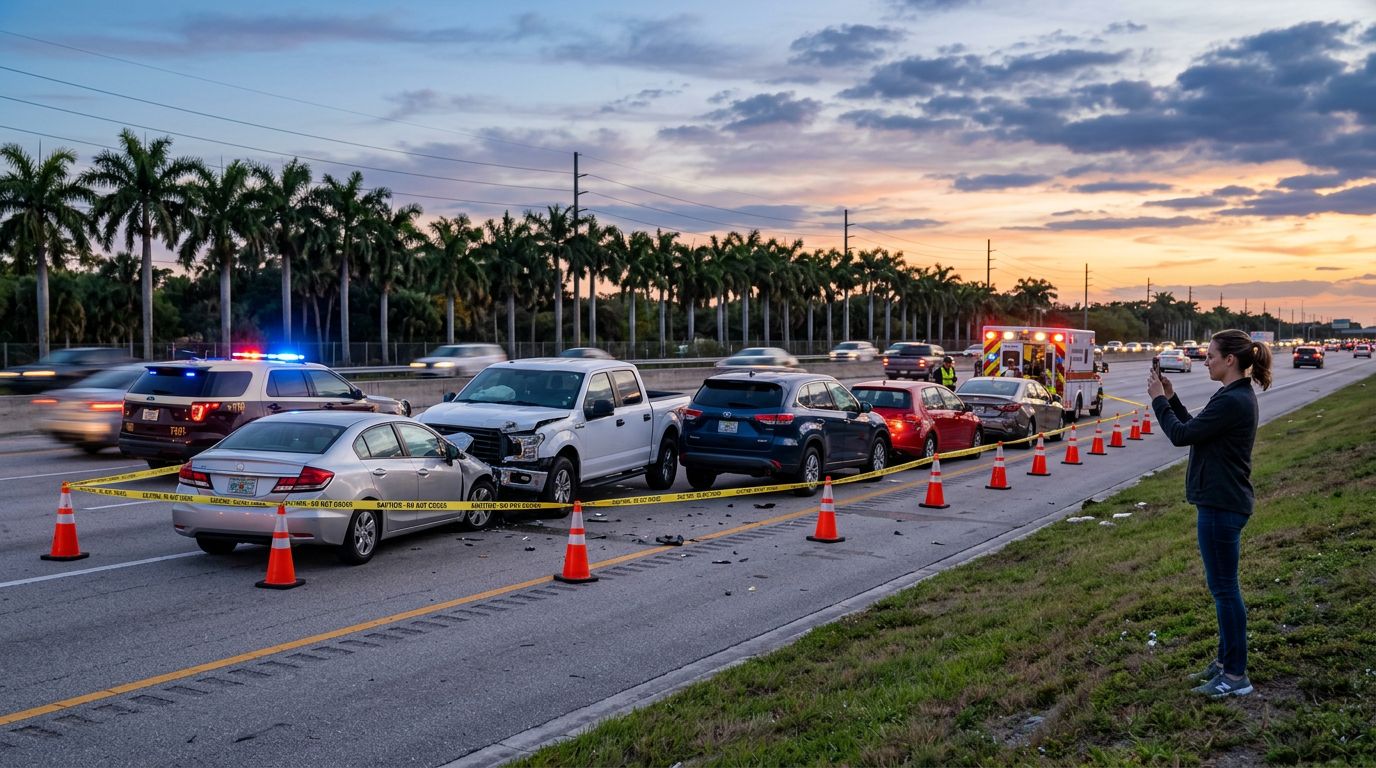
A multi-car pileup can feel like a dropped stack of dominoes, loud, fast, and hard to explain later. Even when you did nothing wrong, the story can get messy within hours. Drivers disagree, witnesses leave, and insurance companies start looking for shared blame.
If you’re building Florida multi-car accident claims, proof matters more than opinions. The goal is simple: lock in the facts early, protect your medical rights, and gather the records that insurers rely on when money is on the table.
The first 24 hours: protect your health and capture the scene before it changes
In a pileup, evidence disappears quickly. Cars get towed, debris is cleared, and skid marks fade. So, the first day is about preserving what the crash looked like and what you felt, while it’s still fresh.
Start with safety and a 911 call. Then get medical care the same day if you can. Pain often shows up later, but delays create doubt. Florida’s own guidance on post-crash steps is a helpful baseline in the moment, see FLHSMV guidance for drivers involved in a crash.
Next, document the scene like you’re telling a story to someone who wasn’t there. Wide photos matter more than close-ups at first. Get the lane layout, traffic signals, road work signs, and the resting positions of all vehicles. Also photograph each car’s damage from all angles, because impact points help explain the chain reaction.
One detail that’s unique to pileups is sequence. Write down, in plain words, what you remember: “hit from behind, then pushed into the car ahead,” or “swerved to avoid debris, then got struck.” That timeline helps later when other drivers try to reverse roles.
Here’s a quick reference table for the proof that usually moves the needle:
| Proof to collect | Best source | Why it helps in pileups |
|---|---|---|
| Scene photos and video | Your phone, witness phones | Shows positions, lane markings, visibility, and impact pattern |
| Witness names and numbers | Bystanders, other drivers | Neutral accounts can break the “everyone blames everyone” loop |
| Driver and insurance info | Exchange at scene | Prevents delays and “wrong policy” excuses |
| Police report number | Responding agency | Anchors date, parties, citations, and initial diagram |
| Medical visit records | ER, urgent care, doctor | Connects injuries to crash timing, not “something else” |
For a deeper, Florida-focused records list (especially for the first week), use this internal guide: Cape Coral crash evidence proof checklist.
If you only do one thing today, get clear photos and get evaluated by a medical provider. Those two steps often decide whether your claim feels “real” to an adjuster later.
Proving you’re not at fault when multiple drivers point fingers
Pileups create a predictable problem: everyone agrees there were impacts, but nobody agrees on cause. Your job is to prove the trigger event and your place in the chain.
Insurance companies often start with simple questions that hide bigger ones. “Did you stop suddenly?” can really mean “Can we blame you for the rear-end?” “Were you changing lanes?” can really mean “Can we split fault across drivers?” In multi-vehicle crashes, these small details add up.
Focus your proof on three areas:
First, impact order. Damage patterns (rear damage followed by front damage, for example) often support “I was pushed.” Your photos, tow yard photos, and repair estimates can help show this.
Second, lane and right-of-way facts. A pileup may start with a sudden lane change, an illegal stop, or a driver who followed too closely. Roadway context matters, so capture signs, merge arrows, and any blocked views.
Third, independent documentation. Ask witnesses what they saw, but don’t coach them. Also look for nearby businesses with cameras. If you have dash cam footage, save the original file and a backup.
Fault rules matter because Florida reduces compensation when you share blame. In newer cases, the “more than half at fault” issue can become a deal-breaker, not just a discount. This internal explanation helps frame that risk: Florida 51% fault rule and car crash compensation.
Also, don’t sleep on official records. Once it’s available, order the crash report and review it for errors. If you need the official source, Florida provides instructions here: Florida Traffic Crash Reports request page. If you want to understand how Florida standardizes crash reporting (including diagrams and codes), the Florida Uniform Traffic Crash Manual gives useful context.
Damages proof for Florida multi-car accident claims: medical bills, PIP, wages, and daily limits
Even when liability is clear, insurers still ask a second question: “What did this crash cost you?” That’s where many not-at-fault drivers lose value, not because they lack injuries, but because they lack documentation.
Florida’s no-fault rules usually push your first medical payments through your own policy. That system confuses people, especially when the other driver obviously caused the crash. If you need a plain-English refresher, start with Florida no-fault car insurance explained.
Two practical issues come up fast in pileup cases:
- Timing of treatment: if you wait, the insurer argues your pain came from “life,” not the crash.
- PIP billing and paperwork: mistakes can shrink what gets paid, even when care is real.
This internal resource breaks down common PIP payment traps and how to fix them: Florida PIP medical benefits after a Cape Coral crash.
Treat the first two weeks like a proof window. Missed appointments and gaps in care become talking points for the insurer.
Wage loss needs the same approach. Get an employer letter with dates missed and your pay rate. If you’re self-employed, pull invoices, bank deposits, and a simple calendar of canceled work.
Finally, document daily limits without turning it into a diary novel. A short weekly note works: what you couldn’t do, what hurt, what improved, what didn’t. Add a few photos if they show braces, swelling, or visible bruising changes.
When it’s time to present your claim, organization helps you get taken seriously. This internal guide shows how to package records so adjusters can evaluate faster: Cape Coral car crash demand package guide.
Conclusion
Pileups create noise, confusion, and finger-pointing. Still, not-at-fault drivers can protect their cases by collecting early scene proof, locking down the crash report, and keeping clean medical and wage records. If you treat your claim like a file that must tell a clear story, Florida multi-car accident claims get easier to prove and harder to minimize.
If you’re facing pushback or shared-fault accusations after a pileup, get legal guidance before you give detailed statements or accept a quick settlement.