
Florida Car Accident Property Damage Release Traps That Cut Injury Money
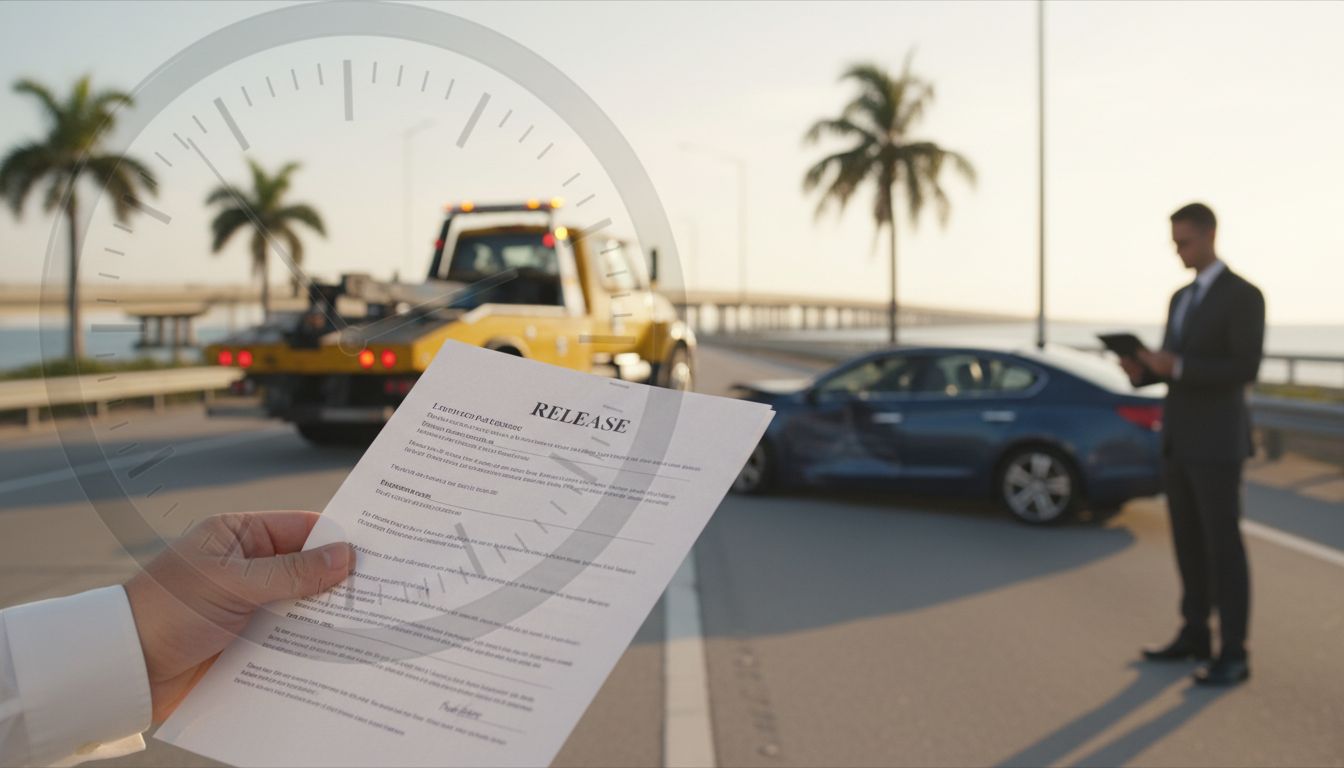
The tow truck leaves, the rental clock starts, and the adjuster sounds friendly. Then a document shows up with a simple pitch: “Sign this so we can pay for your car.” That’s where many people lose real money.
A Florida property damage release can be fair, but it can also be a quiet trap. Some forms are written so broadly that they wipe out injury rights, reduce what an insurer later pays, or hand the insurance company new arguments.
If you’re hurt, even “a little,” treat any release like a loaded tool. It can fix a problem, or it can take your fingers with it.
What a Florida property damage release is (and why it shows up so fast)
A release is a contract. In plain terms, you get paid, and you give up certain rights. The problem is that “certain rights” can be drafted to mean “almost everything.”
Most property damage claims move faster than injury claims. Vehicle repairs and total loss values can be estimated quickly. Injuries often take weeks or months to understand. Adjusters know that timing gap creates pressure, especially when you need a car to work.
Some carriers use that pressure to slide in broad language while calling it “property-only.” That’s why reading every line matters, including the fine print on e-sign portals and check endorsements.
Here’s a quick way to think about common documents you might see:
| Document you’re asked to sign | What it’s supposed to cover | Hidden risk that can cut injury money | Safer approach |
|---|---|---|---|
| Property damage release | Repair or total loss payment | “All claims” wording can include bodily injury | Demand “property damage only” language |
| “Full and final” release | One payment to close the claim | Can end both property and injury claims | Don’t sign until injuries are valued |
| Release with “hold harmless” | Payment plus extra legal language | Can shift blame for liens or later claims | Remove or limit indemnity terms |
If you want to understand how a settlement release is commonly structured, see a sample format like the one described in Settlement Agreement and Release (Florida). Even “standard” releases often include broad, case-closing terms unless they’re narrowed.
The most common Florida property damage release traps that hurt injury claims
A bad release doesn’t always say “injury” in bold letters. Instead, it uses broad phrases that do the same work.
Trap 1: “All claims arising out of the crash.”
That phrase can cover bodily injury, lost wages, future care, and pain and suffering. Once you sign, the insurer may say your injury claim is over, even if you never discussed it.
Trap 2: “Known and unknown injuries.”
Soft tissue injuries, concussions, and back problems can show up later. A release that includes unknown injuries tries to lock you out before you know the full picture.
If the release language reaches beyond the car, it can reach beyond the check.
Trap 3: “Indemnify and hold harmless.”
This language can shift risk to you. For example, if another person later claims damage tied to the crash, the insurer may point to the release and demand you protect them. Even when that demand doesn’t stick, it can become leverage in negotiations.
Trap 4: Payment credits that reduce later injury payouts.
Some documents let the insurer claim a credit or offset later. In other words, money paid for the car becomes an argument to pay less for the injury.
Trap 5: Check endorsements and portal clicks that act like a release.
Sometimes the release is on the back of a check, or it’s wrapped into an online “accept payment” button. People sign without seeing the full text. Always ask for a PDF copy before you accept anything.
Trap 6: Forms tied to license or financial responsibility issues.
After certain crashes, people may hear they need a “release” form for state purposes. One example is the DHSMV release form language that states it releases claims for “damage, injury or loss.” You can see an example of that broad wording in this copy of the Florida DHSMV release form for property damage/injury. Don’t assume a form is “just paperwork” if it contains global release language.
How to protect your injury money before you sign anything
First, slow the process down enough to protect yourself. The car feels urgent, but the injury claim is often the larger claim. A rushed signature can close the door on the bigger room.
Start with three practical moves:
- Ask for a “property damage only” release in writing.
Request language that limits the release to vehicle damage (and rental, towing, storage if applicable). Make them confirm it covers only property damage tied to your vehicle claim number. - Cross-check the release against your real situation.
If you had any of these, treat a release as high risk: ER or urgent care visit, PT referral, missed work, numbness, headaches, shoulder or back pain, or a prior injury that could flare up. Insurance companies often blame symptoms on old issues, so your paperwork has to be clean. (For proof-gathering in the first week, use this Cape Coral crash evidence checklist.) - Keep the injury claim separate, and document that separation.
If you must settle property damage now, add a short sentence that reserves injury rights. For example, you can ask to include a clause that says the agreement does not release bodily injury claims, medical expenses, wage loss, or pain and suffering.
Next, protect your negotiating position. Florida’s fault rules can also shape what you recover, so avoid statements that hand the insurer an easy “shared blame” argument. A release sometimes includes language that suggests you accept partial responsibility. Before you sign anything that talks about fault, read how the threshold works under Florida’s 51 percent fault rule.
Finally, don’t let property damage paperwork distract you from building the injury claim. Strong claims are organized claims. Medical records, imaging, and wage proof should line up with the crash timeline. When you’re ready to present the full case, this guide on building a strong demand for crash damages explains what typically moves settlement offers.
If the insurer lowballs your vehicle value, don’t “trade” injury rights just to get a better car number. Use a process that challenges the estimate without risking the injury claim, like the steps in disputing an insurance valuation after a Florida crash.
Conclusion
A Florida property damage release should pay for property damage, not quietly erase an injury case. Before you sign, read for “all claims” language, unknown injury wording, and hold harmless terms. Then insist on a narrow, property-only agreement that keeps injury rights intact.
The fastest check often comes with the highest strings. Protect your injury money first, because once a release closes the claim, reopening it is rarely an option.