
Florida Store Restroom Slip And Fall Claims Proof Checklist
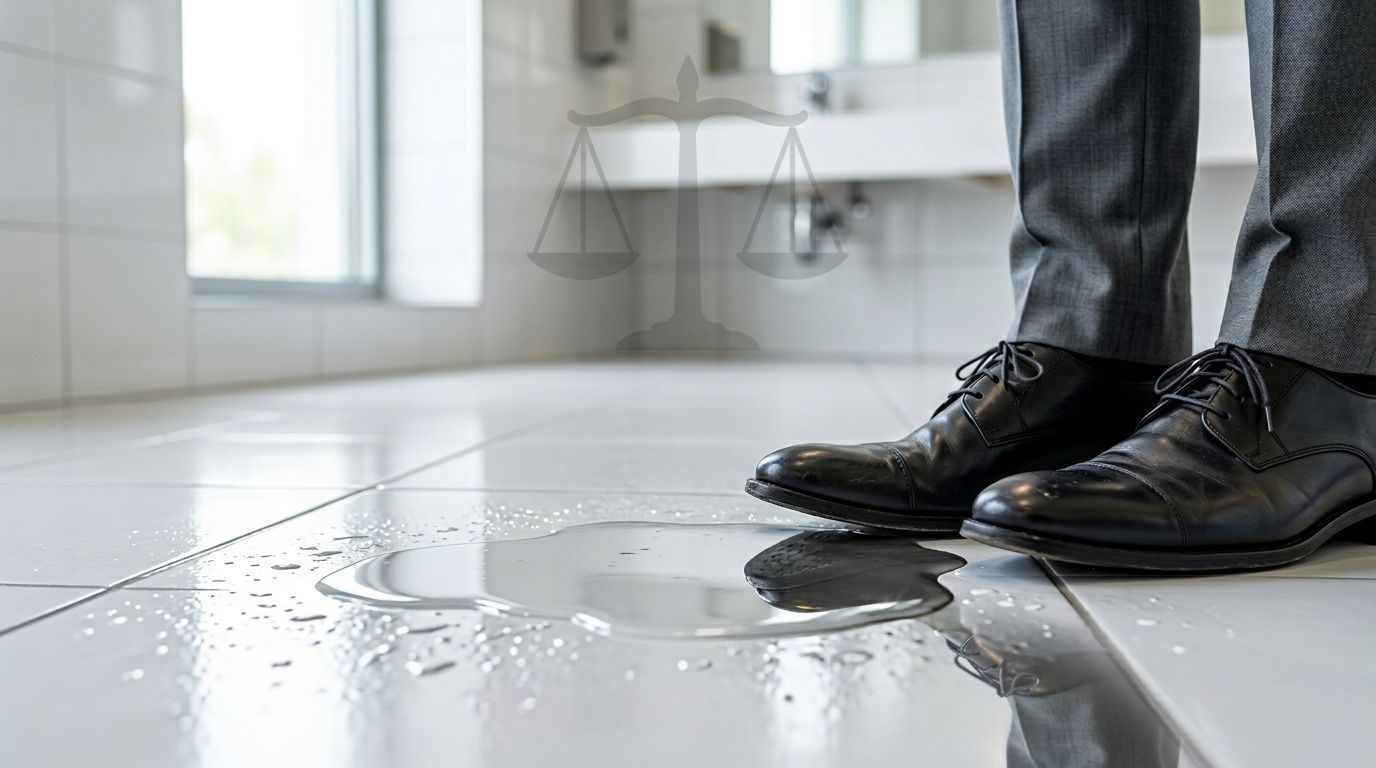
One wet restroom tile can turn a quick shopping trip into months of pain. If you fell in a Florida store bathroom, the hard part isn’t only the injury. It’s proving the store knew, or should’ve known, the floor was dangerous.
In Florida slip and fall claims, embarrassment fades fast, but missing evidence can sink the case. Start with the proof that matters most.
What a Florida Store Restroom Claim Must Show
A store owes customers reasonable care, and that duty covers the restroom too. If you want the broader legal backdrop, see Florida premises liability duty of care. Still, restroom cases usually turn on one narrow issue, notice.
As of March 2026, the core rule hasn’t changed. Under Florida Statute 768.0755, a person hurt by a transitory foreign substance must prove the business had actual or constructive knowledge of the hazard and failed to fix it or warn about it.
Actual notice means staff knew about the problem. Maybe an employee saw water near the sinks. Maybe another shopper warned the cashier about soap on the floor. Sometimes the store created the danger by mopping and leaving the tile slick without enough warning.
Constructive notice is more common, and stronger when the physical proof tells a clear story. Dirty water, footprints, cart tracks, soaked paper towels, or a long-running leak can show the hazard sat there long enough to be found. A recurring overflow, broken sink, or dripping soap dispenser can also show the problem wasn’t new.
You still need to connect the fall to your injuries. Medical records, work losses, and pain complaints help show the restroom hazard caused real harm, not a brief scare. A hard fall with weak proof is still a weak claim.
In most store restroom cases, the fight isn’t over whether you fell. It’s over what the store knew, and when.
The Proof Checklist That Carries the Most Weight
Time matters because restroom conditions change fast. A mop, a cone, or a wiped floor can rewrite the scene in minutes.
This is the proof that usually carries the most weight:
| Evidence | Why it matters | Restroom example |
|---|---|---|
| Photos and video | Shows the floor, lighting, and warnings | Wet tile by sinks, no cone in view |
| Incident report | Creates a time-stamped record | Manager logs the fall and location |
| Witness details | Supports notice and cause | Shopper says staff knew about the leak |
| Condition of the substance | Helps show how old it was | Dirty water with footprints or tissue |
| Video or cleaning logs | Shows inspections and missed checks | No restroom check during a busy hour |
| Medical and wage records | Proves the fallout from the injury | ER visit, missed shifts, follow-up care |
The pattern is simple. Good evidence shows the hazard, the store’s notice, and the damage that followed.
Start with your phone. Take wide shots first, then close-ups. Capture the sink area, stalls, entry path, trash cans, warning signs, lighting, and any leak source. If you slipped near a freshly mopped area, photograph the cone placement, because a sign tucked behind a door may help you more than the store.
Next, report the fall before you leave, if you can. Ask for the manager’s name, the report number, and confirmation that video from the area will be kept. This guide on getting a slip and fall incident report fast explains how to lock down that paper trail while the facts are fresh.
Also preserve the items you wore. Don’t wash your shoes or clothing. Water spots, soap residue, or dirty streaks may help show what was on the floor. Keep your receipt, loyalty app history, or bank record too, because it places you at the store at the right time.
Meanwhile, get witness names and phone numbers yourself. Don’t assume staff will keep track of them. Ask for the names of any employees who cleaned the restroom or responded right after the fall. Nearby cameras outside the restroom can matter too, because they may show staff walking in and out before the fall. If you need a broader plan, this Florida slip and fall evidence checklist can help you protect the first 72 hours, when the best proof often disappears.
Common Mistakes After a Store Restroom Fall
Small mistakes can weaken strong Florida slip and fall claims. First, don’t guess. If you don’t know how long the puddle was there, say so. If you aren’t sure whether it was water, cleaner, or soap, don’t fill in the blank. A rushed guess can hurt later if video or witness statements tell a different story.
Also, don’t play tough. Many people say, “I’m okay,” because they’re shocked or embarrassed. Hours later, the pain shows up. Insurance companies love that gap. Get medical care quickly, follow up, and tell the doctor every symptom, even if it seems minor at first.
Another mistake is cleaning away evidence. Was your shoe wet? Were your pants stained? Did you throw out the receipt? Those details matter. A claim is a lot like a receipt, each loss needs backup.
Be careful with recorded statements too. Short facts beat long explanations. Social media can cause trouble as well. A smiling photo later doesn’t prove you weren’t hurt, but the defense may still use it that way. Stores also push blame by saying the floor was obvious, you were distracted, or a warning sign was nearby. The longer you wait, the more room the other side has to rewrite what happened.
When the Floor Gets Cleaned, Your Proof Should Remain
A store restroom fall claim is won with proof, not outrage. The strongest cases show the hazard, the store’s notice, the injury, and the losses with a clean paper trail.
If a restroom fall left you hurt, act before the floor dries and the footage disappears. A prompt legal review can show whether the store had notice and whether your claim has real value.