
Florida Road Debris Crashes: How to Prove Who Caused the Wreck
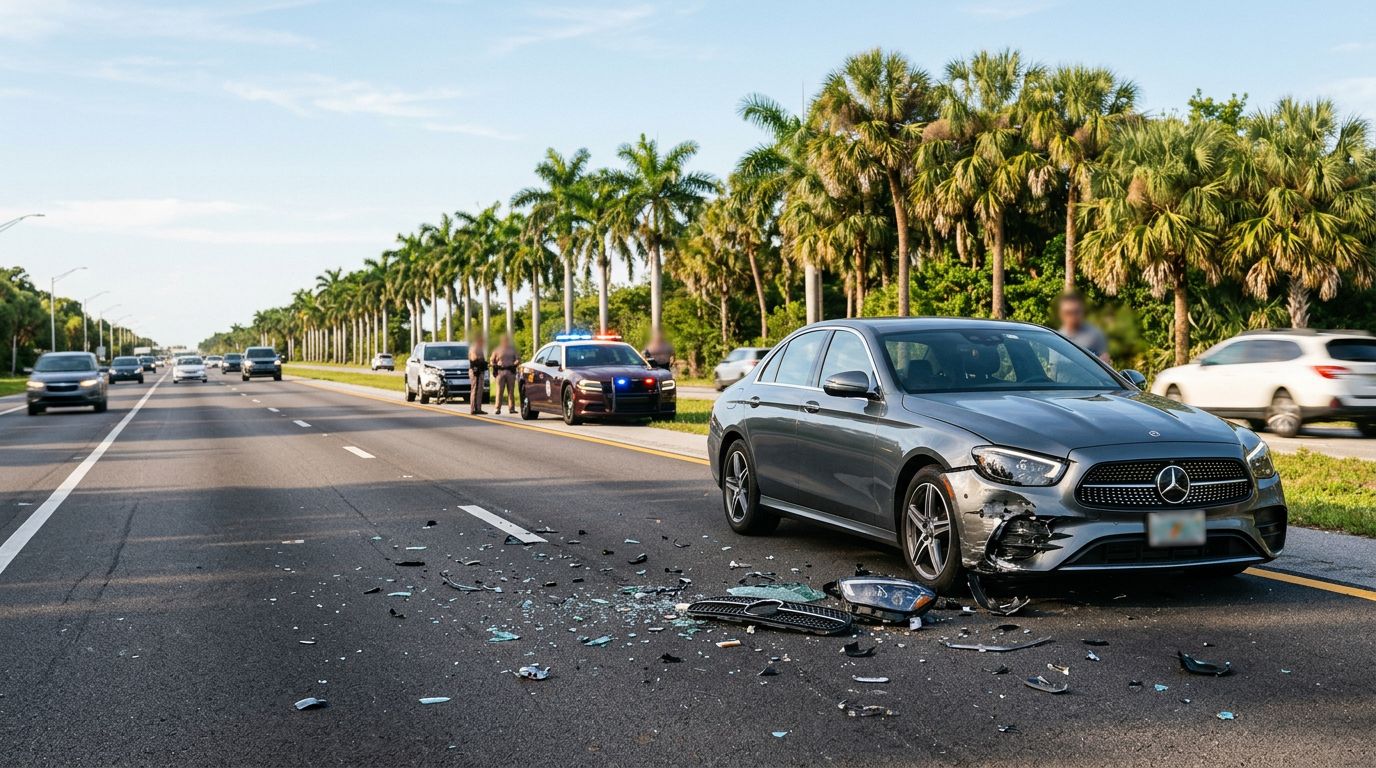
A sudden piece of metal in your lane can turn a normal drive into a Florida road debris accident in seconds. The worst part often comes after the crash, when the at-fault driver denies it, the debris gets cleared, and the story turns into a shrug.
Proving who caused a road debris crash usually isn’t about one perfect piece of evidence. It’s about building a clean timeline and tying the debris to a person, a company, or a road hazard that should’ve been fixed. With the right proof, a “no one knows” case can become a claim with clear responsibility.
Below is how fault is proven in Florida debris crashes, and what to do to protect your case early.
Why Florida road debris crashes are tough to prove
Road debris cases break the usual rules of a car crash. In a rear-end collision, the vehicles tell the story. With debris, the thing that caused the wreck may not be connected to any driver by the time police arrive.
Debris disappears fast. Rain washes away small pieces, traffic scatters fragments, and cleanup crews move items to the shoulder. Meanwhile, drivers who swerved may have secondary impacts that create confusion about what happened first.
Florida’s traffic volume adds to the problem. Recent statewide reporting shows Florida had more than 368,000 crashes in 2023, and it ranked among the highest states for traffic deaths. Early 2026 started quickly too, with dozens of crashes and many injuries reported in the first week of January. More cars on the road means more unsecured loads, more blown tires, and more construction zones where debris can end up in travel lanes.
Legally, a Florida road debris accident can involve several different fault paths:
- A driver dropped cargo (tools, lumber, scrap, furniture).
- A commercial truck shed debris because of poor securement or maintenance.
- Debris came from a prior crash, and drivers behind had no warning.
- A construction or road condition left a hazard that wasn’t cleared in time.
- A “phantom vehicle” caused it, then left before anyone could identify them.
Because there are multiple possible causes, insurers often push one theme: “You could’ve avoided it.” That’s why evidence about visibility, time to react, and lane options matters so much.
What to document right away (before the evidence vanishes)
If you can safely do it, treat the scene like it’s going to change in five minutes, because it often does. Your goal is simple: lock in where the debris was, what it was, and how it led to the crash.
Start with safety and medical care first. Call 911 if anyone may be hurt. Then, if it’s safe to do so, gather proof that shows the whole scene, not just vehicle damage.
Photos and video should answer basic questions an adjuster will ask later. Where was the debris? Which lane? Was it visible in time? Did it appear to fall from a vehicle ahead? Did your car strike it, or did you swerve and get hit?
A strong set of images usually includes wide “map” shots, then closer shots of the debris, impact marks, and final rest positions. If you want a practical checklist built for real claims, use document road debris and skid marks after Florida car accident as a guide for what to capture and how to frame it.
Also try to collect:
- The debris itself (or clear photos) showing size, material, and sharp edges.
- Any identifying marks, like paint color, unique parts, straps, or labels.
- A quick video narration while walking the scene (date, time, direction of travel).
- Witness names and numbers, including passengers in other vehicles.
- Dashcam footage (yours or another driver’s), saved and backed up.
If the debris gets moved before you photograph it, take pictures of scrape marks, gouges, shattered pieces, and where it ended up. Those “boring” details often connect the hazard to your lane and your point of impact.
Even if you feel “mostly fine,” get checked out. Medical records create a time-stamped link between the crash and your symptoms. Delayed treatment is a common excuse insurers use to discount injuries.
How to tie the debris to the driver or company that caused it
To prove fault, you usually need a chain: (1) where the debris came from, (2) who controlled it, and (3) how that failure caused your injuries and damage.
When a vehicle dropped the debris
This is the cleanest liability story, but only if you can identify the vehicle. Look for:
- Witnesses who saw something fall from a truck or trailer.
- Dashcam or traffic camera footage showing the debris drop.
- A license plate, company name, DOT number, or unique markings.
- Proof the driver knew or should’ve known the load was unsecured.
It can help to request video early, because many systems overwrite quickly. An attorney can also send a preservation letter to stop key footage or records from being destroyed.
When it involves a commercial truck or company vehicle
Commercial cases can include bigger insurance policies, but they also bring more paperwork and more pushback. The good news is that business vehicles leave trails: dispatch records, maintenance logs, inspections, GPS data, and load documents.
If the debris came from a work truck, a delivery van, or a fleet vehicle, you may have a claim against the driver and the employer. Steps and proof differ in these cases, so it helps to review Florida company vehicle accident claims and what documentation tends to matter.
Common commercial debris sources include unsecured construction material, tarp failures, loose scrap, and tire debris from poor maintenance. In those cases, the key question becomes whether the company followed safe loading and inspection practices.
When you can’t identify the vehicle (the “phantom driver” problem)
Sometimes you know exactly what happened, but you don’t know who caused it. A truck drops debris, traffic swerves, and the truck keeps going. In that situation, uninsured motorist coverage may become important, depending on your policy and the facts.
A debris crash can still be a real claim even without a named driver, but you must build independent proof of what caused the wreck.
That proof can come from witness statements, dashcam video, 911 call logs, and physical evidence showing your car struck debris (not just “lost control”).
How Florida’s 51 percent fault rule can change your recovery
Florida uses a modified comparative fault system in many negligence cases. In plain terms, your compensation can shrink if the insurer convinces the jury you share blame. If you’re found more than 50 percent at fault, you may be barred from recovering damages in that negligence claim.
That makes road debris cases a target for blame shifting. Insurance companies often argue:
- You were driving too fast for conditions.
- You followed too closely to react in time.
- You changed lanes unsafely to avoid debris.
- You “overreacted” instead of braking.
The strongest counter is evidence that shows your reaction was reasonable. Photos of sight lines, lighting, and traffic flow matter. Event data recorders, dashcam footage, and witness statements can also support that you had no safe escape route.
For a clear explanation of how fault percentages affect payout, see Florida 51% fault rule in car crashes. In a Florida road debris accident, the goal is to keep the focus on the party who created the hazard, not the driver forced to respond to it.
Turning proof into a demand that an insurer takes seriously
Evidence doesn’t help much if it never gets organized into a claim that shows liability and damages. Think of a strong case like a well-labeled file folder, not a junk drawer.
A persuasive demand package usually includes a clear timeline, photos, medical records, wage loss proof, and a straightforward explanation of why the other party caused the hazard. If you’re unsure what belongs in that packet, Cape Coral car crash demand package guide lays out what’s typically included and how it’s presented.
Damages in debris cases can include more than repairs. People often suffer head and neck injuries from sudden braking, rollovers after swerving, or secondary impacts from being hit by other cars. Keep copies of discharge instructions, follow-up care, prescriptions, and any work restrictions.
Also save towing bills, rental car receipts, and photos of personal items damaged in the crash. Those “small” expenses add up, and they help show the real cost of the incident.
The takeaway for a Florida road debris accident claim
Road debris crashes can feel like a mystery, but proof turns them into a story with responsibility. Move fast to document the debris and scene, identify the vehicle or company when possible, and protect your medical timeline. If fault becomes a fight, good evidence is what keeps the focus on the person who created the danger, not the driver who got trapped by it.