
Florida Rainwater Slip and Fall Claims at Store Entrances
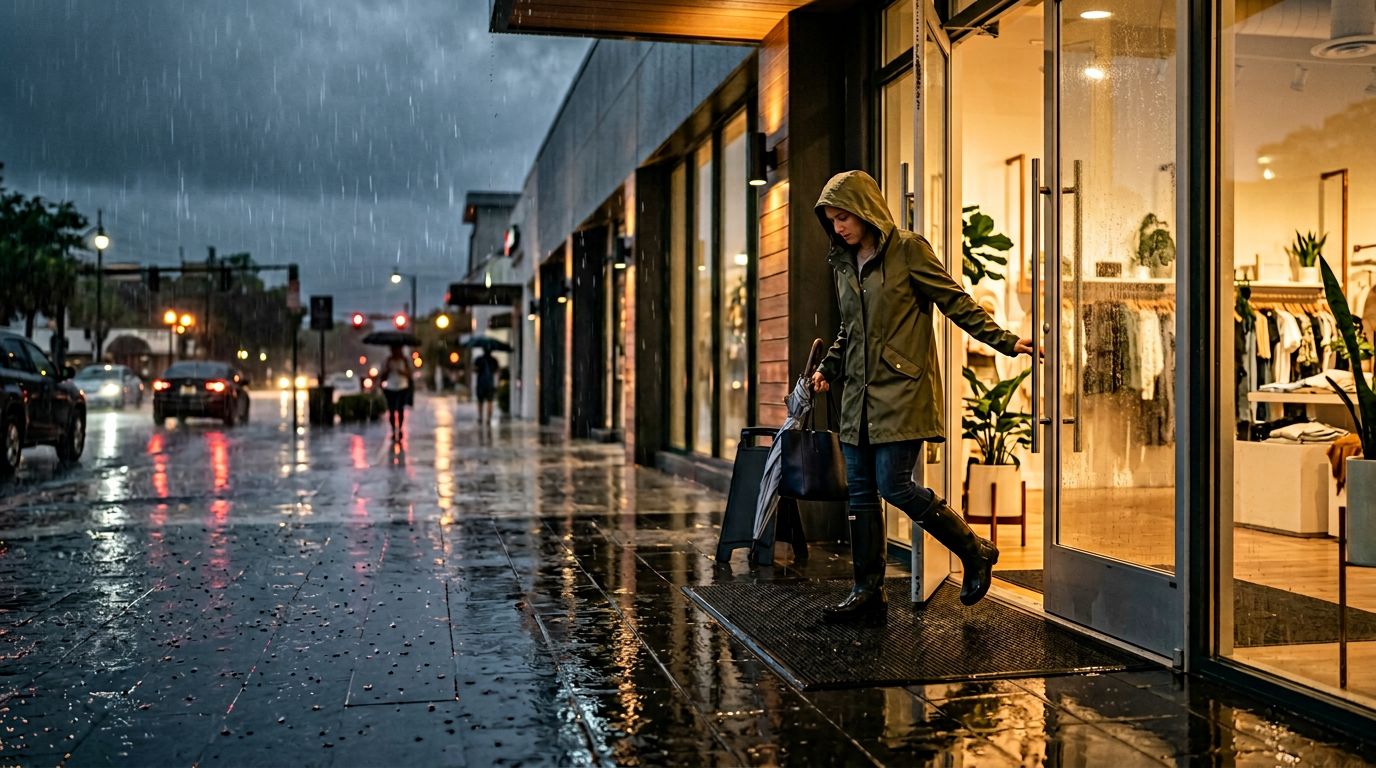
A Florida downpour can turn a store entrance into a skating rink in minutes. Water comes in on shoes, mats get soaked, and slick tile does the rest.
If that happened to you, a florida slip and fall claim may be possible. Still, the case usually turns on one issue: not the rain itself, but whether the store had a fair chance to spot the danger and fix it before someone got hurt.
Rain alone doesn’t excuse a dangerous store entrance
If the weather caused the water, can the store still be liable? Yes, sometimes.
Florida law doesn’t treat a store like an insurer of safety. In plain terms, a business doesn’t promise a perfectly dry floor every second. Still, it must act reasonably when wet conditions are easy to expect, especially at a busy entrance during a storm.
As of March 2026, Florida hasn’t passed a new law aimed only at tracked-in rainwater. These cases still follow the rule for transitory foreign substances. That means the injured person must show the store had actual knowledge of the water, or constructive knowledge, meaning it should have known about it through normal care.
Store entrances are a common trouble spot because the risk is predictable. Afternoon storms roll in fast. Customers stream through automatic doors. Water spreads beyond the mat and onto smooth flooring. In other words, the danger often isn’t a surprise.
That’s why reasonable safety steps matter. A careful store may place fresh mats, inspect the doorway more often, mop on a tighter schedule, and use warning signs where they help. If staff ignore a soaked entry for too long, the claim gets stronger. If the water appeared seconds before the fall, the case gets harder.
Customers also get strong legal protection because they’re invited onto the property to shop. That broader duty appears in Florida’s premises rules, which are explained in this guide to Florida premises liability duty of care.
What actually proves notice after a fall at the entrance
A wet floor alone usually isn’t enough. Proof of notice is the real engine of a claim.
In most rainwater cases, the fight is about what the store knew, and when it knew it.
So what helps show notice? The best evidence often comes from the scene itself. Dirty water with footprints may suggest it sat there long enough for people to track through it. A drenched mat curled at the edge may show the store’s safety setup had already failed. Missing cones near a clearly wet doorway can also matter.
Video can be powerful too. If footage shows repeated customer traffic, employees passing by, or water building up over time, that can support constructive notice. Witnesses help for the same reason. A shopper who saw others slip, or an employee who heard earlier complaints, can fill in gaps that photos alone can’t.
Recurring conditions also matter. Some entrances become slick every time it rains. Some stores know a roof leak drips by the front door. Others use mats that are too small for the traffic flow. When the same hazard keeps showing up, the argument that the store “had no reason to know” starts to wear thin.
On the other hand, stores often defend these cases by saying the danger was open and obvious, or that the water had just arrived. They may also point to a warning sign. A sign helps, but it doesn’t end the case automatically. If the cone sat off to the side while water spread across the walking path, a jury may still see poor safety practice.
Florida fault rules also matter. If the defense shows you were distracted, rushing, or ignoring an obvious hazard, any recovery may drop.
What to do after the fall, and what your claim may cover
Timing matters because entrance evidence disappears fast. Staff mop. Mats get swapped out. Camera footage may be overwritten within days or weeks.
Start with the basics:
- Get medical care quickly: Pain often shows up later, especially with back, neck, wrist, and head injuries.
- Photograph the scene: Capture the doorway, mat, puddle, lighting, and any warning signs.
- Report the fall: Ask for the manager’s name and an incident report.
- Get witness information: A short statement from another shopper can matter later.
- Save your shoes and clothes: Wet soles and stained clothing may support your account.
For a step-by-step guide, review this Florida slip and fall evidence checklist. Early proof often decides whether a claim stays strong or fades.
Medical records are just as important as scene photos. They connect the fall to your injuries and help show the effect on your daily life. That may include a fracture, torn ligaments, a herniated disc, or a concussion. Even injuries that seem minor at first can grow worse after the shock wears off.
A claim may cover more than the first ER bill. Depending on the facts, damages can include treatment costs, lost wages, future care, and pain and suffering. Avard Law explains those categories in this Florida slip and fall damages overview.
Don’t wait because the calendar feels generous. Florida deadlines have changed in recent years, and they can be shorter than many people expect. More important, evidence often expires before the legal deadline does. A prompt legal review can help preserve footage, inspection logs, and witness accounts before the story gets cleaned up with the floor.
Closing thought
Rain is normal in Florida. A preventable fall inside a store entrance isn’t.
If you were hurt after slipping on tracked-in rainwater, focus on treatment and proof right away. In a strong florida slip and fall case, the winning details are often simple: how long the water sat there, what the store did about it, and how clearly your injuries were documented.