
Florida Slip And Fall Surveillance Video How To Request It Fast
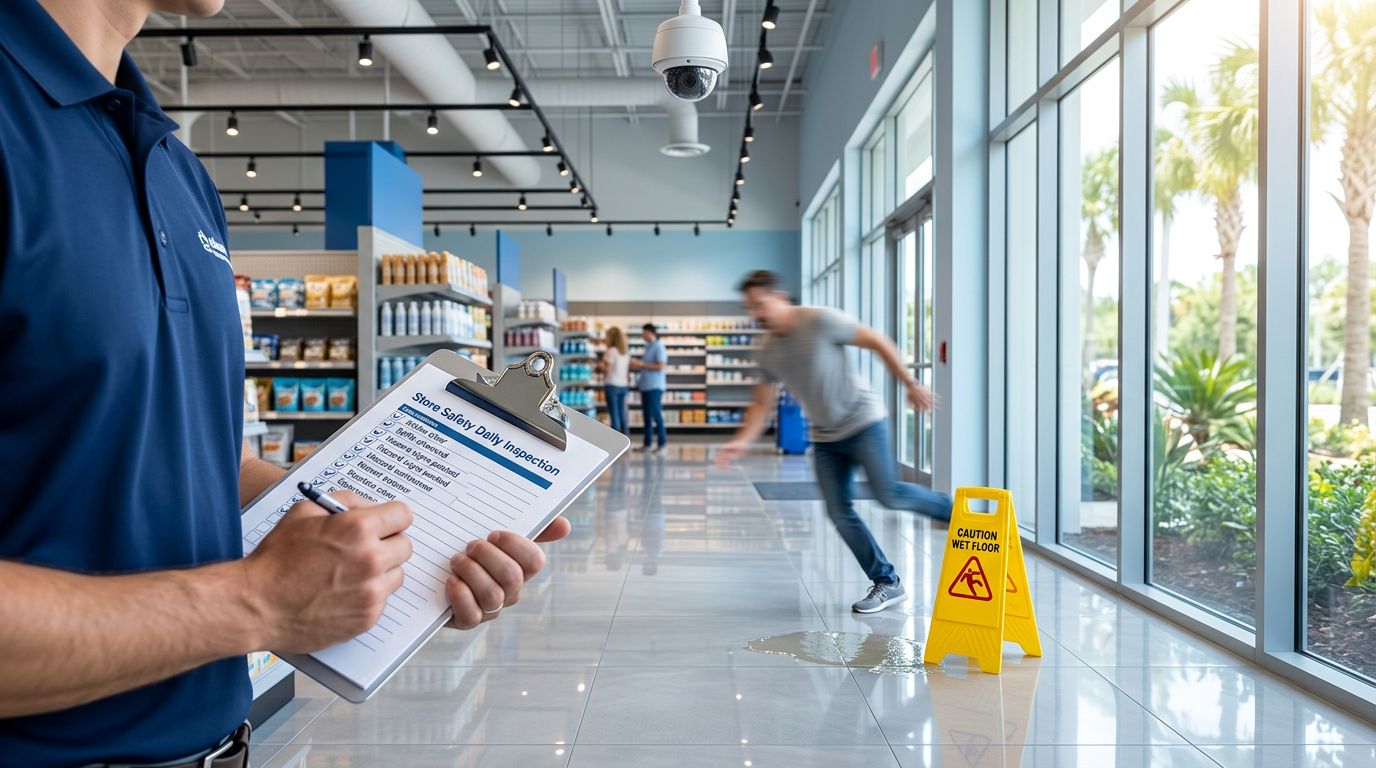
After a Florida slip and fall, surveillance video can be the difference between a clear story and a messy argument. It can show the hazard, how long it was there, and what happened right before you hit the ground.
The catch is simple: video disappears. Many systems overwrite footage in days, sometimes sooner. If you wait until you “feel better,” you may lose the best evidence you’ll ever have. A fast, targeted Florida surveillance video request keeps pressure on the right people and improves the odds that the footage survives.
Why slip and fall surveillance video disappears so quickly
Most businesses don’t store security footage forever. Video takes space, and storage costs money. As a result, many systems loop and overwrite automatically. Even if the store wants to help, an employee may not know how to export the clip, or may not have permission.
Cleaning and repairs also move fast. A wet floor gets mopped. A torn mat gets replaced. Warning cones appear after the fact. Video is often the only neutral record of what the scene looked like at the moment you fell.
Video also matters because it can support or contradict the usual defenses: “There was a sign,” “You weren’t watching,” or “It happened somewhere else.” If you’re dealing with real injuries, it helps to understand how these cases are evaluated, including common injury patterns and next steps in care. See Avard Law’s guide on understanding slip and fall injuries.
The best time to act is before anyone has time to rewrite the story, even unintentionally.
The first 48 hours: what to do before you even send a request
Start with details. Video searches fail when the request is vague.
Write down the basics right away: exact location, date, and the tightest time window you can give (for example, 2:10 p.m. to 2:40 p.m.). Add what you remember about camera placement, such as over the entrance, by aisle 6, or facing the checkout lanes. If you took photos, keep the originals.
Next, report the incident to management and ask for an incident report number. Keep your tone calm. Your goal is to create a timestamped record that the fall happened there.
Also, preserve your medical proof. Delays in care create gaps that insurers love to exploit. Save discharge papers, imaging orders, and follow-up instructions. For a practical checklist of what to gather early, Avard Law explains key items in documentation to show your personal injury attorney in Florida.
Finally, don’t post about the incident online. Insurers may use selective clips or unrelated activity to attack your claim. If you’re worried you’re being watched after an injury, read surveillance in Florida personal injury cases.
Who has the footage: private business cameras vs. government records
Not all surveillance video is treated the same. Your approach depends on who controls the camera.
Here’s a quick way to sort it out:
| Where you fell | Who likely owns the video | Fastest path to preserve it |
|---|---|---|
| Grocery store, hotel, restaurant, apartment complex, mall | Private owner or management company | Immediate written preservation demand, then follow up for a copy |
| City bus facility, courthouse area, some public buildings | Government agency | Florida public records request to the records custodian |
| Law enforcement body-worn camera at the scene | Police or sheriff’s office | Public records request (with limits and possible exemptions) |
For government-held video, Florida’s Public Records Act (often called the Sunshine Law) is grounded in Chapter 119. You can read the statutory framework at Florida Statutes section 119.07. In plain terms, many records are available on request, but some videos may be exempt or redacted depending on the situation.
For police-related footage, it also helps to look at an agency’s own process. The Florida Department of Law Enforcement publishes a practical overview in FDLE’s guide to public records requests.
Private businesses are different. A store usually isn’t required to hand you a copy just because you asked. That’s why preservation language and fast escalation matter.
How to write a Florida surveillance video request that moves quickly
Speed comes from clarity. Your request should read like a map, not a complaint.
A strong request (by email and certified mail when possible) should include:
- Your identifying info: full name, phone, email, and mailing address.
- Exact incident details: date, address, and a narrow time window.
- Camera coverage: ask for all cameras that may capture the fall, the hazard, the area before the fall, and the aftermath (including entrances and registers).
- Preservation demand: request that they preserve footage and logs, including any backup copies.
- Copy request: ask for an exported digital copy in a common format, and ask them to confirm in writing if they refuse.
- Retention warning: politely note that systems often overwrite, so immediate preservation is necessary.
If the footage is held by a government agency, you can make a public records request without special wording, but specificity still helps. The Florida Department of State has a helpful primer on how agencies manage records in Managing Florida’s Public Records (PDF). That resource is useful when you need to understand why agencies ask for time frames, formats, and cost estimates.
One more detail matters in March 2026: many systems are cloud-based now, and exports can take time. Ask them to preserve first, then talk about delivery method. Preservation is the emergency. A copy is the next step.
Don’t lead with a demand for “all video.” Lead with a demand to preserve video before it’s overwritten.
Common mistakes that slow down or derail video requests
Most delays come from avoidable problems.
Vague time windows are a big one. “Sometime in the afternoon” can mean hours of review. That increases cost and reduces cooperation. A 20 to 40 minute window is better.
Another common mistake is asking only for the “moment of the fall.” The minutes before matter just as much. They can show employee inspections, spill activity, or prior near-misses.
Be careful with broad authorizations, too. Some businesses or insurers will offer paperwork that looks routine but gives them room to pull unrelated information. Read anything before signing.
Also, don’t assume a denial means the video is gone. Sometimes the first person you reach doesn’t control the system. Escalate to corporate risk management, the property manager, or the insurer for the premises.
When an attorney can force the issue (and why timing still matters)
If a private owner won’t cooperate, a lawyer can often push harder through formal preservation letters, insurance communications, and, when appropriate, litigation tools like subpoenas. Those tools usually require a filed lawsuit or active case, which is why early legal help can matter when video is on a short retention loop.
A lawyer can also frame the request in a way that reduces “wiggle room.” That includes identifying all likely cameras, demanding preservation of metadata, and documenting any refusal. If video disappears after a clear preservation demand, that loss can become a serious issue in the case.
The practical point is this: you don’t need to know every legal rule to act fast. You need to (1) lock down the facts, (2) send a precise preservation request, and (3) escalate quickly if you get silence.
Conclusion
A Florida slip and fall case can turn on one ordinary file: a short video clip. The fastest Florida surveillance video request is the one that’s specific, sent immediately, and focused on preservation first. If you’re hurt and the property owner won’t cooperate, talk to an attorney quickly, before the footage loops over and disappears for good.