
Florida Turo Accident Claims: The Proof That Matters When a Renter Hits You
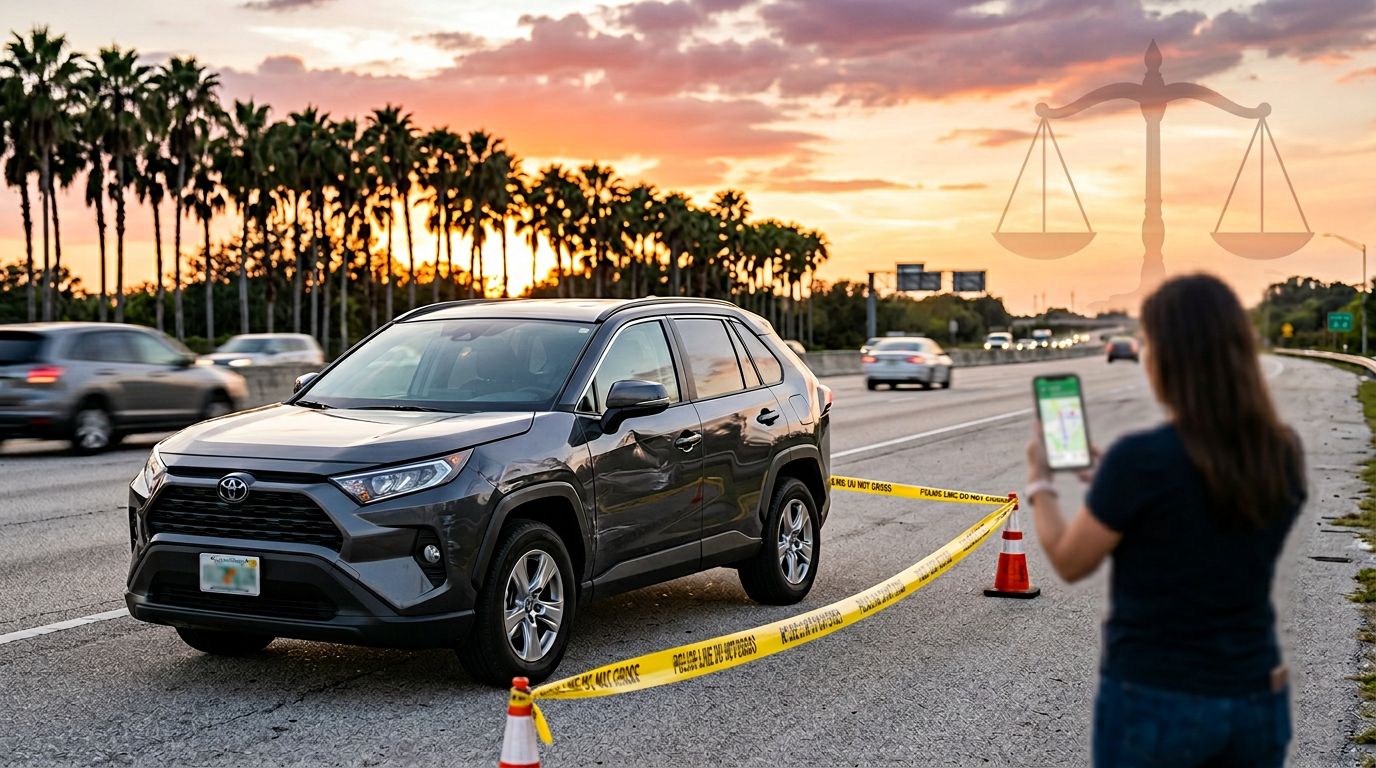
A Turo crash can turn a simple car wreck into a blame fight fast. One driver says it was a rental, another points to the owner, and the platform sits in the background while insurers sort out who pays.
That’s why Florida Turo accident claims often rise or fall on proof, not assumptions. If a renter hit you, the facts you lock down in the first hours can shape the whole case.
Why a Turo crash is harder than a normal Florida accident claim
A regular crash usually starts with two drivers and two insurers. A Turo crash can add a renter, a vehicle owner, Turo’s trip records, and layered coverage questions.
Florida does not use a separate accident claim system just for Turo wrecks. Your case still follows Florida’s no-fault rules for initial medical coverage and fault-based rules for bigger losses. If you need a quick refresher, this guide on how Florida’s no-fault law affects injury claims explains where PIP fits in.
That extra layer matters because timing matters. Was the trip active in the app? Was the approved renter driving, or someone else? Did the owner hand over a car with bad tires, warning lights, or other safety issues?
In a Turo case, prove who was driving and whether the trip was active before the story starts to shift.
Fault rules also matter. Florida uses modified comparative negligence in injury cases. So if the other side can push more than half the blame onto you, your claim can fail.
Because of that, don’t treat this like a normal fender bender. Treat it like a file that needs clean, early proof.
The proof that moves Florida Turo accident claims
Start with the facts that are hardest to dispute. Photos, trip records, and the police report often carry more weight than later explanations.
Here’s the proof that usually matters most:
| Proof | What it helps show |
|---|---|
| Scene photos and video | Vehicle positions, impact points, road marks, weather, plates |
| Police report | Driver identity, statements, citations, crash basics |
| Turo trip screenshots | Active trip status, pickup time, renter name, vehicle details |
| Witness names and numbers | Neutral accounts of who caused the crash |
| Medical records | When symptoms started and how serious they became |
| Pre-trip and post-trip car photos | Prior damage, tire condition, lights, and body damage |
Take wide shots first. Get the whole roadway, traffic signs, lane lines, and final vehicle positions. Then move in for damage, skid marks, debris, and the Turo vehicle’s plate. If the renter rear-ended you, side-swiped you, or pushed you into another car, the damage pattern can help tell that story.
Next, save trip proof. If the driver admits it was a Turo rental, photograph the app screen if you can do so safely. Also save any messages, rental details, or screenshots that show the trip was in progress. In many Florida Turo accident claims, that digital trail helps pin down which coverage layer applies.
Medical proof matters too. Get checked out early, even if the pain seems mild. Neck, back, and head symptoms often show up later. A same-day or next-day visit connects the injury to the crash before the insurer starts blaming work, age, or a prior condition.
Also, keep the damaged car well documented before repairs begin. If the Turo vehicle had bald tires, broken lights, or another visible defect, photograph it. That can matter if the host failed to provide a safe car. The same logic shows up in other rental vehicle cases, including handling rental car accident claims for tourists, where records often matter as much as the crash itself.
Who may pay when a Turo renter hits you
In most cases, the renter is the first place to look. If the driver was speeding, distracted, following too closely, or turned into your lane, that conduct still drives the liability case.
Yet the renter may not be the only target. If the car owner gave the renter an unsafe vehicle, the host could share fault. Think worn tires, bad brakes, warning lights, or poor upkeep that made the crash worse.
Turo can also sit inside the coverage picture, but that does not mean Turo is always the best defendant. As of April 2026, claims aimed straight at Turo itself still face a tougher road than claims against the driver or owner. In plain terms, most cases focus first on the renter’s conduct, the trip records, and any owner negligence.
This is why proof has to answer more than one question:
- Did the renter cause the crash?
- Was the trip active at that time?
- Was the approved renter driving?
- Did a vehicle defect help cause the wreck?
If the crash involved several cars, keep the impact order straight. Chain reactions can muddy a clean claim in a hurry. This Florida chain-reaction crash guide shows why sequence and damage photos matter when more than two vehicles are involved.
Mistakes that hand the insurer an easy defense
The first mistake is guessing. Don’t tell an adjuster what “must have happened” if you don’t know. Stick to what you saw, heard, and felt.
The second mistake is letting digital proof disappear. Turo messages, app screenshots, trip times, and phone photos can vanish or get overwritten. Save them the same day.
Another common problem is rushing into a recorded statement. The other side may sound casual, but the goal is to lock you into a version before the full picture is clear.
Finally, don’t delay care. In Florida Turo accident claims, treatment gaps often become defense arguments. If you waited weeks, expect the insurer to say the crash wasn’t the real cause.
A Turo crash feels confusing because the labels change, renter, host, app, coverage. Still, the core issue stays simple: proof wins.
If a renter hit you, build the case from the first day. Lock down the scene, save the trip evidence, document your injuries, and don’t let the other side write the cleanest version of events first.