
How to Request and Use a Vehicle’s Black Box (EDR) Data After a Cape Coral Crash
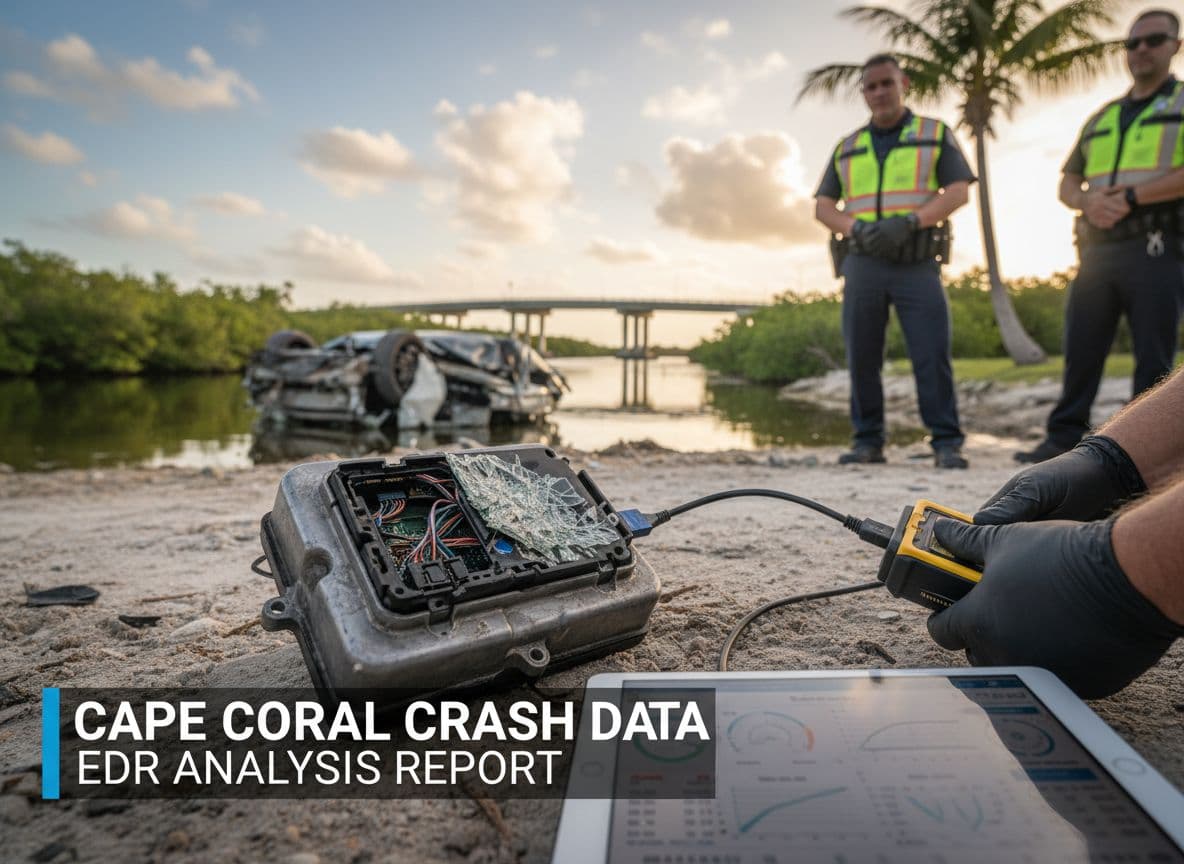
After a Cape Coral crash, people argue about speed, braking, and who had time to react. Memories change, and stories tighten up once insurance gets involved. That’s why vehicle black box data can matter, it’s a quiet witness that doesn’t forget.
Most newer cars store a short snapshot of what happened right before impact. The trick is getting that data legally, preserving it before it’s lost, and using it the right way in a claim.
What vehicle black box data can reveal (and what it can’t)
A car’s “black box” is usually an Event Data Recorder (EDR) tied to the airbag control module. It often records a few seconds of information before and during a crash. Think of it like a receipt printed at the worst moment: limited, but very specific.
Here’s what EDRs commonly capture in many vehicles, and how it can help after a Cape Coral collision:
| Data point (often available) | What it may show | Why it matters in a claim |
|---|---|---|
| Vehicle speed | Speed in the seconds before impact | Supports or challenges “they were flying” claims |
| Brake use | Whether brakes were applied, and when | Helps show reaction time and driver choices |
| Throttle position | Acceleration leading up to impact | Can support “sped up” or “didn’t slow” arguments |
| Seat belt status | Buckled or unbuckled at key moments | Affects injury questions and insurer arguments |
| Airbag deployment timing | If and when airbags fired | Helps confirm crash severity and sequence |
What it doesn’t do: EDR data usually doesn’t “prove fault” by itself. It also won’t record everything (like what the driver saw, whether traffic was blocked, or if someone changed lanes without signaling). Some vehicles store more than others, and some store almost nothing unless airbags deploy.
Florida rules as of January 2026 generally treat EDR information as controlled by the vehicle’s owner, so access often depends on owner consent, a court order, or an insurance process. That ownership issue shapes everything you do next.
Preserve the black box early, because it can disappear fast
EDR evidence is physical evidence, it lives in the vehicle. If the car gets repaired, totaled, sold, or crushed, the chance to capture vehicle black box data can vanish. Even driving the vehicle after the crash can affect what’s stored in some models.
Start with the basics that protect all evidence, not just EDR:
- Photograph the vehicles from all sides, including the interior (dash lights, airbags, seat belts).
- Write down where the car is going (tow yard name, address, phone number).
- Keep paperwork from the tow, storage, and insurance adjuster.
For a practical post-crash checklist, review immediate actions after a Cape Coral car crash. The early steps you take can stop evidence from slipping away while you’re focused on medical care and getting home.
Send a preservation letter (and do it before the car moves again)
A preservation letter (sometimes called a spoliation letter) is a written demand that key evidence be kept. It’s commonly sent to:
- The other driver (and their insurer)
- A towing company or storage yard holding the vehicles
- A repair shop
- A salvage company, if a vehicle may be declared a total loss
The goal is simple: don’t let anyone “dispose of” the car before the EDR is captured. A personal injury attorney can send this fast and direct it to the right parties, with language that matches Florida evidence rules.
Use a qualified technician and protect chain of custody
Downloading EDR data is not like plugging in a phone charger. It may require specialized tools and training, plus photos and documentation that show the condition of the vehicle and module.
If you need a technician, companies such as EDR data retrieval technicians or Florida-based services like Florida EDR download services are examples of providers that perform downloads. The more important point is not the brand name, it’s documentation. A clean chain of custody helps keep the data usable if the case turns into litigation.
How to request EDR data in Florida after a crash (and how to use it well)
Getting vehicle black box data comes down to two questions: (1) who owns the vehicle, and (2) what legal permission exists to access it.
Common legal paths to access EDR data
Owner consent: If you own the car, you can often authorize a download. If the other driver owns the car, you usually can’t just take their data. Their consent changes everything.
Court order in a lawsuit: If the other side won’t cooperate, EDR access may require a lawsuit and a judge’s order. Courts tend to look for relevance, a real reason the data matters, and a plan that limits damage to the vehicle.
Insurance investigation: Sometimes an insurer attempts to collect EDR data during a serious crash review, depending on the policy, permissions, and how the investigation is handled. Don’t assume they’ll do it, and don’t assume they’ll share it.
Police reports are still part of the foundation, even when EDR data exists. If you haven’t gotten your report yet, follow steps to secure an official accident report in Cape Coral. EDR data and crash reports often work together, especially when drivers give different stories.
Turning raw EDR numbers into usable evidence
EDR reports can be misunderstood. A few examples of common issues:
“Speed” may be pre-impact only: It might show speed seconds before impact, not the precise speed at the moment of contact.
Multiple impacts can confuse the story: A crash can involve a first hit, then a second hit. The EDR snapshot might relate to one event, not the entire chain.
Context matters: Hard braking could mean “driver was reckless,” or it could mean “driver tried to avoid a sudden lane change.” Pair EDR with photos, scene measurements, vehicle damage patterns, and witness accounts.
If you’re building a claim, organize your proof so the EDR data isn’t floating by itself. Medical records, bills, wage loss proof, and crash photos still drive the value of most cases. A helpful starting point is what evidence to provide your personal injury lawyer.
Why EDR data can matter more now
Insurance companies often push fault arguments hard, especially when the case is serious. EDR data can box in exaggerated claims like “they never braked” or “they were speeding the whole time.” It can also protect you when the other driver’s story shifts after they talk to an adjuster.
At the same time, EDR data can cut both ways. If it hurts your version of events, it doesn’t disappear. That’s another reason to involve a lawyer early, so you understand what’s likely to be found and how it fits your broader evidence picture.
Conclusion
When the facts are disputed after a Cape Coral crash, vehicle black box data can add clarity that witness statements can’t. The key is acting early, keeping the vehicle from being altered or destroyed, and using a proper legal path to access the data. If you’re dealing with injuries and pushback from insurance, a personal injury attorney can help preserve the vehicle, request the EDR lawfully, and use it alongside medical and crash evidence to tell a consistent story.