
Knee Injuries from Dashboard Crush in Cape Coral Car Crashes: Diagnosis Tests and Claim Value
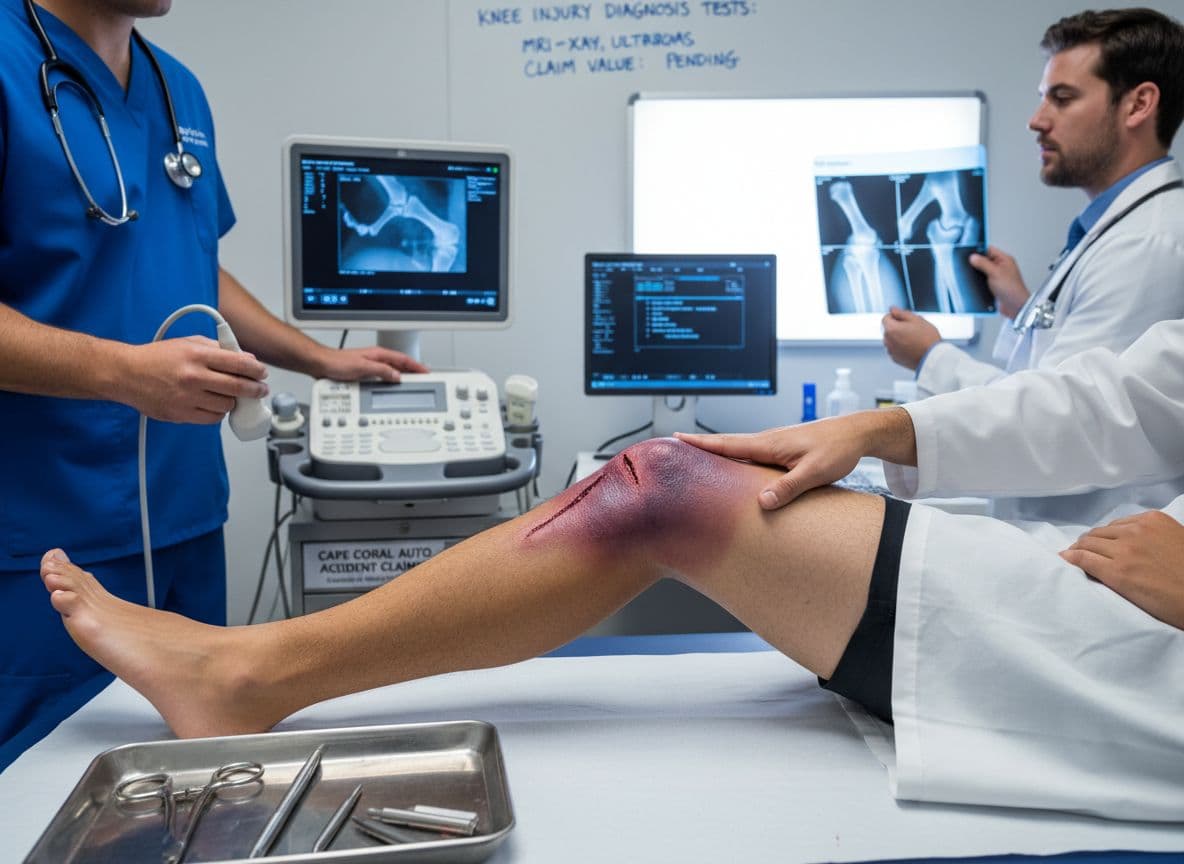
A split second after impact, your knee can slam into the dashboard like a hammer into a door hinge. The outside bruise may look minor, but the inside damage can be serious. This type of dashboard knee injury shows up often after front-end collisions in Cape Coral, especially when the crash forces the lower leg backward while the thigh stays planted.
If you’re searching for answers, you usually want two things: clear medical steps (what tests confirm the injury) and a realistic view of what your claim may be worth. Both depend on documentation, timing, and the exact structures injured.
What a “dashboard crush” knee injury really means
“Dashboard knee” isn’t a diagnosis. It’s a crash mechanism. The knee takes a direct blow from the dash, shifting force into the joint and the bones above and below it.
Common injuries from dashboard impact include:
- Posterior cruciate ligament (PCL) tear: The shin bone is driven backward, stressing the PCL. A dashboard mechanism is a classic cause, with imaging examples discussed in this Radiopaedia case: https://radiopaedia.org/cases/posterior-cruciate-ligament-tear-due-to-dashboard-injury?lang=us
- Meniscus tears: Twisting plus impact can tear the cartilage that cushions the joint.
- Patella injuries: The kneecap can fracture or track poorly after trauma.
- Tibial plateau fractures: A break at the top of the shin bone that can destabilize the joint.
- Cartilage damage: Joint surface injury that may lead to arthritis later.
The key point for both care and claims is this: a dashboard strike can injure more than one structure at the same time.
Symptoms that should never be brushed off
Pain is obvious, but other signs matter just as much. After a crash, watch for:
- Swelling that increases over hours
- A knee that feels unstable, loose, or like it may “give out”
- Limited range of motion, locking, or catching
- Trouble bearing weight or walking normally
- Numbness, tingling, or coolness below the knee (possible nerve or blood vessel involvement)
Some people can walk right after the collision, then stiffen up the next day. That delay doesn’t mean you’re fine. It often means inflammation and internal bleeding are building.
For a plain-language overview of post-crash knee pain and why it can worsen over time, this medical resource is helpful: https://laclinicasc.com/knee-pain-car-accident/
Diagnosis tests doctors use after a dashboard knee injury
A strong claim usually starts with strong medical proof. That means the right exam, the right imaging, and clear notes that connect the injury to the crash.
1) History and physical exam (what happened and where it hurts)
Your provider should document details like: your seating position, whether the airbags deployed, and exactly how the knee hit the dashboard. Those facts help explain why a ligament tear or fracture is crash-related.
In the exam, providers often check:
- Range of motion
- Tenderness location (joint line vs kneecap vs below the knee)
- Stability tests (including PCL/ACL checks)
- Gait (how you walk)
- Neurovascular status (pulse, sensation, foot warmth)
2) X-rays (first-line imaging)
X-rays look for fractures and dislocations. Even if the pain feels “soft-tissue,” an X-ray may catch a patella fracture or tibial plateau injury that changes the whole treatment plan.
3) MRI (best for ligaments, meniscus, cartilage)
MRI is often the test that confirms a PCL tear, meniscus tear, or cartilage injury. If the insurer questions why treatment lasted months, MRI findings can answer that.
4) CT scan (when fracture detail matters)
CT may be ordered when a fracture is suspected or already seen on X-ray and the orthopedic team needs a better map before deciding on surgery.
5) Follow-up orthopedic testing
Orthopedic notes can be critical. They often include graded instability findings and treatment recommendations, which can explain future limits at work and at home.
Treatment choices that can raise or lower claim value
Knee injuries don’t all heal the same way. Two people can have “knee pain,” but one needs a brace and therapy, while the other needs reconstruction surgery.
Treatment may include:
- Bracing and activity limits
- Physical therapy to restore motion and strength
- Anti-inflammatory meds or pain management
- Injections in some cases
- Arthroscopy to repair meniscus or cartilage damage
- Ligament reconstruction (often for unstable PCL/ACL injuries)
- Future care if post-traumatic arthritis develops
From a claim standpoint, the medical plan affects more than bills. It affects downtime, future risk, and how permanent the injury may be.
Claim value in Cape Coral dashboard knee cases, what drives the number
There’s no single “average” that fits a dashboard crush injury. Claim value is built from the harm you can prove, and the insurance coverage available.
Here are the big drivers.
Florida no-fault rules and when you can pursue more
In many Cape Coral crashes, your first layer of coverage is PIP. That system has limits and deadlines, and serious injuries may allow a claim beyond no-fault. For a practical breakdown, see: https://avardlaw.com/car-accident-attorney/what-floridas-no-fault-law-means-for-your-cape-coral-car-accident-claim-2/
Damages that usually matter most in knee injury claims
A knee case often becomes valuable when it changes how you live and work, not just how it feels.
Common categories include:
- Medical bills (ER, imaging, ortho, PT, surgery)
- Future medical care (repeat MRIs, injections, hardware removal, arthritis care)
- Lost wages and reduced earning ability
- Pain and suffering, loss of enjoyment of life
A clear overview of compensation categories is here: https://avardlaw.com/car-accident-attorney/understanding-types-of-compensation-in-car-accident-cases/
How adjusters evaluate “severity”
Insurance companies tend to look for objective proof. These details often move the claim:
- MRI-confirmed ligament or meniscus tear
- A documented fracture
- Surgical recommendation or completed surgery
- Months of consistent, reasonable treatment
- Work restrictions from a treating doctor
- Permanent impairment rating or ongoing instability
For a broader look at how injury type can shape settlement expectations in Cape Coral, this guide can help you frame the discussion: https://avardlaw.com/personal-injury/average-settlement-values-for-car-accident-claims-in-cape-coral-by-injury-type/
The evidence that strengthens a dashboard knee injury claim
A dashboard knee injury is easier to prove when your records tell one consistent story: impact, symptoms, testing, diagnosis, and treatment.
Helpful evidence often includes:
- Photos of knee bruising and swelling over the first week
- Photos of interior vehicle damage where the knee hit
- EMS and ER records noting knee trauma after the crash
- Imaging reports (X-ray, MRI, CT) and ortho notes
- PT notes showing limited function, then progress (or lack of it)
- Wage and time-off documentation from your employer
If you’re not sure what to gather, this checklist is a solid starting point: https://avardlaw.com/personal-injury/documentation-to-show-your-personal-injury-attorney-in-florida/
When to call a personal injury attorney for a Cape Coral dashboard knee injury
Some claims stay simple. Others don’t, especially when the knee injury affects your job or may never fully heal. It’s smart to speak with a personal injury attorney when:
- Your MRI shows ligament or meniscus tears
- An orthopedic doctor recommends surgery
- You can’t return to work, or you return with restrictions
- The insurer downplays the injury as “just soreness”
- You suspect future problems like arthritis or chronic instability
Time also matters. Deadlines can apply to insurance claims and lawsuits. A clear overview is here: https://avardlaw.com/car-accident-attorney/understanding-the-timeline-for-filing-a-car-accident-claim/
Conclusion
A dashboard knee injury can look small at first and act big later. The right diagnosis tests, especially careful exams and imaging, help your doctors treat the real damage and help your claim reflect the full impact. If your knee injury is disrupting work, mobility, or daily life, getting legal guidance early can protect both your health records and your financial recovery.