
Florida Hospital Medication Allergy Errors: Records Patients Should Save
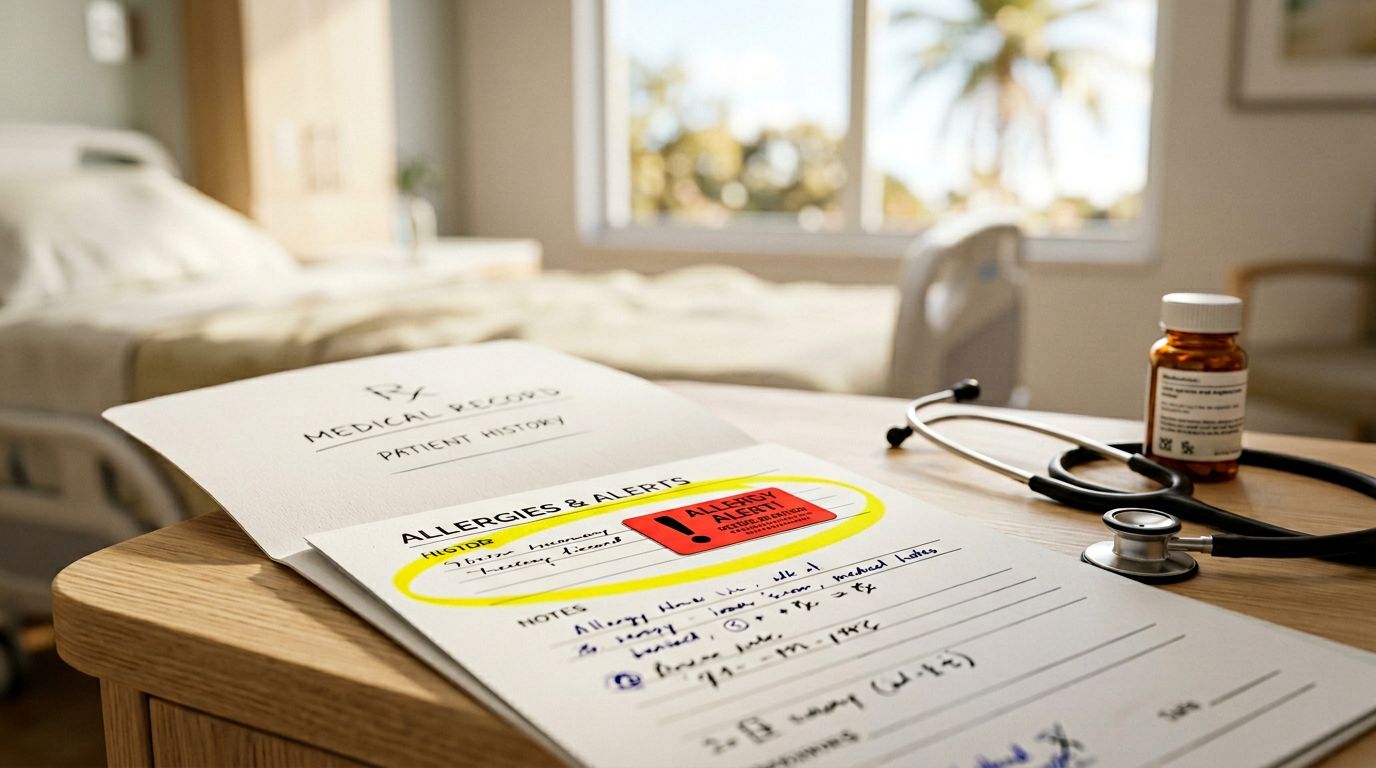
A bad drug reaction in a hospital can feel like smoke without a visible fire. You know harm happened, but the cause may stay hidden unless you gather proof fast. With medication allergy errors, the strongest evidence usually sits inside the medical record.
For Florida patients thinking about a malpractice claim, timing matters. As of March 2026, available sources do not show recent Florida-only hospital numbers on allergy-related medication mistakes. Still, national data shows adverse drug reactions affect about 10% of patients overall and up to 20% of hospitalized patients, according to an NCBI overview of medication dispensing errors. That makes record preservation more than paperwork. It can decide whether a lawyer and medical expert can tell what really happened.
Why medication allergy errors leave a paper trail
Not every allergic reaction proves negligence. Some reactions happen even when staff act with care. However, a preventable error may exist when a hospital had reason to know about an allergy, then gave the drug anyway, failed to act on a warning, or delayed treatment after the reaction began.
Hospitals create records at each step. First, someone asks about allergies during intake. Next, the allergy list goes into the chart. Then a doctor enters an order, a pharmacist reviews it, and a nurse gives the medication. If any link in that chain breaks, the record may show it.
That trail matters because memory fades fast. A patient may remember saying, “I’m allergic to penicillin,” while the defense later argues the allergy wasn’t reported clearly. The chart can support one story and weaken the other. If you’re sorting out whether the event looks like bad luck or negligence, Avard’s Florida medical malpractice guide explains how Florida cases are evaluated.
If the allergy was in the chart, the case often turns on who saw it, when they saw it, and what they did next.
Available patient-safety reporting also shows a common theme. Allergy-related mistakes often stem from weak communication, missed chart review, and unsafe overrides of warnings. That pattern appears in the Pennsylvania Patient Safety Advisory on documented allergies. In other words, the problem is often less about one dramatic moment and more about a series of small missed checks.
Which hospital records patients should request and keep
Start with the full chart, not just the portal summary. A portal may show visit notes, but it often leaves out medication logs, scanned forms, and detailed nursing records.
This quick table shows the records that often matter most:
| Record to request | What it may prove |
|---|---|
| Admission history and nursing intake | Whether you or your family reported the allergy at arrival |
| Allergy list and medication reconciliation | Whether the chart carried the allergy forward during care |
| Physician orders and pharmacy review | Whether the ordered drug conflicted with a known allergy |
| Medication administration record (MAR) | The exact drug, dose, time, and staff member involved |
| Vital signs, labs, and nursing notes | When the reaction started and how severe it became |
| Rapid response, ICU, and discharge records | What treatment followed, and whether the reaction caused lasting harm |
The takeaway is simple: ask for records that show both warning signs and response.
Also keep documents outside the hospital chart. Save discharge papers, follow-up visit notes, prescription receipts, photos of rashes or swelling, and any messages sent through the patient portal. If a family member heard staff discuss the allergy, write down that person’s name while the memory is fresh.
A discharge summary alone rarely tells the full story. Think of it like a movie trailer. It hints at what happened, but it leaves out the scene-by-scene sequence. That’s why cases involving hospital medication mistakes often depend on the MAR, nursing notes, order history, and allergy screens. If you want a better sense of how lawyers use those records, Avard’s page on proving hospital negligence in Florida shows why detailed evidence matters.
If available, ask whether the hospital can provide barcode medication records, allergy alert logs, or order timestamps. Those items may show whether staff scanned your wristband, whether an electronic warning appeared, and whether someone overrode it. They are not always easy to get, but when they exist, they can be powerful.
How to protect a Florida claim after a hospital allergy mistake
Once the reaction is under control, the next step is building a clean timeline. Keep it factual. Don’t guess, and don’t fill gaps with assumptions.
- Request records in writing.
Ask for the complete hospital chart as soon as you can. Keep a copy of your request and note the date you sent it. If records arrive in pieces, compare them and ask for missing sections. - Write down the sequence of events.
Include when you arrived, what allergy you reported, when the medication was given, what symptoms started, and what staff said afterward. Also save bills, missed work records, and follow-up treatment notes because damages matter in a Florida case. - Move before the clock becomes a problem.
Florida malpractice claims face strict deadlines and pre-suit rules. Waiting for the hospital to “look into it” can cost valuable time. Avard’s guide to medical malpractice time limits in Florida explains why delay can hurt even a strong claim.
Try not to post about the event on social media. Don’t edit your notes later to make them sound better. A simple, honest timeline carries more weight than a polished story. Meanwhile, keep getting medical care and follow your doctors’ instructions. Ongoing treatment records can connect the allergy event to later harm.
Conclusion
When a Florida hospital gives a drug that triggers a known allergy, the answer is usually in the records. Save the full chart, the medication logs, the allergy screens, and your own timeline before details slip away. If the paper trail shows a missed warning or a bad override, those records can form the backbone of a medical malpractice claim. The sooner you preserve them, the clearer your case becomes.