
Motorcycle crashes in Cape Coral: injuries, insurance, and proof
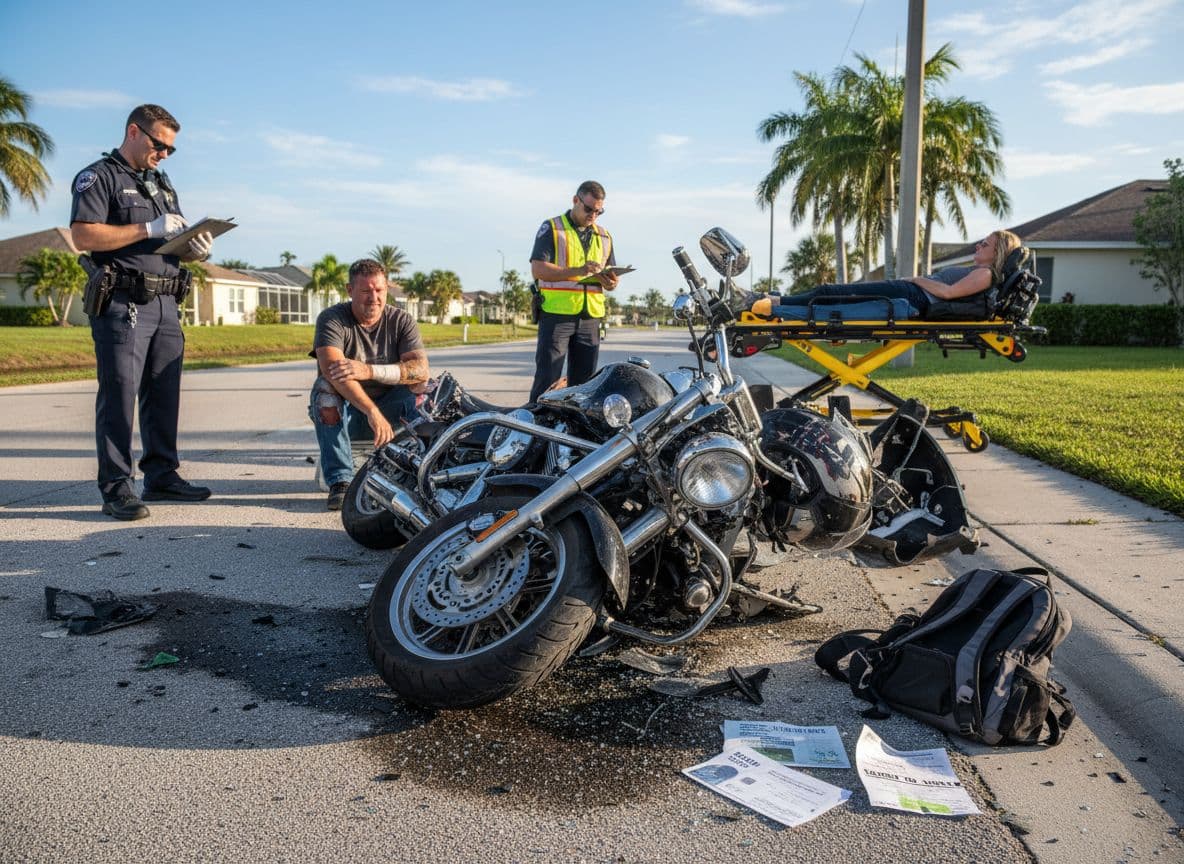
A Cape Coral motorcycle accident can turn a normal ride into a medical crisis in seconds. Riders don’t have a steel frame, airbags, or a seat belt to absorb impact, so the body takes the hit.
After the ambulance and the first hospital visit, the next wave often hits harder: insurance calls, blame-shifting, and pressure to “wrap it up” fast. The best way to protect your health and your claim is to understand what injuries mean for your case, where coverage may come from, and what proof actually moves the needle.
Cape Coral motorcycle crash risk, what the numbers say right now
Cape Coral sits inside Lee County, and recent public data shows a serious problem for riders.
In Lee County, the Florida crash dashboard numbers reported 312 motorcycle crashes and 31 motorcycle deaths in 2024 (with 2023 showing more total crashes but fewer deaths). That mix is a warning sign: even when crash counts dip, outcomes can stay severe. Local reporting has also highlighted Florida’s unusually high motorcycle fatality totals and the role of helmet use and speed in deadly wrecks, using state data as the source (see Florida is the top state for motorcycle deaths. What are the 2024 numbers for Lee County?).
For the most current city-level picture, Florida’s official dashboard lets you filter by Cape Coral, year, and crash type (including motorcycles). It’s the closest thing to live reporting for January 2026: Crash Dashboard, Florida Department of Highway Safety and Motor Vehicles.
Injuries in a Cape Coral motorcycle accident, why “I’ll be fine” can be a trap
Motorcycle injuries often look obvious, but the worst damage can hide for hours or days.
Common injuries in Florida motorcycle wrecks include traumatic brain injuries, broken bones, road rash, spinal injuries, and internal bleeding. Head trauma is a big one because a helmet can reduce risk, but it can’t stop a hard impact from rattling the brain. Broken ribs, collarbones, wrists, ankles, and pelvis fractures are also common, and they can keep you out of work for months.
Road rash sounds minor until you’ve seen it done right, cleaning, debridement, infection risk, sometimes skin grafts, scarring, and nerve pain that won’t quit.
Two steps matter early, both for your recovery and your claim:
- Get checked even if you feel “just sore.” Adrenaline masks symptoms, and internal injuries can turn serious fast.
- Follow through with treatment. Insurance adjusters treat gaps in care like a red flag, even when the gap happened because you were overwhelmed or couldn’t get an appointment.
Insurance after a motorcycle crash in Cape Coral, where money may come from
Insurance in motorcycle cases is rarely simple, and the right answer depends on the vehicles involved, policy language, and fault.
In many cases, compensation may come from a mix of:
The at-fault driver’s liability coverage: This is often the main path when a driver caused the crash by failing to yield, turning left into a rider, changing lanes without checking, or running a light.
Uninsured or underinsured motorist coverage (UM/UIM): This can matter when the driver who hit you has little coverage or none at all.
Your own medical payments coverage (MedPay) or similar benefits: Some riders carry optional coverage that can help with early bills.
Health insurance and hospital liens: Health coverage may keep treatment moving, but payback and liens can affect the final recovery.
Property damage coverage: For the bike, gear, and sometimes phone damage, but don’t assume the first offer matches the real loss.
One practical tip: don’t treat the first call from an insurer like a friendly check-in. It’s also an investigation. If you’re unsure what to say, it may help to talk with a personal injury attorney first, especially if injuries are more than minor.
For local guidance on injury claims, start here: Cape Coral personal injury attorneys.
Proof that wins motorcycle claims, what to gather early (and what not to do)
A strong claim is like a chain, and proof is each link. Missing links don’t just slow the process, they give the insurer room to argue that your injuries came from something else.
Here’s the evidence that tends to matter most.
| Proof that matters | Why it matters in a motorcycle case |
|---|---|
| Medical records and bills | Connects the crash to your diagnosis, treatment plan, and costs |
| Photos and video (scene, vehicles, injuries) | Captures details that vanish fast, debris patterns, visibility, road defects |
| Police report and 911 records | Locks in early statements, parties, witnesses, and initial fault notes |
| Witness names and numbers | Helps when the driver changes their story days later |
| Wage and job documents | Supports lost income and future work limits |
A deeper checklist can help you stay organized when your head’s spinning: Essential documents for personal injury cases.
A few mistakes that can quietly damage your case
Giving a recorded statement too soon: Adjusters may ask questions that sound casual but are designed to pin you into a narrative before the full injury picture is clear.
Posting on social media: A single photo of you smiling at a family event can get twisted into “not really hurt.” It’s common enough that many injury victims worry they’re being watched. That concern isn’t paranoid, it’s practical: Surveillance tactics in Florida injury lawsuits.
Fixing or selling the bike right away: The bike itself can be evidence. Damage patterns can support how the crash happened, especially in disputes about speed or lane position.
Proving fault in Cape Coral, and how blame gets pushed back onto riders
Many motorcycle claims come down to fault and shared fault. Florida uses a modified comparative fault system, which means your compensation can drop if you’re partly at fault, and you may be blocked from recovery if you’re found more than 50 percent at fault.
Insurers often try to shift blame with arguments like:
“The rider was speeding.”
“The rider came out of nowhere.”
“They weren’t visible.”
“They weren’t wearing a helmet, so their injuries don’t count.”
Even when helmet use becomes part of the debate, the bigger issue is usually this: can the insurer prove that a specific choice caused a specific injury outcome? That’s where medical opinions, crash reconstruction, and clean documentation can make a difference.
If your crash involved a passenger, the claim issues can change again, including who can claim benefits and under what policy: Motorcycle passenger injury claims in Florida.
When it makes sense to get legal help fast
Some cases are straightforward. Many aren’t.
It may be time to get help when injuries are serious, fault is disputed, the driver is uninsured, or the insurer is pushing a quick settlement before you finish care. A lawyer can also help coordinate evidence requests, handle insurer contact, and calculate damages that don’t show up in a stack of bills, like future treatment needs and reduced earning ability.
If you’re weighing that step, this overview explains what representation typically includes in a motorcycle injury case: Florida motorcycle accident attorney services.
Conclusion
After a Cape Coral motorcycle accident, the claim is rarely just about a dented bike. It’s about injuries that can change your work, sleep, and daily life, and about proof strong enough to stand up when the insurance company starts picking at details. Get medical care, document everything you can, and don’t let early pressure force a long-term decision. The right next step is the one that protects your health and your rights at the same time.