
Proving Nerve Damage and Radiculopathy After a Florida Car Crash in Cape Coral
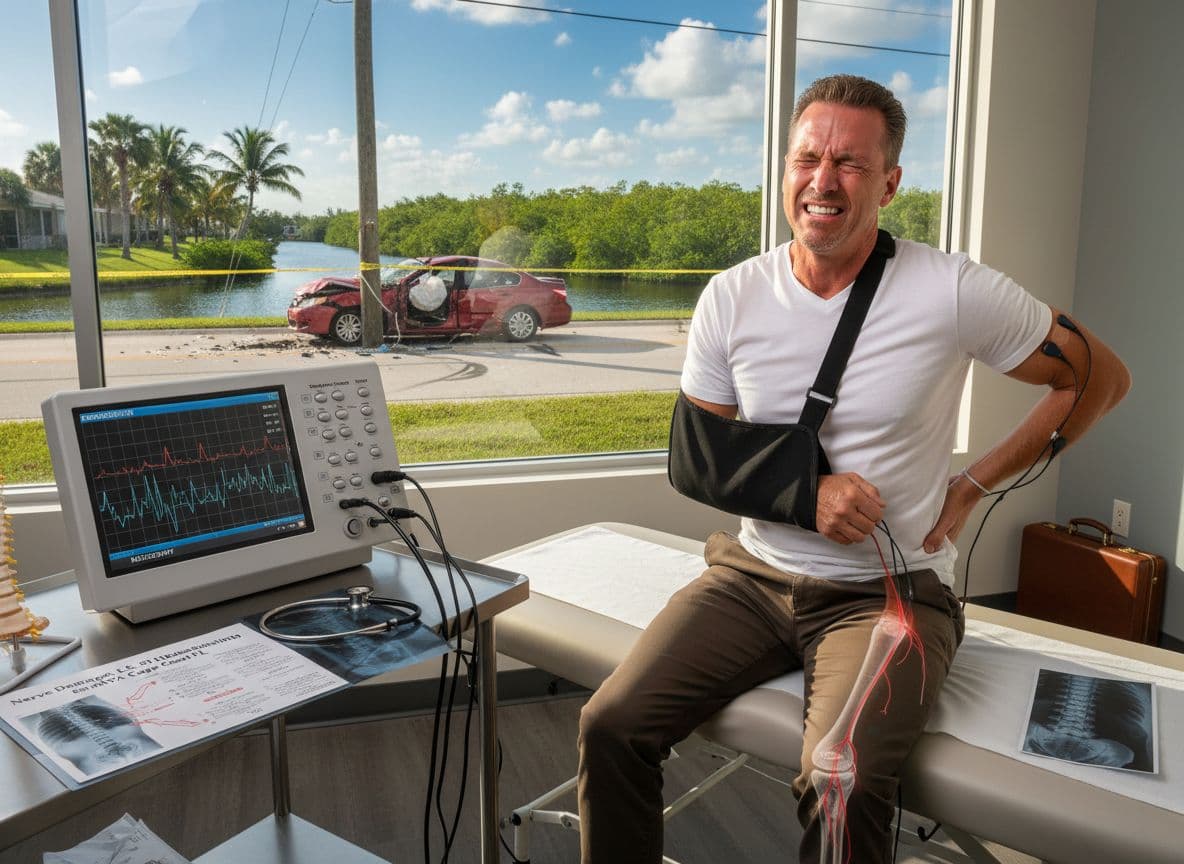
If you are dealing with nerve damage after a Cape Coral crash, you already know the pain is very real, even when it is hard to show on a simple X‑ray.
Many people looking up “nerve damage car accident Florida” are really asking the same thing: How do I prove what I feel so an insurance company or jury will take it seriously?
This guide explains, in plain language, how nerve damage and radiculopathy work, how doctors diagnose them, and what evidence a personal injury attorney can use to build a strong claim after a Cape Coral car accident.
What Are Nerve Damage and Radiculopathy After a Crash?

Photo by Gustavo Fring
Think of your nerves as the body’s wiring. A Florida car crash can stretch, pinch, or crush those wires, especially around the neck and lower back.
Two common results are:
- Peripheral nerve damage: a nerve outside the spine is bruised or cut, causing numbness, burning, or weakness in a limb.
- Radiculopathy: a nerve root is squeezed where it leaves the spine, often by a herniated disc. Pain shoots down an arm or leg, sometimes with tingling or loss of strength.
Doctors often talk about cervical radiculopathy (from the neck) and lumbosacral radiculopathy (from the lower back). Medical sources like the NCBI review on cervical radiculopathy and the companion article on lumbosacral radiculopathy describe these patterns in detail and match what crash victims feel every day in real life.
Warning Signs After a Cape Coral Crash That Point to Nerve Injury
Right after a wreck, adrenaline can mask pain. Symptoms often build over hours or days.
Common red flags include:
- Sharp, burning, or electric pain that travels down an arm or leg
- Numbness, pins‑and‑needles, or “dead” spots in the skin
- New weakness when lifting, gripping, or walking
- Pain that worsens when you cough, bend, or turn your head
- Loss of reflexes or clumsiness in the hands or feet
Cape Coral and the rest of Lee County see thousands of crashes each year, with more than 5,000 reported injuries in 2023 alone. With that many wrecks, doctors in the area see these nerve patterns all the time.
Florida’s no‑fault rules make timing critical. To trigger Personal Injury Protection (PIP) benefits, you usually must seek medical care within 14 days of the crash. Articles on what to do immediately after a Cape Coral car crash stress fast treatment for this reason.
If any of these signs show up, even if you “only” have back or neck soreness at first, get checked right away. Waiting gives insurers room to argue the pain is not crash‑related.
How Doctors Diagnose Nerve Damage and Radiculopathy
From a legal point of view, diagnosis is more than medical care. It creates the paper trail your attorney needs to prove your injury.
The exam
A good doctor will:
- Ask exactly where pain travels
- Test reflexes with a small hammer
- Check strength and sensation in each limb
- Use simple maneuvers to reproduce symptoms along a nerve path
Guides like the lumbar radiculopathy assessment show how precise these tests can be. The exam notes later help show that your complaints followed a classic nerve pattern, not random aches.
Imaging and electrodiagnostic tests
Several tests can turn invisible pain into visible proof.
| Test or exam | What it tends to show in a crash case |
|---|---|
| MRI or CT scan | Herniated discs, spinal stenosis, swelling around nerve roots |
| Nerve conduction study (NCS) | Slower signals along a damaged nerve pathway |
| Electromyography (EMG) | Ongoing nerve irritation or loss of nerve supply to muscles |
Medical literature on electrodiagnostic evaluation of cervical radiculopathy explains how EMG and NCS confirm what the exam suggests.
In whiplash‑type crashes, research such as the review on nerve pathology and neuropathic pain after whiplash injury shows that damaged nerves can keep firing abnormally long after soft tissue seems healed. That kind of science often helps a jury believe long‑term pain complaints.
Every scan, test, and follow‑up visit becomes a building block in your case file.
Turning Medical Findings Into Legal Proof in a Florida Nerve Damage Claim
For a nerve injury case, your story must check three boxes:
- You have a diagnosed nerve condition.
- The car crash in Florida caused or worsened it.
- The condition has real effects on your life and income.
A strong file usually includes:
- Consistent medical records: ER notes, primary‑care visits, specialist reports, physical therapy, pain management, and any surgery.
- Objective findings: MRI reports, EMG/NCS results, and exam notes showing weakness, lost reflexes, or sensory loss.
- A clear timeline: records showing you had no such symptoms before the wreck, then documented complaints after it.
- Impact evidence: work restrictions, HR notes, pay stubs showing lost wages, and descriptions of tasks you can no longer do.
Florida’s no‑fault system means your PIP coverage pays up to $10,000 in medical bills regardless of fault. When injuries are severe or permanent, you may step outside no‑fault and pursue the at‑fault driver for full damages, including pain and suffering. A guide to Florida no-fault insurance explained for Cape Coral accidents walks through those thresholds.
Insurers often argue that nerve problems stem from age or “degenerative changes.” A skilled personal injury attorney counters this by pointing to:
- Clean or mild findings on older scans, compared to clear damage after the crash
- New, documented limits on daily activities
- Treating doctors’ opinions linking the wreck to your current condition
If the insurance company still lowballs your claim, resources on steps to dispute claim valuation after a Cape Coral accident can help you understand options for pushing back.
Why Local Medical and Legal Help Matters in Cape Coral
Proving nerve damage is a team effort. Local experience matters for both doctors and lawyers.
On the medical side, specialists familiar with radiculopathy, such as neurologists and spine doctors, know which tests carry the most weight and how to explain findings in plain English. Works like the NCBI chapter on evaluation of myelopathy and radiculopathy show how detailed these assessments can be.
On the legal side, a Cape Coral personal injury attorney understands:
- Florida’s shortened 2‑year deadline for most car crash lawsuits
- How Lee County crash reports are written and where errors often appear
- Local judges and defense tactics used by major insurers in the area
That knowledge shapes everything from which experts to hire to when to push for trial versus settlement.
You do not have to wait until your treatment is finished. In many cases, hiring an attorney early helps protect your claim, organize records, and stop adjusters from twisting offhand comments into excuses to deny payment.
Conclusion: Protect Your Rights After a Nerve Injury in Cape Coral
Nerve damage and radiculopathy after a Florida car crash are hard to live with and, at times, hard to prove. When pain shoots down an arm or leg, or numbness will not fade, you need more than sympathy; you need solid medical evidence that ties those problems to the wreck.
Thorough exams, targeted imaging, and electrodiagnostic tests, combined with clear records of how your life has changed, can turn an invisible injury into a strong legal claim. A focused personal injury attorney can pull those threads together and present them in a way insurers and juries respect.
If a Cape Coral crash left you with lasting nerve pain, do not ignore it or let an adjuster write it off as “just soreness.” Get proper medical care, keep records, and speak with a lawyer who understands nerve injury cases in Florida. Your health, income, and future comfort may depend on it.