
Florida Rear-End Crash Claims and the Sudden Stop Defense
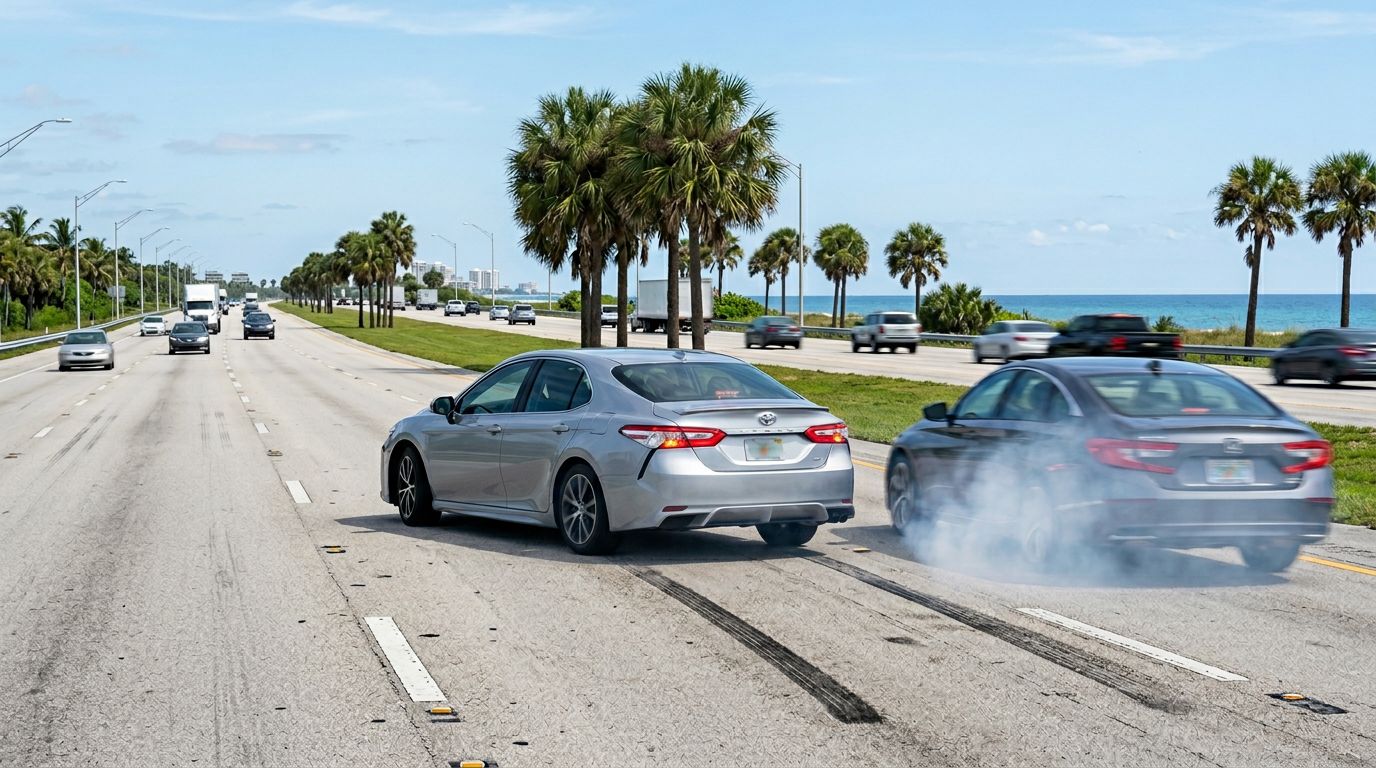
A rear-end crash looks simple from a distance. One car hits another, and the rear driver gets blamed. Yet Florida rear-end crash claims often turn on what happened in the seconds before impact.
Florida logged more than 358,000 crashes in 2025. With that volume, insurers lean on quick assumptions. A sudden stop defense can change that, but only when the facts support it.
Why the sudden stop defense matters in Florida rear-end crash claims
Florida law usually starts rear-end cases with a rebuttable presumption against the rear driver. In simple terms, the driver in back must explain why the crash wasn’t just tailgating, distraction, or speed. That’s a hard starting point, but it isn’t the end of the case.
The sudden stop defense tries to rebut that presumption. It argues the lead driver stopped so abruptly, and so unexpectedly, that a reasonable driver behind couldn’t avoid the crash. Sometimes the claim also involves an unsafe lane change. A car cuts in, leaves no safe distance, then hits the brakes. At that point, the case may be less about following too closely and more about a dangerous move by the lead driver.
A sudden stop alone doesn’t win the defense. The stop must be unexpected, unsafe, or out of step with normal traffic conditions.
That distinction matters. Drivers can brake for a red light, a pedestrian, stalled traffic, or road debris. Those stops may be sudden, but they aren’t careless. On the other hand, slamming the brakes at a green light with clear road ahead may support the defense. The same is true when road rage or a brake check enters the picture. For a closer look at intentional braking cases, see these Florida brake check crash claims.
Because Florida uses modified comparative fault, shared blame can change the whole outcome. If a jury finds you more than 50 percent at fault in a negligence claim, you may recover nothing. So, the fight is rarely all or nothing at first. Often, it’s about shifting fault away from the rear driver and back toward the person who created the hazard.
What facts make the defense stronger or weaker
In these cases, timing is everything. A rear bumper and a bent trunk lid don’t tell the full story. The best evidence shows what both drivers did in the five to ten seconds before impact.
Video is often the strongest proof. A dashcam may show the lead driver cutting into the lane and braking right away. A nearby store camera may show empty road ahead. Witnesses help too, especially when they saw erratic driving before the hit. If the lead driver was waving, lane-blocking, or tapping the brakes, that context can shift the case.
Several facts usually make the sudden stop defense stronger:
- Unsafe cut-in: the lead driver moved into your lane without leaving room.
- No clear reason to brake: traffic ahead was flowing, and the light was green.
- Road rage signs: gestures, horn use, repeated brake taps, or lane games.
- Vehicle data: speed and braking records may match your version.
- Neutral witnesses: third-party accounts often carry more weight than either driver’s story.
Still, some facts weaken the defense fast. Heavy traffic, rain, short sight lines, phone use, or a long skid mark can hand the insurer an easy counterpoint.
Many claims also get harder when property damage looks light. Adjusters love to say a low-impact crash couldn’t have hurt you. That’s not always true. Soft tissue injuries, disc injuries, and flare-ups can come from slower impacts. If that’s part of your case, this guide on proving injuries after a low-impact rear-end crash explains why medical proof matters more than bumper damage.
Think of the evidence like a movie, not a snapshot. One frame shows contact. The full clip shows fault.
How fault, injuries, and early steps affect settlement value
Even when the sudden stop defense has merit, settlement value still depends on proof. PIP may pay some early medical bills, because Florida remains a no-fault state for initial coverage. Yet the larger claim, pain and suffering, lost income, future care, still rises or falls on fault and injury evidence.
That means the first few days matter. After a crash, drivers must stop and remain at the scene under Florida’s duty to stop after a property-damage crash. Then protect the case before the story hardens. Save photos of the lane layout, final car positions, and any businesses with cameras nearby. Get medical care quickly, and describe symptoms in plain words. If you wait too long, the insurer may argue something else caused your pain.
Chain-reaction crashes add another layer. One sudden stop can set off a line of impacts, and each driver may point in a different direction. When that happens, sequence matters. Who stopped first, who was pushed, and who had room to react? This overview of rear-end chain-reaction accidents shows why these files get messy fast.
Insurers also look for side issues. They may blame old injuries, claim you overtreated, or say your symptoms don’t match the vehicle damage. That’s why records matter so much. Clean treatment notes, wage-loss proof, and preserved video can do more than a heated argument ever will.
A strong lawyer helps by locking down footage, reviewing the crash report for errors, and building a timeline that makes sense. In sudden stop cases, a clear timeline is often the difference between “rear driver pays” and “let’s talk about shared fault.”
A rear-end collision may look open and shut, but first impressions can fool everyone. Evidence changes these claims. When the lead driver stopped without a real traffic reason, cut into a lane, or used the brakes as a weapon, the sudden stop defense can rebut the usual presumption and shift fault. If an insurer is pushing a simple rear-end story, move fast, because the best Florida rear-end crash claims are built on timing, context, and proof.