
Side-Impact Car Crashes in Cape Coral: Why T-Bone Injuries Often Lead to Tough Fault Disputes
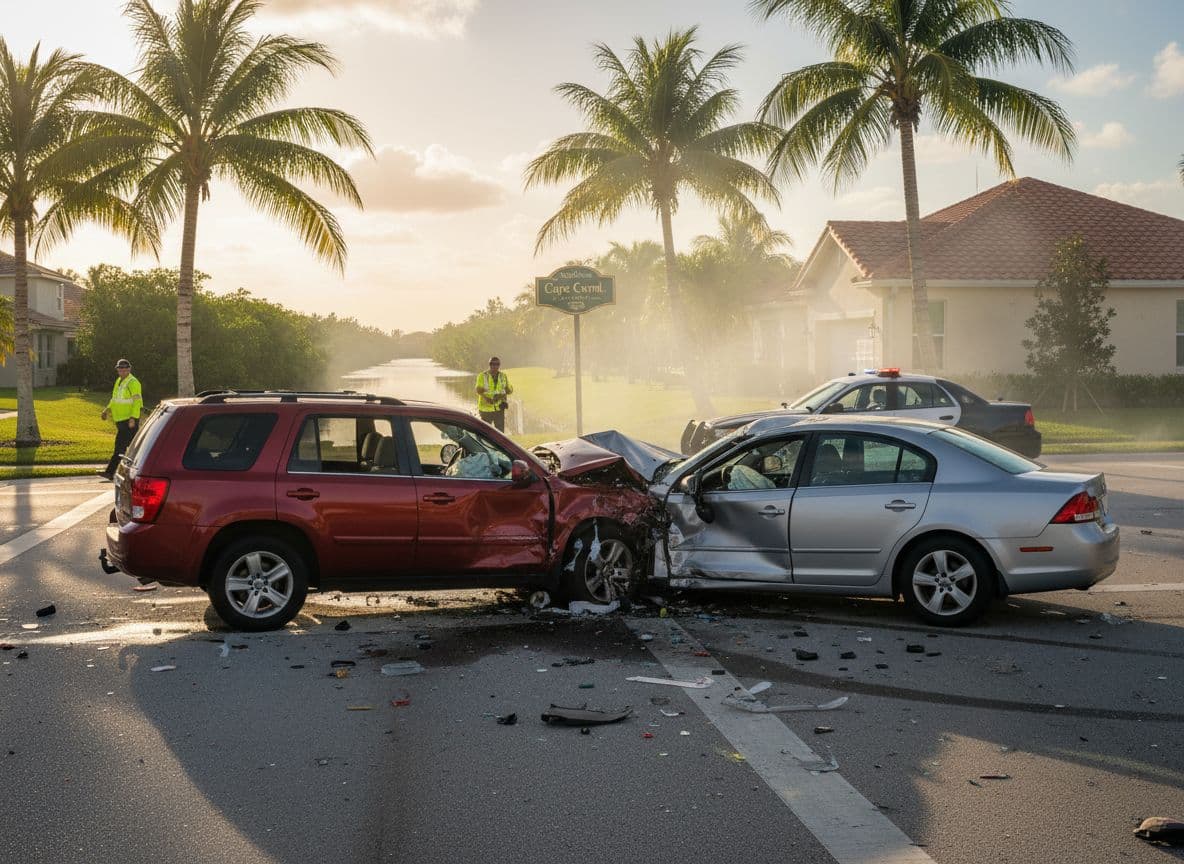
You may hear the crunch of metal, then nothing but confusion. Side-impact crashes often happen in a split second at a busy Cape Coral intersection, leaving both drivers claiming they had the green light.
These wrecks, often called t-bone accidents, cause some of the most serious injuries on local roads. They also trigger some of the hardest fights over who must pay. When t-bone accident fault is disputed, insurance companies move fast to protect their bottom line, not your health.
This guide explains why side-impact collisions are so dangerous, why fault is often contested, and how a personal injury attorney can protect your rights in Cape Coral.
Why Side-Impact Crashes Are So Dangerous In Cape Coral
In a frontal crash, the engine and frame take much of the hit. In a side-impact crash, the only thing between you and a speeding vehicle may be a door and a few inches of metal.
Cape Coral has many wide, multi-lane roads that meet at busy intersections. Veterans Memorial Parkway, Santa Barbara Boulevard, and Cape Coral Parkway all see high traffic and high speeds. These conditions are perfect for a driver to misjudge a yellow light or rush a left turn.
Local data shows that many of the most dangerous intersections involve side hits and turning movements. A T-bone crash at busy Cape Coral intersections can crush the passenger compartment, throw occupants sideways, and cause sharp twisting of the neck and spine.
When impact comes from the side, airbags and crumple zones have less room to work. That is why t-bone crashes often cause brain injuries, broken ribs, hip fractures, and internal bleeding.
How Florida Law Looks At T-Bone Accident Fault
Florida uses a no-fault insurance system for medical bills up to your Personal Injury Protection (PIP) limit, usually $10,000. Your own PIP coverage pays first, even if the other driver clearly caused the crash.
For serious injuries, though, PIP is just the start. To recover full damages for pain, suffering, and long-term losses, you must prove that the other driver was at fault and that your injuries meet Florida’s “serious injury” threshold.
Recent tort reform changed how fault works in these cases. Florida now uses a modified comparative negligence rule. If a jury finds you 50 percent or less at fault, your compensation is reduced by that percentage. If you are more than 50 percent at fault, you get nothing from the other driver.
This shift gives insurers a strong reason to argue about t-bone accident fault. They may claim you were speeding, distracted, or “could have avoided” the crash. To understand how these new laws affect your claim, review the new fault rules for Cape Coral t-bone accidents.
The result is simple but harsh. In many side-impact cases, the fight is no longer just about how badly you were hurt. It is about who can push the other driver’s fault over that 50 percent line.
Why Fault Is So Hard To Prove In A T-Bone Crash
T-bone crashes usually happen in the middle of an intersection. By the time everyone stops, the light has changed, the cars are moved, and witnesses are shaken.
That makes proof tricky. Common problems include:
- Both drivers insist they had the green light
- There are no clear skid marks or camera footage
- Neutral witnesses leave before police arrive
Many side-impact wrecks also involve partial fault. One driver may run a red light, while the other is speeding. A driver might roll through a right turn, while cross-traffic accelerates to “beat the yellow.” In these gray areas, each side points at the other.
Insurance adjusters know how to use this confusion. They may suggest you share blame because you “could have slowed down,” did not see the other car sooner, or glanced at your phone. They only need to push your fault above 50 percent to cut off your claim.
Careful investigation can shift the balance. Police reports, traffic camera footage, nearby business video, vehicle “black box” data, and expert accident reconstruction all matter. For deeper guidance on these mixed-fault fights, look at Avard Law’s page on Cape Coral side-impact fault dispute legal advice.
Common Injuries From Side-Impact Collisions
A side hit concentrates force on one side of your body. Even at lower speeds, that force can be severe.
Common t-bone injuries include:
- Traumatic brain injuries and concussions
- Neck and back injuries, including herniated discs
- Broken ribs, clavicle, pelvis, or hip
- Shoulder and knee damage from twisting or direct impact
- Internal organ injuries and internal bleeding
Many of these injuries do not fully show up at the scene. Adrenaline can hide pain for hours or days. You might leave the crash thinking you are only “sore,” then wake up the next day unable to turn your head or bear weight on a leg.
Serious side-impact trauma often means surgery, long-term therapy, and time away from work. It can also leave lasting limits on lifting, walking, or even sitting at a desk. That is why medical records, doctor opinions, and clear proof of your daily limits are so important in any fault dispute.
How To Protect Your Claim After A Cape Coral T-Bone Crash
Your actions in the minutes and days after a side-impact crash can make or break your case. You do not have to do everything perfectly, but a few steps help a lot.
Right after the crash, if you can:
- Call 911 and wait for police
- Take photos of all vehicles, damage, skid marks, and the traffic light
- Get names and contact details for witnesses
Seek medical care the same day if possible, and always within 14 days. This protects your health and keeps your PIP benefits in place. Tell doctors about every area that hurts, even if the pain seems minor. Hidden injuries are common in t-bone crashes.
Avoid talking about fault at the scene or on social media. A simple “I am sorry” can be twisted into an admission of blame. When the other driver’s insurer calls, give only basic facts. Do not guess about speed, time, or what you “should have done.”
As soon as your immediate medical needs are stable, it makes sense to speak with a Cape Coral personal injury attorney. A local lawyer can:
- Secure camera footage before it is erased
- Work with experts to analyze vehicle damage and timing
- Deal with insurers so you can focus on healing
- Calculate long-term medical and wage losses, not just the first bills
Side-impact crashes at Cape Coral intersections are not simple fender benders. Treat your case with the same care you give your health.
Conclusion
Side-impact crashes combine sudden force, complex intersections, and sharp legal fights over fault. In Cape Coral, where t-bone collisions are common at busy crossroads, those disputes can decide whether you receive fair compensation or walk away with unpaid bills and lasting pain.
You do not control the other driver’s choices, but you do control your response. Get prompt medical care, preserve evidence, and talk with a lawyer who understands t-bone accident fault and Florida’s new rules. Taking those steps now can protect your future long after the wreckage is cleared from the road.