
What to Do When Your Florida PIP Benefits Run Out Mid-Treatment (Cape Coral step-by-step plan)
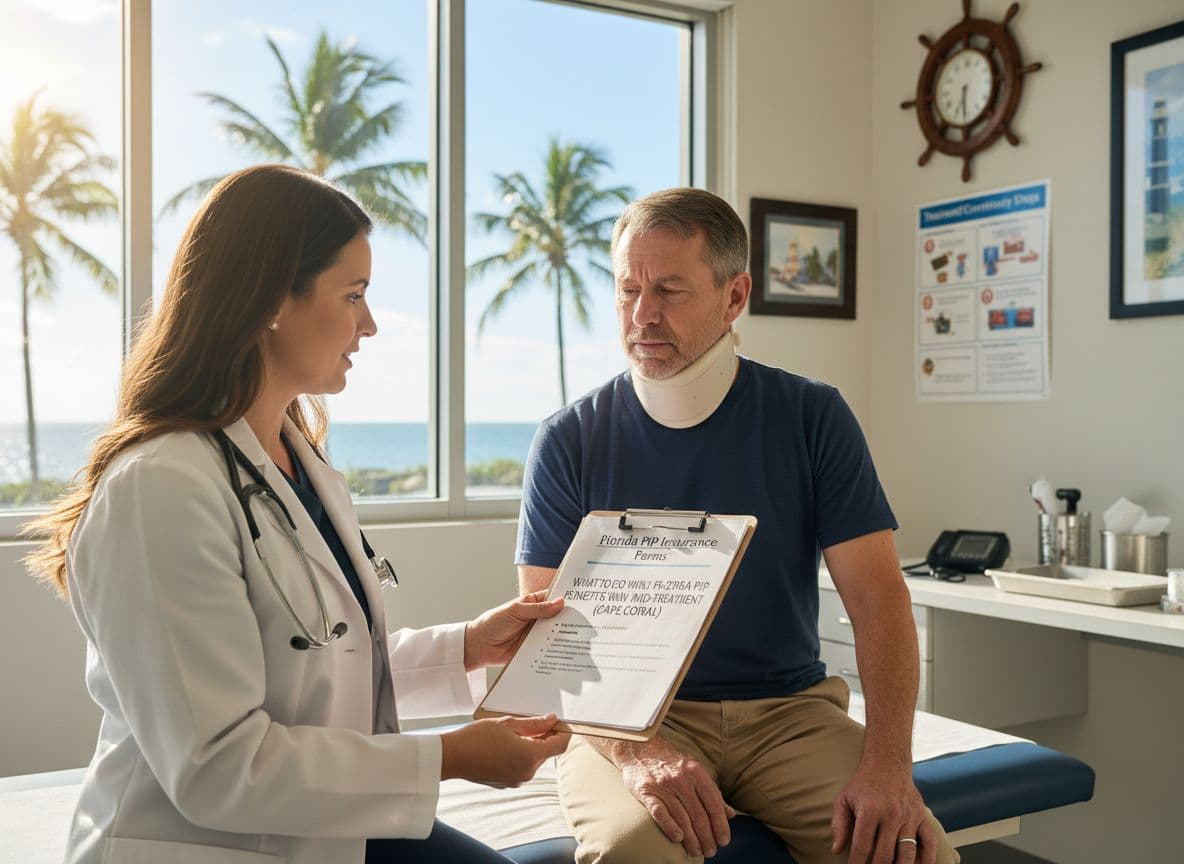
Your care isn’t finished, but the bills are piling up and your Florida PIP benefits look tapped out. It’s a common panic point after a Cape Coral crash, especially with ER visits, imaging, and weeks of therapy.
When PIP runs out mid-treatment, the goal is simple: keep medical care steady, prevent surprise collections, and line up the next source of payment without damaging your injury claim. The steps below are built for real life in Cape Coral, where treatment often starts fast and coverage runs out faster.
Why Florida PIP benefits can run out before you’re healed
Florida is a no-fault state, so PIP is usually the first money available for injury treatment, no matter who caused the crash. Most drivers carry the minimum PIP amount, and serious injuries can burn through it quickly.
PIP also rarely pays 100 percent of every bill. Co-pays, deductibles, and billing disputes can leave balances behind even before the limit is reached. In some cases, if an emergency medical condition isn’t documented, the available PIP amount can be limited for certain treatment.
If you want a clear refresher on coverages that often come into play next (like MedPay, UM/UIM, and bodily injury coverage), see Understanding PIP and PD coverage in Florida.
Step 1: Confirm the PIP “exhaustion” in writing (don’t rely on a phone call)
Before you change treatment plans or agree to pay out of pocket, get the paper trail.
Ask your auto insurer for:
- A PIP payment ledger (what was billed, what was paid, and to whom)
- Every Explanation of Benefits (EOB) or denial
- The date the policy limit was reached (or the reason payments stopped)
Then compare it to what your providers say you owe. Billing errors happen. Duplicate charges happen. Coding issues happen. If a provider never submitted a bill correctly, you may be staring at a “balance” that should’ve been processed through PIP first.
This step also helps later if you need to argue that treatment was reasonable, or that the insurer underpaid.
Step 2: Keep treatment going without letting bills spiral
Running out of PIP doesn’t mean you stop care. It means you get organized fast so the financial side doesn’t wreck your recovery.
Call each provider’s billing office and ask two direct questions:
- “Is my account marked as an auto accident case with PIP exhausted?”
- “What are my options to avoid collections while I keep treating?”
Common options include a short-term hold on collections, a payment plan, or billing your health insurance next. If you have upcoming MRIs, injections, or specialist visits, confirm pricing and billing rules before the appointment. It’s easier to prevent a problem than fix one.
If you need a local, practical overview of the PIP process that leads up to this moment, start with How to navigate your PIP claim after a Cape Coral car accident.
Step 3: Identify the next best payer (and don’t guess)
Once Florida PIP benefits are gone, the next payer depends on your insurance stack and how the crash happened. Here’s a clear way to think about it.
| Next payment option | When it usually fits | What to watch for |
|---|---|---|
| Health insurance | Ongoing care after PIP exhaustion | Your plan may want reimbursement later if you recover money from the at-fault driver |
| MedPay (if you bought it) | Quick help with medical bills | Limits are often small, but it can cover gaps and co-pays |
| Uninsured/underinsured motorist coverage | If the other driver has little or no coverage | Claim handling can still be aggressive, treat it like a serious negotiation |
| Bodily injury claim against the at-fault driver | When the other driver caused the crash and coverage exists | Settlement timing can be slow, don’t assume it will pay next month |
| Workers’ comp | If you were hurt while working | Reporting deadlines and approved provider rules can be strict |
A key point: try to avoid “self-paying” large bills in the middle unless a plan is in place. Large out-of-pocket payments can create stress and make it harder to keep consistent treatment.
Step 4: Lock down the records that protect your case and your coverage
When PIP ends, insurers start asking harder questions. The best defense is clean documentation.
Focus on these basics:
- Treatment timeline: keep appointment dates and referrals in one place
- Symptoms and limits: short notes about sleep, driving, lifting, and work function
- Work loss proof: pay stubs, missed hours, doctor restrictions
Also secure the crash paperwork early. If you don’t already have it, follow Steps to get a police report after a Cape Coral accident. A complete report can help when fault is disputed or when an insurer tries to shift blame later.
Step 5: Know when you can pursue more than no-fault benefits
PIP was designed as a starting point, not a full solution for serious injuries. If your injuries are severe, permanent, or involve major scarring or loss of function, you may be able to pursue a claim beyond PIP.
Two time-sensitive realities matter in January 2026:
- Florida injury deadlines are shorter than many people assume.
- Fault arguments matter more now, because being assigned most of the blame can block recovery in many cases.
For a Cape Coral focused breakdown of the newer rules that can affect timing and fault, read How HB 837 changes Cape Coral car accident claims.
Step 6: Bring in a personal injury attorney when the gap is getting expensive
Some people wait until treatment ends to talk to a lawyer. That can be too late to prevent avoidable financial damage when Florida PIP benefits run out mid-treatment.
A personal injury attorney can help when:
- PIP stopped early because the insurer denied bills
- Providers are threatening collections while you’re still treating
- You need to coordinate health insurance, MedPay, and injury claims without contradictions
- The at-fault insurer is pushing a quick, low settlement before you know your long-term needs
This isn’t only about lawsuits. It’s also about managing billing pressure while protecting the value of the claim you may need to fund future care.
Step 7: Make a short, realistic plan for the next 30 days
You don’t need a perfect long-term roadmap today. You need a stable next month.
A workable 30-day plan looks like this:
- Confirm PIP exhaustion paperwork and fix billing errors
- Switch to the next payer (health insurance or MedPay) for ongoing treatment
- Get written billing holds or payment terms from providers
- Collect your crash report, wage proof, and key medical records
- Get legal advice if the financial gap is growing or fault is being disputed
Conclusion
When your Florida PIP benefits run out mid-treatment, the worst move is freezing and hoping it sorts itself out. Confirm the exhaustion, stabilize your billing, and line up the next payer quickly. If the injury is serious or the insurers start pushing back, getting help from a personal injury attorney can keep treatment on track while protecting the claim that may pay for what PIP never could.