
Florida Workers’ Comp Drug Test After Injury: What Fails A Claim
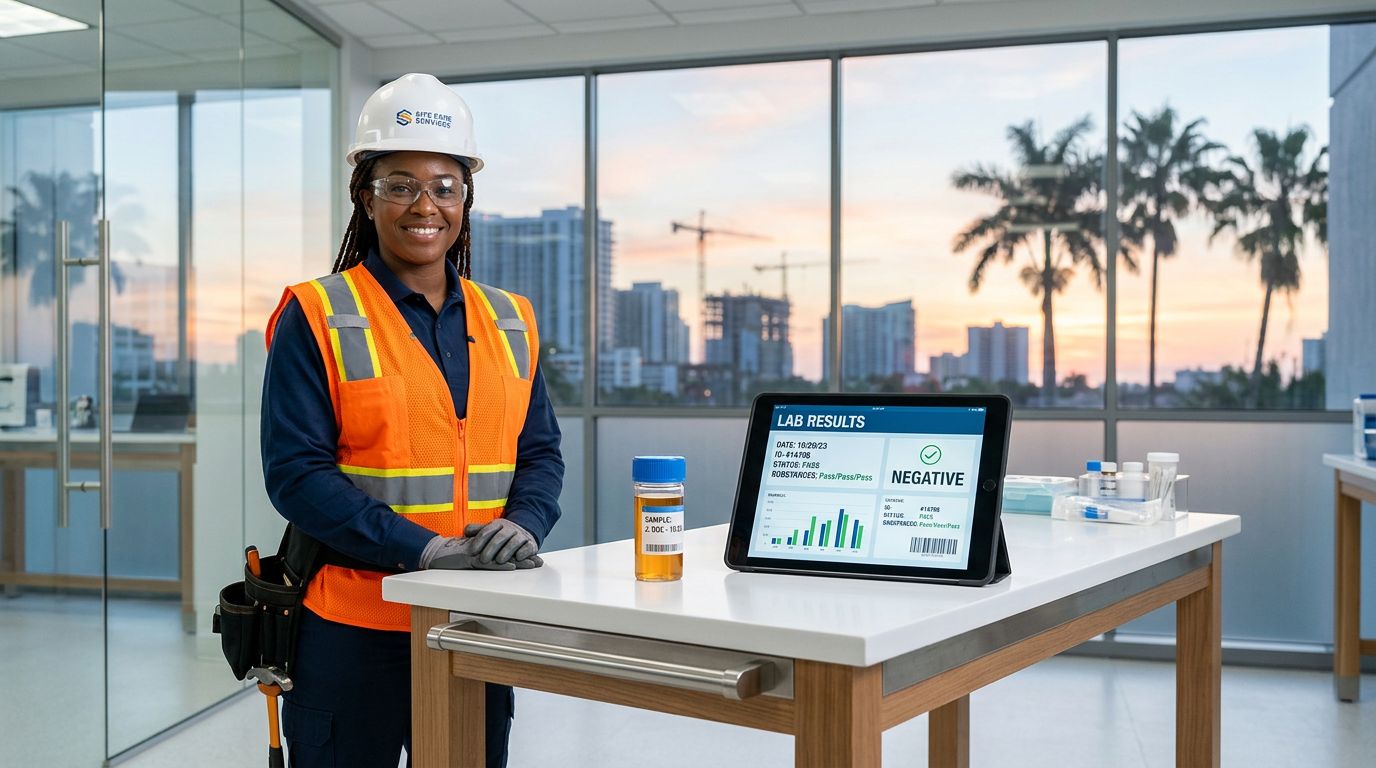
A work injury is stressful enough. Then your employer says you need a Florida workers’ comp drug test. For many workers, that moment raises a scary question: will this test wipe out my benefits?
In Florida, a post-injury drug test can put a claim at risk, but it doesn’t always end it. The outcome often turns on the employer’s testing program, the type of result, and whether the insurer can use the law’s “presumption” against you.
Below is what usually triggers testing, what results can derail a claim, and what to do fast if the insurer tries to deny benefits.
Why employers order drug tests after a workplace injury in Florida
Florida law encourages “drug-free workplaces,” and it gives employers tools to enforce them. The Legislature’s stated goal is to prevent work accidents tied to drug use and to allow benefit losses when impairment causes an injury. You can read that policy statement in Florida Statute 440.101.
If an employer follows the requirements of a drug-free workplace program, it can require testing in set situations, including after certain workplace accidents. Those program rules live in Florida Statute 440.102. Separately, the workers’ comp law in Chapter 440 includes a powerful legal presumption that can affect benefits when a worker tests positive or refuses testing (see Florida’s Chapter 440 statutes).
Two points catch many people off guard:
First, timing matters. Post-accident tests usually happen soon after the incident, sometimes the same day. That’s because insurers argue the test is tied to whether impairment contributed to the injury.
Second, refusing a test can be treated like failing. If you walk out, delay without a valid reason, or don’t cooperate, the insurer may treat it as a positive result and move to deny benefits.
A post-injury drug test isn’t just a workplace rule. In workers’ comp, it can become a legal shortcut the insurer uses to argue the injury isn’t covered.
Florida workers’ comp drug test results: what actually fails a claim
“Failing” in workers’ compensation usually means this: the insurer denies medical care and wage benefits because it claims drugs or alcohol caused, or contributed to, the accident. Under Florida’s workers’ comp system, a positive drug test can trigger a presumption against the worker. That presumption can be hard to overcome.
Here are the most common ways a drug test creates denial risk:
- Positive result for illegal drugs: A confirmed positive can prompt an insurer to claim impairment caused the accident.
- Positive result for marijuana (even medical): Florida allows medical marijuana, but workers’ comp and workplace policies don’t work like a medical card. THC can stay detectable long after use, and insurers may still argue impairment. For more detail on how this plays out, see Avard Law’s page on does a positive drug test affect Florida workers comp.
- Alcohol at or above the legal threshold: Alcohol results can also support a denial, depending on the facts and testing rules.
- Refusal, failure to appear, or tampering allegations: Insurers often treat these like a positive because they claim you blocked verification.
At the same time, some situations look like an automatic denial but aren’t always:
A prescription medication result may have an explanation, especially if you take the medication as directed and disclose it properly. Also, testing problems happen. Chain-of-custody issues, wrong sample handling, or non-confirmed screening results can matter.
Florida’s drug-free workplace framework also relies on verification steps, including medical review of certain results. The state’s workers’ comp agency explains how drug-free workplace programs tie into the system, including insurance incentives, in its drug-free workplace FAQ for employers.
This quick table shows how insurers usually frame common outcomes:
| Test outcome | What the insurer argues | What it can mean for your claim |
|---|---|---|
| Negative | No impairment evidence | Claim usually proceeds normally |
| Positive (confirmed) | Presumption of impairment or causation | Benefits may be denied unless you rebut it |
| Refusal or non-cooperation | Treated like a positive | Denial risk is high |
| Positive with valid medical explanation | Result doesn’t equal impairment | Still contested, but not always fatal |
The takeaway is simple: the test result is only part of the story, but insurers often try to make it the whole story.
How to protect your benefits if the test is positive (or you couldn’t test)
If a Florida workers’ comp drug test comes back positive, the most important thing is speed. Deadlines can be short, and the paper trail matters.
Start with the basics. Ask for a copy of the test result and any paperwork you signed. Also request the chain-of-custody documents and whether the lab ran a confirmation test (not just an initial screen). If the program allows re-testing of the same sample at another certified lab, ask how to request it right away. Even when you plan to challenge the denial, you still need the documents to do it.
Next, focus on causation. The presumption can feel like a thumb on the scale. Still, it can be challenged with strong proof that the substance did not cause the accident. Helpful evidence often includes:
- Accident proof: Photos, video, equipment records, and maintenance logs that show a hazard or malfunction.
- Witness statements: Co-workers who saw the incident and your condition before and after.
- Medical timeline: ER notes, triage records, and provider observations about alertness, speech, and coordination.
- Policy compliance issues: Missed steps in the employer’s program, notice problems, or testing that didn’t follow required procedures.
Also be careful about what you say at work. Don’t guess about what happened or why a result occurred. If you take prescriptions, gather proof of lawful use and dosing, but avoid handing over unrelated medical history without advice.
Treat a post-injury drug test like a time-sensitive dispute, because insurers do.
Finally, get legal help early if the insurer denies benefits. A lawyer can spot procedural errors, demand the right records, and build evidence to rebut the presumption. That’s often the difference between a quick denial and a claim that survives.
Conclusion
A Florida workers’ comp drug test after injury can fail a claim when it produces a confirmed positive result, or when a worker refuses to test. Still, denials are not always the final word, especially when testing rules weren’t followed or the accident had a clear non-drug cause. If your benefits are threatened, act fast, document everything, and protect your right to medical care and wage benefits.