
Florida Tanker Truck Crash Claims: Spill Logs and Driver Hours
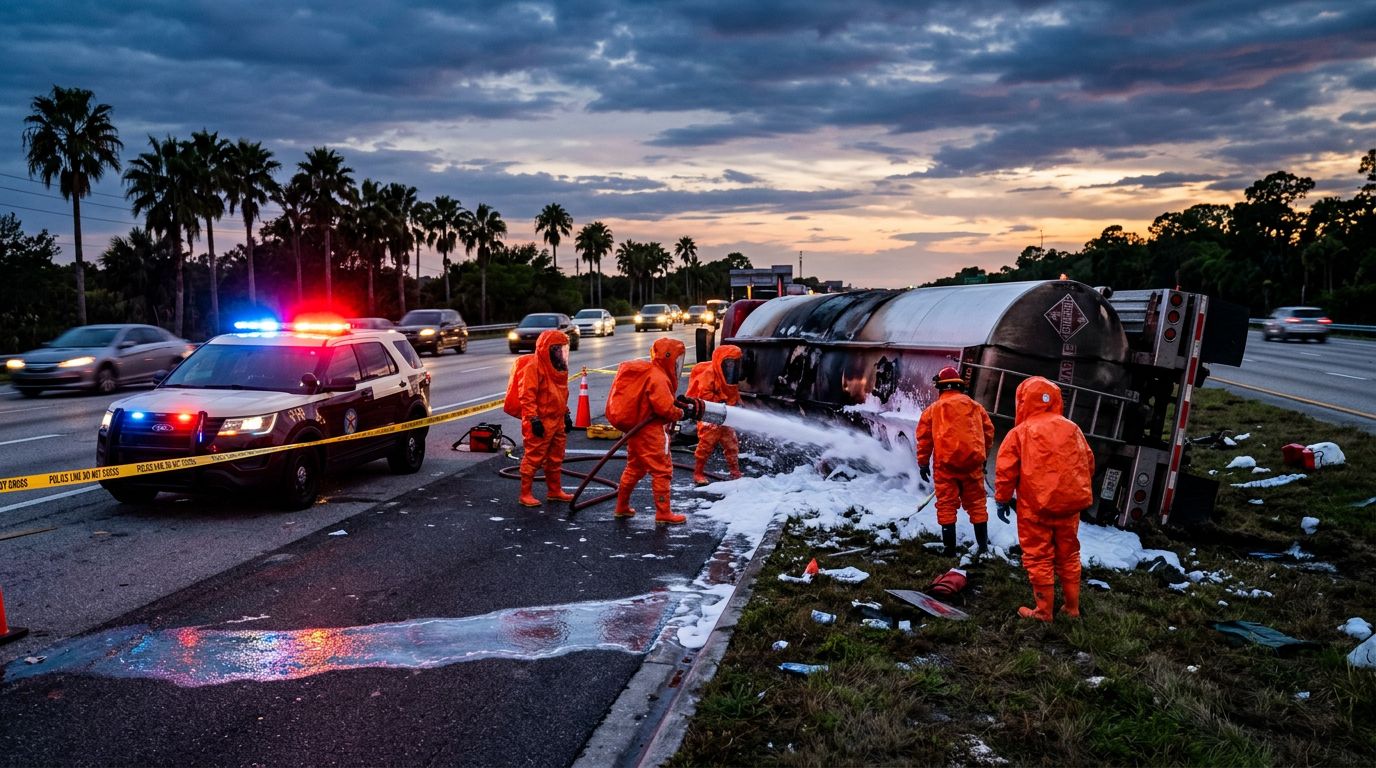
A tanker crash can leave more than twisted metal. It can shut down lanes, trigger a hazmat response, and wipe out key evidence before most victims get home.
In Florida tanker truck crash claims, two records often matter more than people expect: spill logs and driver hour records. They can show what leaked, when the danger grew, and whether fatigue may have played a role. That paper trail often shapes fault, damages, and settlement value.
Why tanker cases get harder than ordinary truck wrecks
A tanker truck isn’t hauling dry cargo. It may carry fuel, chemicals, or other liquid loads that move inside the tank. When that load shifts, a crash can turn into a rollover, fire risk, or multi-vehicle pileup in seconds.
That changes the claim. Police write one report, but fire rescue, hazmat crews, cleanup contractors, and the carrier may each create their own records. If the tanker struck several vehicles, the Florida chain reaction accident checklist can help show why sequence and timing matter.
Florida law also lets the defense argue that an injured person shared blame. That matters because fault findings affect payment for medical bills, lost pay, property loss, and pain and suffering. Because of that, you need more than a broad story about “a big truck crash.” You need timestamps, scene data, and records that tie the truck’s conduct to the wreck.
In tanker cases, the police report is only the start. The stronger paper trail often sits with the spill response and the truck’s own logs.
Why spill logs can make or break the claim
A spill log does more than count gallons. It can show when the leak began, how responders contained it, where fuel or chemicals spread, and whether the tanker kept releasing product after impact. Those details help explain how severe the crash was and why nearby drivers had little chance to avoid it.
On February 11, 2026, public reports described a fuel tanker crash on I-595 in Davie. The tanker rear-ended a van, rolled over, and spilled about 4,000 gallons into the roadway and drainage system. News reports focused on lane closures, foam response, and the spill itself. No published report identified a driver hours violation. That gap is common in early coverage.
For a claim, spill records can fill in what headlines miss. They may identify the cargo, the estimated amount released, the path of the spill, and the length of the shutdown. They can also point to valve failure, tank damage, or delayed containment. If a trucking company later downplays the event as a minor impact, the spill file may tell a different story.
Ask about more than one document. Useful records may include fire department reports, hazmat run sheets, cleanup invoices, cargo papers, and photographs taken during containment. When fuel reached drains or shoulders, those records may also show how far the danger spread beyond the first point of impact.
Driver hours often reveal the other half of the story
Fatigue evidence rarely appears in plain view at the scene. Instead, it shows up in electronic logging device records, dispatch messages, fuel receipts, toll data, and GPS timestamps. A driver may say he felt fine. The time records may show something else.
Florida publishes a plain overview of hours-of-service rules for commercial drivers. Those rules limit driving time and require off-duty rest. In many tanker cases, the issue is not only whether a driver crossed a legal limit. The issue is whether the schedule was so tight that fatigue, missed breaks, or rushed driving became part of the crash.
Hours records can also expose bad edits. If the ELD shows one timeline but fuel stops, bills of lading, or phone records show another, that mismatch matters. It may support a claim against the driver, the carrier, or both.
Still, hours records do not prove fault by themselves. A lawyer usually reads them beside dispatch records, pre-trip inspection reports, maintenance files, and post-crash testing results. Together, those records can show whether the driver was tired, late, distracted, or pushed to keep moving despite risk.
The records that should be preserved early
Time matters because trucking companies repair equipment fast and routine data can disappear. The first days after a tanker wreck often decide whether the case stays clear or turns into a blame fight.
This short table shows the records that usually matter most:
| Record | What it may show | Why it matters |
|---|---|---|
| Spill logs and hazmat reports | Leak source, spread, response times | Proves severity and roadway danger |
| ELD and GPS data | Driving hours, speed, stops, rest | Supports fatigue and timeline issues |
| Cargo papers | What the tanker carried | Confirms exposure and cleanup needs |
| Dispatch and phone records | Delivery pressure or route changes | Shows company control and urgency |
| Maintenance and inspection files | Brake, tire, valve, or tank issues | Points to mechanical failure or poor upkeep |
You should also move fast to preserve scene photos, dashcam footage, and the vehicles themselves. That same early-proof problem shows up in other commercial truck cases, including Florida jackknife truck crashes, where the roadway story can change within hours.
If a passenger car struck the tanker after a spill or sudden blockage, don’t let the defense reduce the case to a simple rear-end crash. Liquid cargo can shift weight, spills can erase traction, and lane closures can force impossible choices. The records above help explain that chain of events in a way witness memory often cannot.
A strong claim usually comes from matching the paper trail to the physical scene. When the timestamps line up, the defense has less room to rewrite what happened.
What matters most after a Florida tanker crash
The strongest Florida tanker truck crash claims often rest on records most people never see at the roadside. Spill logs can show how dangerous the scene became. Driver hour records can show whether fatigue or a bad schedule helped cause it.
When those records disappear, the other side gets more room to shape the story. Early action, careful preservation, and quick legal review can keep a tanker crash from turning into a one-sided paper fight.