
Florida Golf Cart Accident Claims: Proof Checklist After a Crash
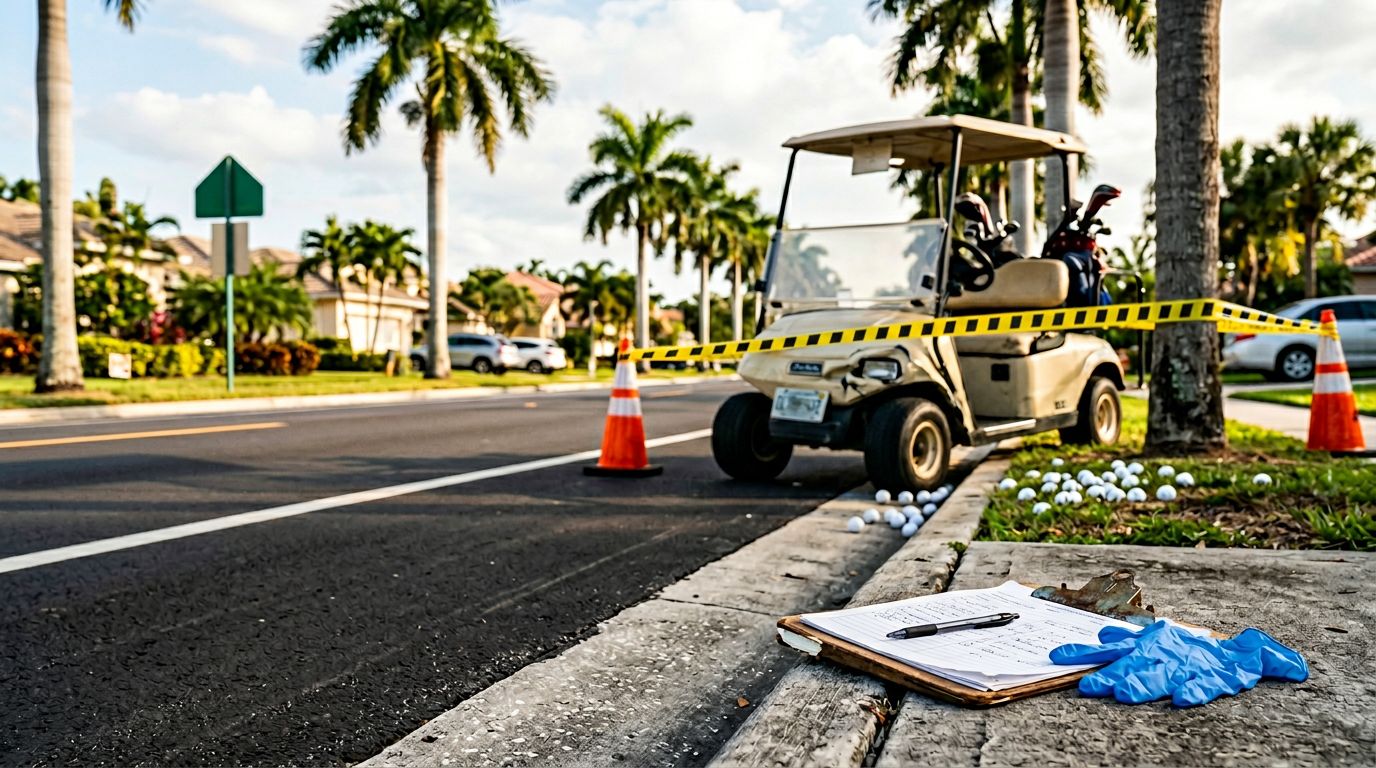
A golf cart crash can look small at first, then turn into a serious injury case fast. If you were not at fault, the hardest part often isn’t the crash itself, it’s proving what happened before the evidence fades.
Insurance companies don’t pay because a wreck feels unfair. They pay when the facts, records, and losses line up. That’s why strong Florida golf cart accident claims are built early, not months later.
The first proof problem is usually the scene
A golf cart scene changes fast. The cart gets moved. Broken parts get picked up. Witnesses head home. By the next day, the story can already look different.
That matters because Florida golf cart accident claims still follow the same basic rule as other injury cases. You need proof that someone acted carelessly, that the carelessness caused the crash, and that the crash caused real harm.
If the wreck happened on a public road, the legal setup matters too. Florida’s rules for golf carts and low-speed vehicles can affect fault, insurance, and whether the other side tries to blame the cart driver for illegal roadway use. The FLHSMV low-speed vehicle guidance explains those categories, and Florida Statute 316.21265 outlines roadway use rules for golf carts.
Florida also changed the picture in 2026. Public-road golf carts now generally require minimum PIP and property damage coverage, so early treatment and clean records matter even more. If you want a plain-English look at how those benefits work, this guide to PIP benefits after Florida crashes is a helpful starting point.
This is the proof insurers usually want to see first:
| Proof item | What it helps prove | Why it matters |
|---|---|---|
| Scene photos and video | Point of impact, road layout, visibility | Stops later guesswork |
| Cart and vehicle damage | Who hit whom, and from where | Supports the fault story |
| Driver, owner, and insurance details | Who may be legally responsible | Identifies all payers |
| Early medical records | When symptoms began | Connects injuries to the wreck |
The point is simple. A claim gets stronger when several small facts tell the same story.
Your proof checklist after a Florida golf cart crash
Think of evidence like footprints in wet sand. Wait too long, and the tide erases them.
Start by protecting your health. Then start building the file. If you need a local example of how these cases are handled, this overview of golf cart accident claims in Cape Coral shows how fault and damages are often framed in Florida.
Use this checklist as your baseline:
- Call 911 when there are injuries, major damage, or any dispute about what happened.
- Take wide photos first, then close-ups of damage, skid marks, debris, lighting, signs, and path entrances.
- Get the names, phone numbers, insurance details, and plate numbers for every driver and owner involved.
- Ask witnesses for contact information before they leave.
- Look for cameras at gates, clubhouses, homes, stores, or intersections nearby.
- Preserve the golf cart before repairs, disposal, or battery replacement changes the evidence.
- Get medical care quickly, and tell the provider about every symptom, even if it seems mild.
- Save bills, work-loss records, receipts, towing papers, and ride costs.
- Write down what happened while the memory is fresh, including speed, direction, weather, and lighting.
- Keep texts, app messages, and call logs if they help show where you were going or who saw the crash.
The best golf cart claims don’t rely on one dramatic piece of proof. They rely on a clean trail of details.
Each item blocks a common insurance defense. Photos help defeat claims that the crash was minor. Witnesses help when the other side changes the story. Medical records help when the insurer says your pain came from something else.
Also, don’t overlook ownership and maintenance. Some golf cart crashes start with bad brakes, worn tires, broken lights, or unsafe modifications. In those cases, fault may extend beyond the person behind the wheel.
Mistakes that can shrink a strong claim
Many not-at-fault victims hurt their own cases without meaning to. They give a recorded statement too soon. They repair the cart before anyone documents it. They say, “I’m fine,” because adrenaline is still high.
That last mistake is common. Neck, shoulder, back, and head symptoms often show up later, much like the common Florida crash injuries seen after other traffic collisions. A treatment delay gives the insurer room to argue that the crash wasn’t serious.
Another problem is assuming private property means no real claim exists. That’s not always true. A crash in a neighborhood, resort, parking area, or community path can still support a liability claim. Depending on the facts, the responsible party might be the driver, the owner, a business, or another party that failed to keep the area reasonably safe.
Florida’s modified comparative fault rule also matters. If the insurer can pin part of the blame on you, your recovery may drop. If they push your share above 50 percent, recovery can be barred. So expect them to look for arguments such as poor lighting, too many passengers, unsafe turns, distracted driving, or roadway use that broke local rules.
Social media can add another headache. A single photo from dinner or the golf course may be twisted into proof that you’re unhurt. Keep the case off your feed.
Finally, don’t assume a low settlement offer means the facts are clear. Fast offers often appear before the full medical picture does. Once you settle, you usually can’t go back for more.
A golf cart wreck may happen in seconds, but the proof battle lasts much longer. The people who do best usually act early, stay organized, and avoid casual statements that can be used against them later.
A not-at-fault victim shouldn’t have to fight uphill over missing photos, delayed treatment, or a repaired cart. Protect the proof first, then deal with the claim.
If fault is disputed or the insurer starts shifting blame, getting legal advice early can keep a straightforward case from turning into a costly mess.