
Florida Stairway Fall Claims Checklist For Photos Codes And Reports
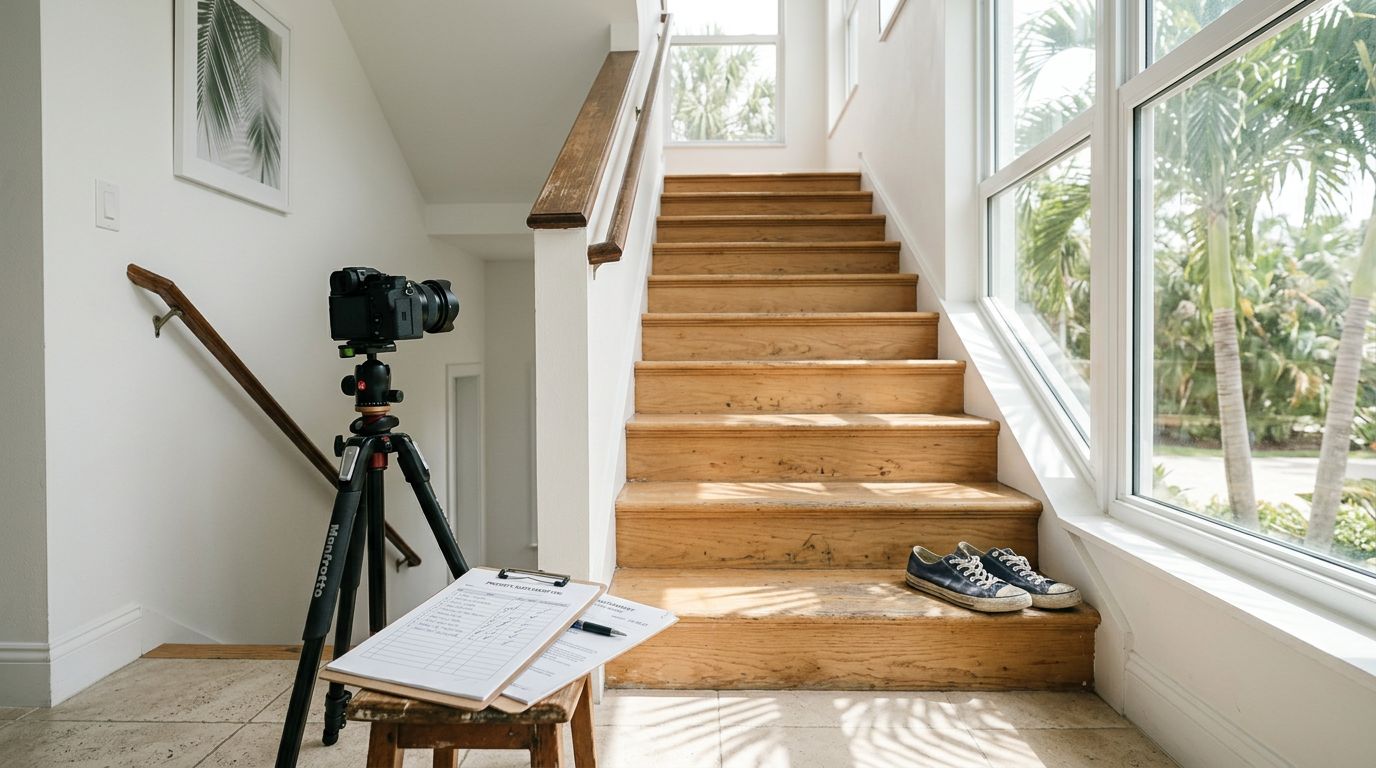
A stairway fall can change your life in seconds. The pain hits first, then the questions start. Why did you slip, why didn’t the handrail hold, why was that step a different height?
If you’re thinking about Florida stairway fall claims, the most important work often happens in the first day. Good photos, the right code details, and the right reports can keep a strong case from turning into a shrug.
Below is a practical checklist you can follow after a stair fall in Florida, focused on what to capture and what to request before evidence disappears.
The photo proof that makes or breaks a stair fall case
Photos do two jobs at once. First, they lock in what the stairs looked like before repairs. Second, they help explain your fall without relying on memory weeks later.
If you can, do these three things right away:
- Get medical help first, then return to document if it’s safe.
- Photograph the scene before staff “fixes” it (cones, mopping, moving rugs).
- Save what you wore, especially shoes, because tread and debris matter.
A quick table helps you cover the angles insurers argue about most.
| What to photograph | Quick tip | Why it matters |
|---|---|---|
| Entire stairway from top and bottom | Stand back, show context | Proves layout, slope, and visibility |
| Each step close up | Capture tread, nosing, and edges | Shows uneven wear, broken edges, or slick surfaces |
| Side view of the flight | Shoot along the stair line | Helps show inconsistent riser heights |
| Handrails (both sides) | Include brackets and endpoints | Documents loose rails, missing rails, poor returns |
| Lighting and shadows | Take one photo with flash, one without | Poor light can hide step edges and defects |
| Any warning signs (or lack of them) | Zoom out and in | Shows what the owner did, or didn’t do |
| Wet spots, spills, or tracked-in water | Add a common object for scale | Shows size and location of the hazard |
| Your injuries over time | Repeat photos at 24 and 48 hours | Bruising and swelling often develop later |
| Your footwear after the fall | Photograph soles and uppers | Helps counter “wrong shoes” arguments |
Also, take a 10 to 20 second video walking the path you took (only if safe). Narrate what you see in real time: loose rail, dark landing, missing strip, or a wobbly step. That audio can refresh your memory later.
If you want a broader overview of how slip and fall cases get evaluated, see Avard Law’s guide on understanding slip and fall injuries. It helps connect the scene details to the injury issues that come up in claims.
Which Florida stairway codes to flag, even if you’re not an inspector
You don’t need to quote code sections to have a valid claim. Still, code concepts help you spot what matters, and they guide experts when they inspect later.
In March 2026, Florida generally follows the Florida Building Code (with different tracks for residential vs. commercial). Many stair falls involve the same repeat problems:
Step size and consistency (the “one odd step” problem)
A single step that’s slightly taller can act like a hidden pothole. People fall because their body expects a steady rhythm.
Commercial and multi-family stairs often use dimensions similar to the IBC baseline (commonly a 7-inch max riser and 11-inch minimum tread). Many one and two-family homes allow a bit more rise and a bit less tread (often 7 3/4 inches max rise and 10 inches minimum tread). What matters most in real cases is uniformity across the flight.
For a plain-language example of what building departments look for in homes, review the City of Tallahassee’s residential stairway and handrail requirements PDF. Code editions vary by year and project type, but the document shows the kinds of measurements that often become case issues.
Handrails, guardrails, and “nothing to grab”
Missing handrails and loose brackets are common in stair fall claims. So are rails that stop short, rails blocked by décor, or rails mounted too far from the wall to grip.
Handrail height rules often land in a narrow band (commonly 34 to 38 inches above the tread nosing). Rails also need safe ends, not sharp cutoffs that snag clothing or hands.
Surfaces, edges, and traction
Look for worn anti-slip strips, glossy paint, smooth tile, or rounded nosings that reduce footing. Edge contrast matters too. On dark stairs, dark tread edges can disappear in shadows.
A stairway doesn’t have to collapse to be unsafe. Small design and upkeep failures can stack up, then one misstep turns them into a serious injury.
If you want to read actual Florida Building Code text as an example, the ICC hosts sections online, including a Florida code page on stairs in the Florida Building Code. Use it as a reference point, but remember the right section depends on the building type and where the stairs are located.
Workplace stairs add another layer because employers often control maintenance schedules and safety rules. For that angle, Avard Law’s article on workplace slips trips and falls explains common hazards and how people should respond after a work injury.
The reports and records to request before they “disappear”
Photos show what happened. Reports help prove notice, timing, and the owner’s response. In Florida stairway fall claims, the goal is to build a clean timeline that matches your medical care.
Start with these records:
- Incident report (store, hotel, apartment complex, restaurant, or event venue). Ask for the report number and the name of the person who took it.
- 911 call and dispatch logs if emergency services responded. These can lock in time and location.
- EMS report and ER records, including triage notes. Early symptom notes carry weight.
- Imaging and results (X-ray, CT, MRI), plus follow-up referrals.
- Witness info: names, phone numbers, and a short written summary while it’s fresh.
- Maintenance and cleaning logs for the stairway. These can show missed inspections or rushed “cleanup.”
- Prior complaints or work orders about that stairway (loose rail, broken step, poor lighting).
- Surveillance video from stairwell cameras, hallway cameras, or entrances that show foot traffic and lighting.
Video is the record most likely to vanish. Many systems overwrite in days, not months.
Send a written preservation request fast. Ask the property owner to keep all footage from at least 30 minutes before and after the fall, from every camera that could capture the stairs or your approach.
Finally, keep your own file. Save receipts, mileage to appointments, and a short daily note about limits (stairs, driving, lifting, sleep). Those small details often explain damages better than a big speech later.
Florida deadlines matter too. In many negligence cases, Florida now uses a two-year window to file suit, and waiting also makes evidence harder to get. The earlier you act, the fewer gaps the insurer can exploit.
Conclusion
Stairway cases are won with details, not drama. Take wide and close photos, note code-related issues like uneven steps and missing rails, and request reports and video before they get erased. If your injuries are serious, getting legal guidance early can help protect the evidence and your options. The sooner you start, the clearer the story stays.