
How to document soft tissue injuries that show up weeks after a Cape Coral crash
You walked away from a Cape Coral crash thinking you got lucky, then the soreness stuck around. A week later, your neck feels tight. Two weeks later, your shoulder burns when you reach overhead. By week four, you’re skipping sleep and using sick time.
That delay is common with soft tissue injuries, and it creates a new problem: how do you prove the crash caused pain that didn’t hit you all at once?
Good soft tissue injury documentation is less about one perfect record and more about a clear story backed by everyday proof. The goal is simple: show what happened, when symptoms started, what care you got, and how your life changed.
Why soft tissue pain can show up weeks later
Soft tissue injuries affect muscles, tendons, and ligaments. In a collision, your body can get stretched and twisted in ways it was never meant to handle, even at lower speeds.
Symptoms can lag because:
- Adrenaline masks pain right after impact.
- Inflammation builds over time, like a slowly rising tide.
- Compensation injuries develop when you change how you move to avoid pain.
- Spasms and stiffness can tighten up days later, then limit your range of motion.
Soft tissue injuries also don’t always show clearly on early imaging. X-rays can rule out fractures, but they don’t “see” strained ligaments or irritated muscles. That’s one reason your written and medical records matter so much.
If you’re trying to understand what counts as a common crash injury in Florida, this overview helps set expectations: Common injuries from Florida car crashes.
Start with medical proof, and be precise about timing
If symptoms appear weeks later, the first step is still medical care. Your health comes first, and treatment creates the foundation for documentation.
When you see a provider (urgent care, primary doctor, orthopedist, chiropractor, PT), explain the timeline in plain language:
- The date of the crash
- When you first noticed symptoms (even mild)
- How symptoms changed over time (worse in the morning, worse after driving, etc.)
- What activities trigger pain (lifting groceries, turning your head, typing)
Small details help a doctor write better notes. Better notes help connect the dots later.
Also, follow through. Gaps in care can look like the injury wasn’t serious, even when the real reason was cost, work, or long appointment waits.
For a broader checklist of what to collect and keep, this guide is a strong starting point: Essential injury documentation for Florida personal injury cases.
Build a “soft tissue injury documentation” file (what to save and why)
Think of your claim file like a binder you can hand to someone and they’d immediately understand your situation. You’re not trying to drown anyone in paperwork, you’re building a clean timeline.
Here’s what usually belongs in a strong documentation set:
| What to document | What to save | Why it matters |
|---|---|---|
| Medical visits | After-visit summaries, provider notes, referrals | Shows complaints, findings, and the care plan |
| Imaging and tests | X-ray and MRI orders and results, radiology reports | Rules out other causes, shows evaluation steps |
| Physical therapy | PT intake, progress notes, home exercise plan | Tracks limits, pain levels, and functional change |
| Prescriptions and supplies | Pharmacy printouts, receipts for braces, creams | Supports treatment consistency and cost |
| Bills and payments | Itemized bills, EOBs, co-pay receipts | Proves financial impact and links charges to care |
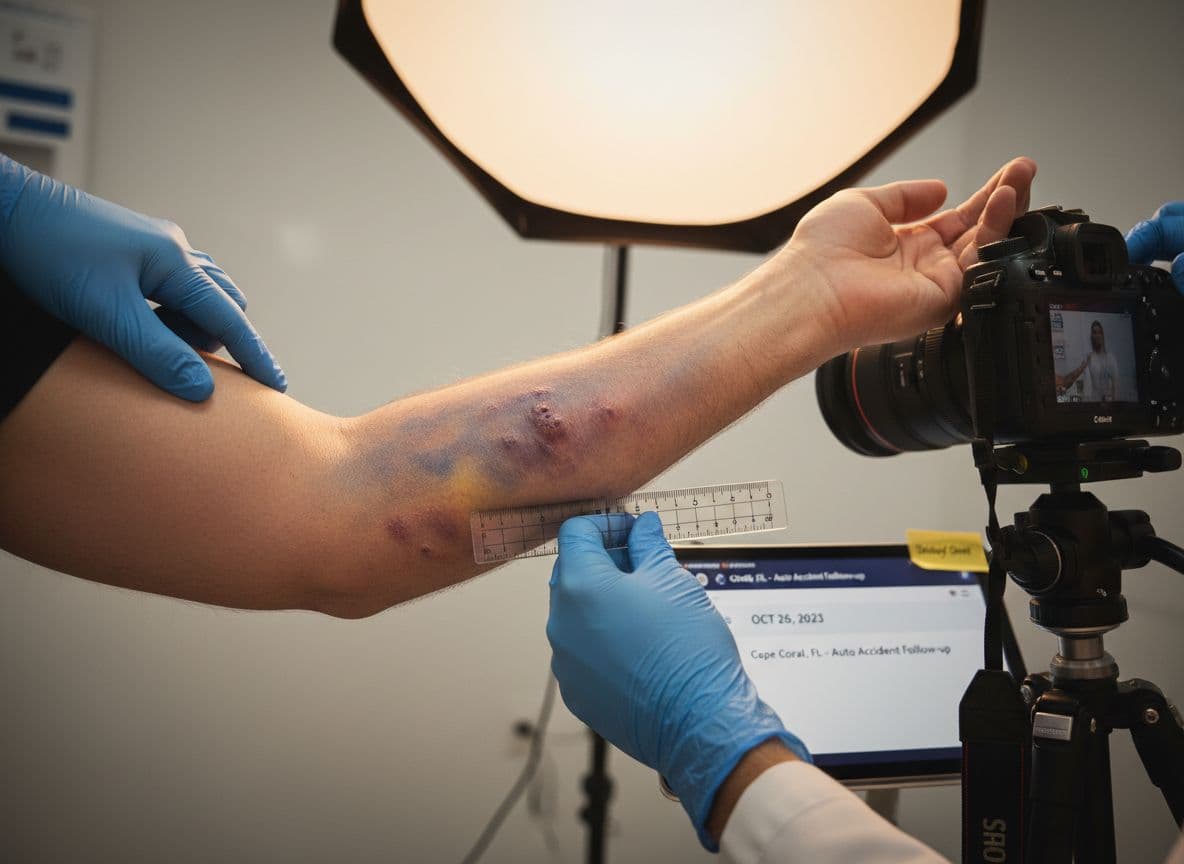
| Photos | Bruising, swelling, visible changes over time | Helps when symptoms are real but not “visible” |
| Communications | Insurance letters, emails, claim notes | Keeps the story consistent and dates clear |
A practical tip: save everything as PDFs and name files by date (Example: “2026-01-18 PT Evaluation”). That simple habit prevents confusion later.
Keep a daily symptom log that sounds like a real person wrote it
A good pain journal isn’t dramatic. It’s steady. It reads like a weather report for your body.
Each day, write 3 quick items:
Pain and location: “Left neck and upper back, 6/10 by late afternoon.”
Limits: “Couldn’t check blind spot without turning my shoulders.”
What you did: “PT exercises, ice for 15 minutes, took prescribed muscle relaxer.”
Include sleep issues, headaches, numbness, tingling, or reduced grip strength if they show up. Also note “good days.” Consistency is believable.
Avoid guessing at medical terms. Don’t label something a “torn ligament” unless a provider diagnosed it. Stick to what you feel and what you can’t do.
Document work problems without turning your job into a courtroom
Missed work is not the only work loss. Soft tissue injuries often cause “work slower, leave early, can’t lift” problems that don’t show on a pay stub unless you document them.
Useful items to gather:
Time records: sick days, reduced hours, schedule changes.
Pay proof: recent pay stubs before and after the crash.
Employer note: a short written confirmation of missed time or modified duty.
If your job has physical demands, write down the specific tasks you can’t do now. “Pain at work” is vague. “Can’t carry 30-pound equipment” is clear.
Preserve crash evidence that supports the injury connection
If symptoms show up weeks later, insurers often say, “How do we know it’s from the crash?” Your job is to keep proof that makes the connection feel obvious.
Strong items include:
- Photos of vehicle damage (inside and out)
- Photos of the scene, if you have them
- Tow and repair invoices
- Names and contact info for witnesses
- The official crash report
If you still need the report, follow the correct process so you get the right document for your records: Accessing official crash documentation in Cape Coral.
One more caution: be careful with recorded statements. It’s easy to say “I’m fine” in the first few days, then regret it when your neck locks up later. If you talk to insurance, keep it factual and brief.
When to bring in a personal injury attorney for delayed soft tissue injuries
Soft tissue cases are often disputed because pain can be real without dramatic test results. That’s where timing and documentation carry the case.
Consider speaking with a personal injury attorney if:
- Symptoms began later and the insurer is questioning the link
- Treatment is lasting longer than expected
- You’re being pushed to settle before you finish care
- Your work limits are growing, not shrinking
- You’re overwhelmed keeping records and responding to insurance
A lawyer can help organize medical proof, request missing records, and present your soft tissue injury documentation in a way that matches how claims are evaluated.
Conclusion
Delayed pain after a Cape Coral crash can feel like a second hit, first the wreck, then the weeks of discomfort that follow. The best response is calm, consistent documentation that shows a clear timeline: crash, symptoms, care, and daily impact. Get checked, follow through with treatment, and keep records that match real life. If the insurer pushes back, the strength of your paper trail often decides how seriously your injury gets taken.